
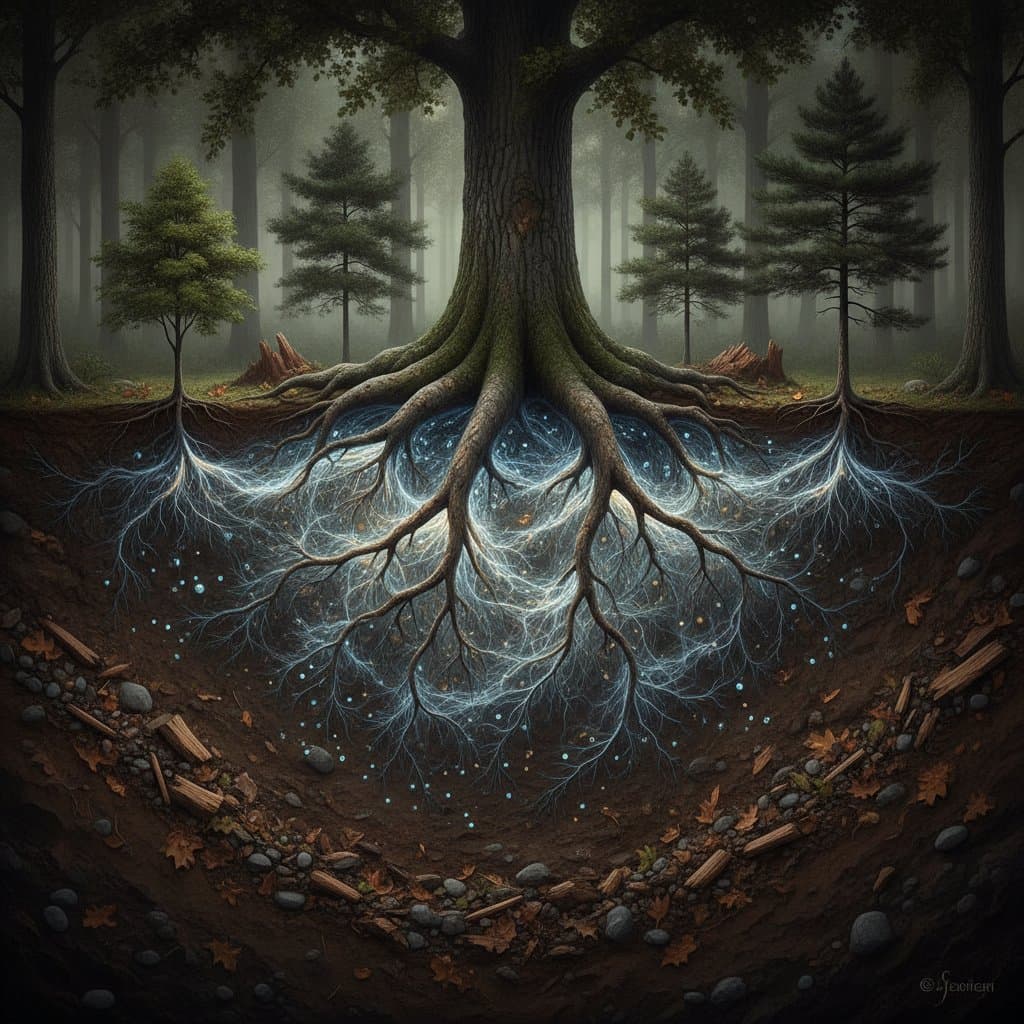
Symbiotic Nutrient Exchange
Mycelium networks connect tree roots with soil fungi in a mutually beneficial partnership. Fungi gather phosphorus, nitrogen, and micronutrients from the soil and deliver them to tree roots. In return, trees supply the fungi with carbohydrates produced through photosynthesis.
This exchange improves nutrient uptake efficiency. Trees require fewer chemical fertilizers, and soil health improves over time through sustained biological activity.
Improved Water Absorption
Mycelium extends the effective reach of tree roots by exploring soil pores that roots alone cannot access. The fungal threads absorb and transport moisture from deeper or distant layers, which proves especially useful in compacted or dry soils.
Trees linked to active mycelium networks maintain better hydration during drought and recover more quickly once rainfall returns.
Disease Resistance and Soil Balance
Mycorrhizal fungi form a physical and chemical barrier around roots that limits invasion by harmful pathogens. They also help maintain diverse microbial populations that support overall soil stability.
Balanced soil biology correlates with stronger long-term tree vigor and fewer disease outbreaks.
Communication and Signaling
Mycelium networks carry chemical signals between connected trees. When one tree detects pests or water stress, it releases compounds that travel through the fungal threads and prompt neighboring trees to activate defensive responses.
This signaling supports collective resilience across the stand.
Key Factors That Influence Mycelium Activity
Soil Composition and Texture
Fungi grow best in aerated, loamy soils that contain sand, silt, and organic matter. Heavy clay or compacted ground restricts oxygen movement and slows fungal expansion.
Organic Matter Availability
Decaying leaves, wood chips, and compost supply the carbon that mycelium requires. Landscapes kept free of all debris often show reduced fungal populations.
Chemical Use and Soil Disturbance
Pesticides, fungicides, and synthetic fertilizers damage beneficial fungi. Repeated tilling or heavy equipment traffic breaks fungal threads and delays network recovery.
Tree Species Compatibility
Oaks, pines, birches, and beeches form strong associations with ectomycorrhizal fungi. Maples and many fruit trees respond better to endomycorrhizal species. Matching inoculants to tree type increases establishment success.
The Mycelium Inoculation Process
Homeowners and landscapers can introduce beneficial fungi through a structured inoculation sequence.
- Test soil for nutrient levels, pH, and biological activity to identify deficiencies.
- Select commercial inoculants formulated for the target tree species and soil conditions.
- Clear compacted soil and apply organic mulch around the root zone to retain moisture.
- Place spores or granules in direct contact with living roots through mixing, injection, or watering.
- Maintain consistent moisture without waterlogging and withhold synthetic fertilizers for the first several months.
Improved leaf color and growth rates typically appear within one growing season.
DIY versus Professional Application
DIY inoculation works well for small trees and garden beds because products are readily available and application is straightforward. Professional service provides accurate diagnosis, specialized equipment, and post-treatment monitoring that reduces risk for mature or stressed trees.
Certified arborists confirm species compatibility and adjust care plans based on observed results.
Indicators That Trees May Benefit from Inoculation
Slow growth, yellowing foliage without visible pests, poor root development, or recent soil disturbance all suggest limited fungal support. Adding compatible mycorrhizal fungi can restore biological function in these situations.
Selecting a Qualified Specialist
Verify certification from recognized arborist organizations. Request details on soil testing procedures, inoculant species, application methods, and follow-up schedules. Compare several estimates while weighting expertise and documented results above lowest price.
Questions to Ask Before Treatment
- Do you focus specifically on mycorrhizal inoculation and soil biology?
- Which fungal species will you introduce, and why are they suitable for these trees?
- How long does full network establishment usually require?
- Will the treatment interact with existing grasses or shrubs?
- How often does reapplication become necessary after soil disturbance?
- Can fungal treatment be combined with aeration or organic amendments?
- What ongoing maintenance steps protect the new network?
Emerging Approaches in Soil Management
Microbial soil amendments now replicate forest conditions in managed landscapes. These products reduce irrigation needs and chemical inputs while supporting carbon storage and soil structure.
Integrating fungal care into routine maintenance brings urban plantings closer to the resilience found in natural woodlands.
Sustaining Mycelium Networks Over Time
Apply organic mulch annually, retain leaf litter where practical, and avoid synthetic fertilizers near root zones. Keep soil evenly moist and limit compaction from foot traffic or machinery.
These practices allow fungal threads to persist and continue supporting tree communication and resource sharing.