
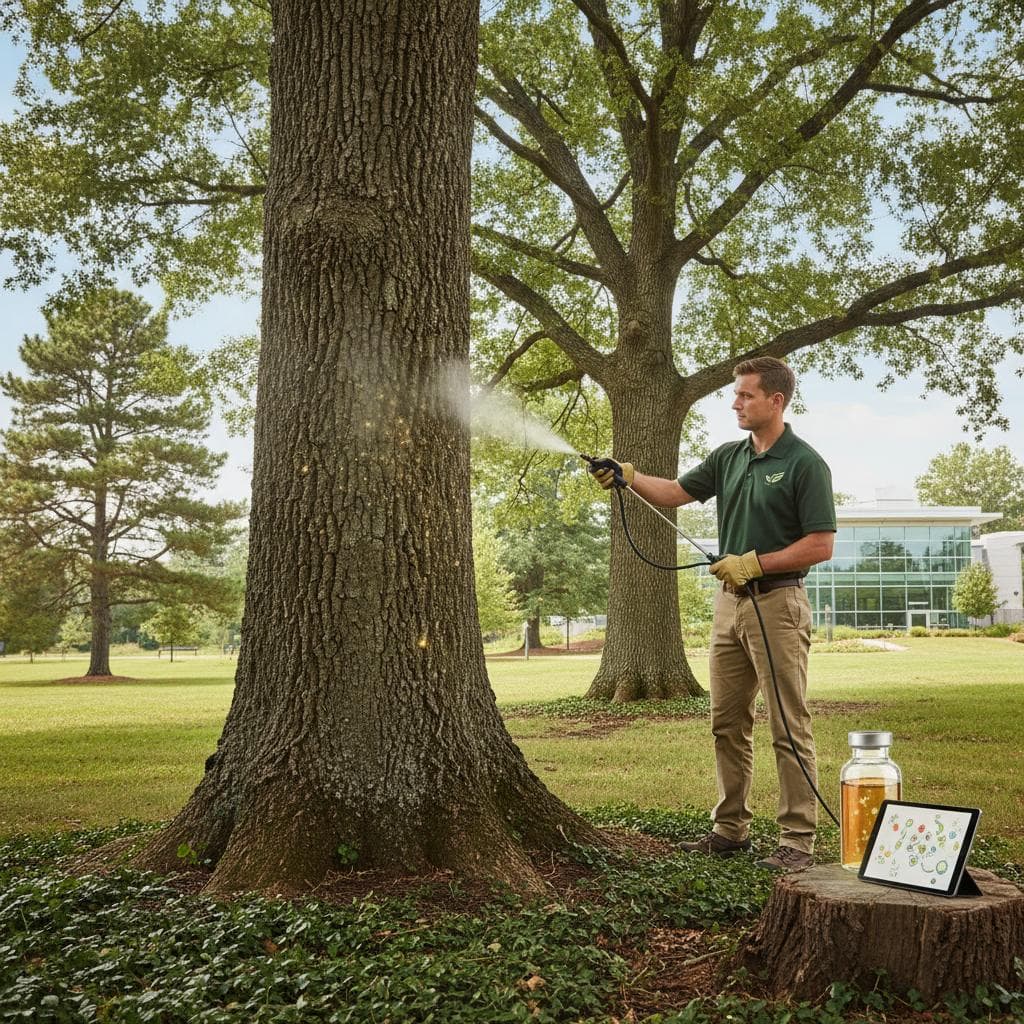
Bio-Fungicide Surge Transforms Sustainable Tree Care
Tree health faces constant threats from fungal diseases that weaken roots, rot trunks, and spread through landscapes. Conventional fungicides once provided quick but short-term solutions. A new wave of bio-fungicides now reshapes disease management for homeowners, arborists, and municipalities. These natural treatments prove safer, environmentally responsible, and increasingly effective.
This guide explains how bio-fungicides work, outlines typical costs, and shows why they support sustainable arboriculture.
What is a Bio-Fungicide?
A bio-fungicide is a natural, living product that controls fungal diseases in plants and trees. It relies on beneficial microorganisms such as bacteria, fungi, or plant extracts rather than synthetic chemicals. These agents suppress harmful pathogens and strengthen the tree natural defenses. The approach reduces chemical inputs while promoting soil biodiversity and long-term tree health.
Average Bio-Fungicide Treatment Costs
Treatment costs vary with tree size, disease severity, and application method. Homeowners typically pay between 80 and 350 dollars per tree, with an average around 200 dollars per treatment. The table below shows ranges by tree size.
| Tree Size | Average Cost Range |
|---|---|
| Small Tree (under 30 ft) | 80 - 150 dollars |
| Medium Tree (30-60 ft) | 150 - 250 dollars |
| Large Tree (over 60 ft) | 250 - 350 dollars |
Prices cover the product, professional application, and follow-up inspection. Some providers offer discounts for multiple trees or seasonal maintenance programs.
Factors Affecting the Cost of Bio-Fungicide Treatments
Several variables shape final pricing. Understanding them helps homeowners plan and avoid surprises.
Tree Size
Larger trees need more solution, longer application time, and equipment such as aerial lifts or high-pressure sprayers. Greater canopy volume raises the cost.
Disease Severity
Early infections often respond to fewer applications. Advanced issues such as root rot or canker may require repeated treatments or combination with other organic products.
Tree Species
Oaks and elms show higher susceptibility to certain pathogens. These species may need targeted formulations or extra applications for full suppression.
Location and Accessibility
Trees on slopes, near buildings, or in dense plantings demand extra time and equipment. Urban sites frequently increase costs slightly.
Time of Year
Applications work best during active growth periods when trees absorb microbial agents efficiently. Scheduling in these windows improves results and can affect pricing.
Urgency
Emergency calls for fast-spreading infections may add expedited fees. Preventive work scheduled in advance remains more affordable.
The Bio-Fungicide Treatment Process
Professional providers follow a clear sequence to deliver reliable outcomes.
-
Initial Assessment and Diagnosis
An arborist examines the tree for leaf spotting, discoloration, trunk lesions, or early leaf drop. Laboratory tests may confirm the exact pathogen. -
Treatment Plan and Quote
The arborist recommends a schedule and supplies a detailed quote covering product type, dosage, and expected results. -
Preparation
Technicians clear debris around the base and may prune lightly to improve airflow and coverage. -
Application of Bio-Fungicide
They apply the product via sprayer, soil drench, or trunk injection. Soil applications target root-zone issues directly. -
Monitoring and Follow-Up
The arborist tracks tree response over several weeks. Booster applications or complementary organic treatments may follow if needed. -
Ongoing Maintenance
Sustainable programs include periodic reapplications, soil monitoring, and pruning to maintain airflow.
DIY vs. Hiring a Professional for Bio-Fungicide Treatments
Retail bio-fungicides tempt some homeowners to treat trees themselves. Professional service often delivers safer and more consistent results.
When to DIY
- Treating small ornamentals or shrubs with mild leaf-spot issues
- Applying preventive general-purpose products
- Working in open, accessible areas
Always follow label instructions exactly. Misapplication can reduce effectiveness or stress the tree.
When to Hire a Professional
- Managing infections in large shade or heritage trees
- Treating root or trunk diseases such as Armillaria or Phytophthora
- Diagnosing complex or recurring problems
- Performing trunk injections or soil drenches that require specialized equipment
Certified arborists identify pathogens accurately and apply products to preserve beneficial soil organisms.
How to Hire a Tree Service for Bio-Fungicide Treatment
Selecting the right provider supports both recovery and sustainability.
-
Check Credentials and Insurance
Confirm the company employs certified arborists and carries liability plus workers compensation coverage. -
Ask About Experience with Bio-Fungicides
Choose providers familiar with microbial products and sustainable practices. -
Get Multiple Estimates
Obtain quotes from at least three companies and compare plans as well as prices. -
Review Product Information
Request details on the microbial species, mode of action, and safety certifications. -
Confirm the Treatment Schedule in Writing
A written agreement should list methods, frequency, follow-up visits, and any guarantees. -
Check References or Reviews
Look for testimonials or case studies showing successful disease control with bio-fungicides.
Frequently Asked Questions
How much does it cost to treat a 50-foot tree with a bio-fungicide?
A 50-foot tree falls in the medium category. Expect costs between 150 and 250 dollars per application. Disease type, access, and number of visits influence the final price.
Are bio-fungicides as effective as chemical fungicides?
Modern bio-fungicides match chemical performance when applied correctly. Chemical options may act faster initially, yet bio-fungicides build lasting resistance by improving soil and plant health.
Can bio-fungicides be used on fruit trees?
Many products carry approval for fruit trees and edible plants. They control powdery mildew and leaf spot while keeping fruit safe to eat.
How often should bio-fungicide treatments be applied?
Most programs use one or two applications per growing season. Severe cases may need more frequent initial treatments followed by maintenance doses.
Do bio-fungicides harm beneficial insects or wildlife?
These products target specific fungal pathogens and leave pollinators, birds, and soil organisms unharmed.
What are the signs that a tree needs a bio-fungicide treatment?
Watch for discolored leaves, premature drop, fungal growth on bark, or thinning canopy. These symptoms indicate a fungal issue that may respond to treatment.
Can bio-fungicides help prevent tree diseases?
Preventive applications introduce beneficial microbes before infection occurs. The tree develops a protective barrier that discourages fungal colonization.
Practical Steps for Sustainable Tree Health
Rising use of bio-fungicides reflects a shift toward sustainable arboriculture. Homeowners and professionals now see that living soil systems support healthier trees than chemical quick fixes. Biological treatments cut runoff, aid pollinators, and build long-term resilience.
Pair bio-fungicide applications with sound cultural practices. Proper watering, mulching, pruning, and soil aeration strengthen results. Regular professional inspections catch problems early.
Bio-fungicides offer a science-backed method that protects trees and ecosystems alike. Homeowners who choose these treatments invest in lasting property health and environmental quality.