
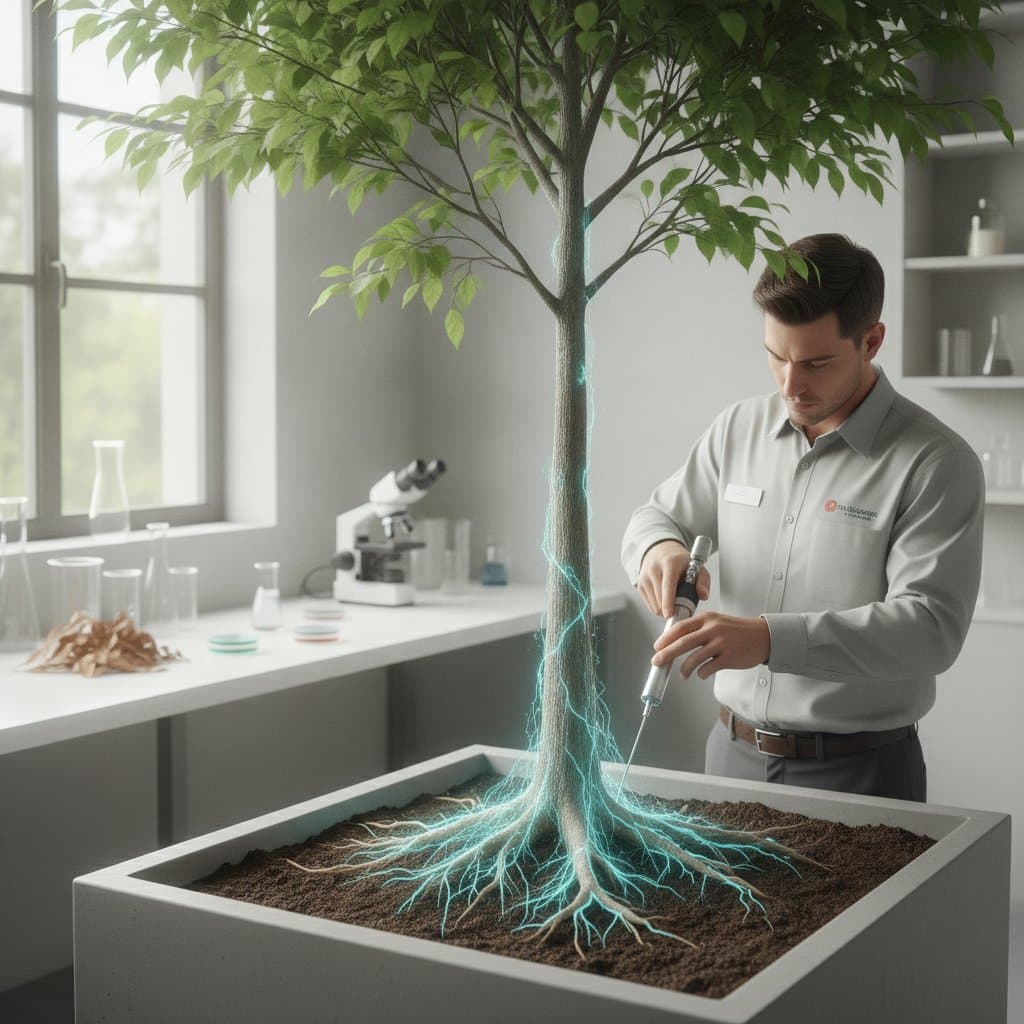
Mycorrhizal Injections Revive Stressed Trees
Mycorrhizal injections revive stressed trees by restoring beneficial soil fungi that support root function. This approach improves nutrient uptake and water absorption in trees affected by compaction, drought, or construction. Homeowners typically observe stronger growth and greener foliage once the fungi establish in the root zone.
Trees in disturbed soils often lack the natural fungal networks that aid survival. Mycorrhizal fungi extend root reach and help trees access resources that remain unavailable otherwise. Learning the treatment details allows property owners to select solutions suited to their landscapes.
What Mycorrhizal Injections Involve
Mycorrhizal injections deliver fungal spores into the soil around tree roots. The fungi form a partnership with roots that expands the effective surface area for absorption. In return, the fungi receive sugarstree.
This relationship occurs in healthy soils but disappears after soil disturbance. Injections replace the missing fungi and rebuild the biological support system. The process works for many common landscape trees including oaks, maples, and pines.
Conditions That Affect Results
Several site factors determine how well the treatment performs. Tree species, soil texture, and moisture levels all play roles in fungal establishment.
- Species such as oaks and pines often respond within a single season.
- Compacted or chemically altered soils may need aeration before injection.
- Consistent moisture supports fungal growth while waterlogged conditions hinder it.
- Applications during active root growth periods yield faster colonization.
- Severely damaged trees with limited live roots may show limited response.
An arborist evaluates these elements before recommending treatment.
Indicators That Treatment May Help
Visible symptoms often signal the need for soil biology restoration. Yellowing leaves, reduced annual growth, and early leaf drop appear first. Sparse canopies, dead twigs, and slow recovery after drought also point to root limitations.
When several trees display similar patterns, soil conditions rather than pests usually explain the decline. Mycorrhizal injections address the underlying imbalance directly.
Application Steps
Certified professionals follow a structured sequence to place the fungi accurately.
- Inspect tree condition and soil profile.
- Select a fungal blend matched to the tree and site.
- Inject the solution at multiple depths and locations around the root zone.
- Water the area and apply mulch to encourage establishment.
- Monitor canopy density and new growth over subsequent months.
Visible changes generally appear within one growing season.
Professional Service Versus Home Application
Commercial inoculants exist for personal use, yet professional delivery reaches deeper roots more reliably. Large trees possess extensive root systems that demand calibrated equipment and species-specific mixes. Incorrect placement wastes material and delays results.
Professional treatment costs range from several hundred dollars per tree depending on size and access. This expense often prevents later removal or replacement expenses.
Selecting a Provider
Qualified arborists demonstrate specific credentials and practices. They hold current certification, maintain experience with similar species, and tailor blends to site conditions. Written estimates and calibrated equipment further indicate reliability.
Questions Before Scheduling
Homeowners benefit from clarifying details in advance. Ask which fungal species the product contains, when results may appear, and whether follow-up aeration is advised. Inquire about reapplication intervals and post-treatment care that protects the restored soil life.
Common Questions
How soon do results appear?
Most trees display improvement within one growing season. Full effects depend on initial soil quality and the extent of stress.
Are the fungi safe around pets and other plants?
The organisms occur naturally in healthy soils and pose no risk to people, animals, or nearby vegetation.
Do injections address construction damage?
They frequently assist recovery. Compacted soil and severed roots limit water uptake. The added fungi help rebuild absorption capacity.
How long does one treatment last?
A single application often remains effective for several years. Disturbed sites may require periodic reapplication to sustain populations.
Does the treatment eliminate fertilizer needs?
It reduces fertilizer demand by improving uptake efficiency. Combining organic amendments with mycorrhiza produces the strongest outcomes.
Can the same approach serve shrubs and turf?
Yes. Shrubs and lawns respond to mycorrhizal products, though application methods shift to surface sprays or watering rather than injection.
Will injections cure root diseases?
They do not target pathogens directly. Improved root vigor does increase natural resistance over time.
Sustaining Tree Health Through Soil Biology
Mycorrhizal injections rebuild the living soil component that anchors long-term tree performance. When paired with appropriate watering and mulching, the treatment supports continued vitality and reduces future stress susceptibility.