
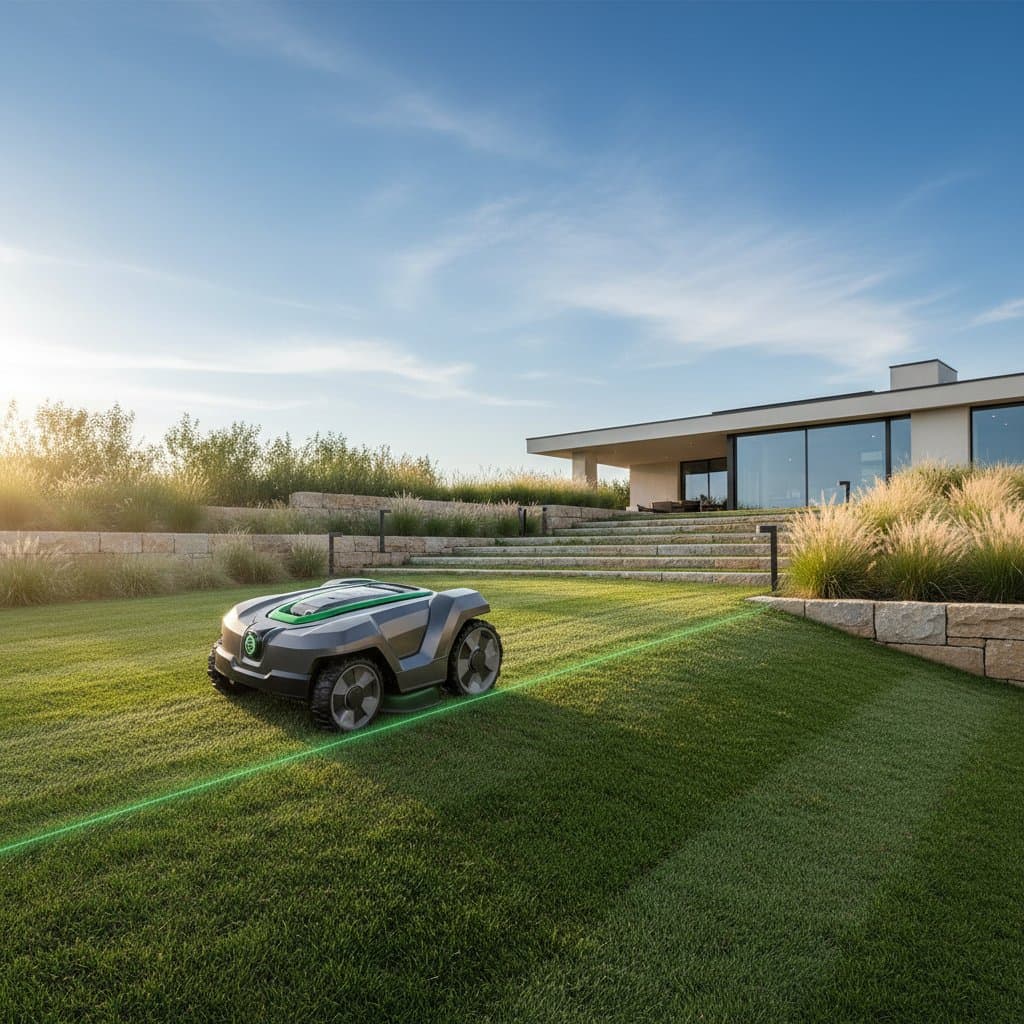
Robot Mowers Master Steep Slopes: A Guide for Effortless Lawn Care
Maintaining a lawn on sloped terrain presents unique challenges. Gravity complicates traction for traditional push mowers, often leading to uneven cuts and physical strain for the user. The latest robotic lawn mowers address these issues through innovative designs that ensure stability, precision, and safety on inclines.
These advanced machines integrate sophisticated navigation systems with robust traction mechanisms to deliver uniform mowing results. Homeowners benefit from reduced effort and enhanced yard aesthetics. This comprehensive guide details the functionality of slope-capable robot mowers, associated costs, available models, installation considerations, setup procedures, maintenance practices, and answers to common questions.
Understanding Robot Mower Costs
National Average Pricing
Slope-capable robotic mowers command prices in the mid-to-high range relative to basic flat-terrain models. The inclusion of specialized sensors, reinforced motors, and enhanced traction components elevates the cost. Many users view this expenditure as justified by the long-term savings in time and labor, particularly during peak growing seasons.
Pricing by Yard Size and Configuration
- Small yards (less than 0.25 acres): Entry-level compact mowers with moderate slope handling start at lower price points, suitable for gentle inclines up to 20 degrees.
- Medium yards (0.25 to 0.5 acres): Balanced mid-tier options manage inclines around 30 degrees, offering reliable performance without excessive cost.
- Large or intricate yards (over 0.5 acres): Top-end models equipped with all-wheel drive and dynamic pathfinding tackle gradients exceeding 35 degrees, though they involve greater initial investment.
Factors Influencing Total Expenses
Multiple elements determine the overall price of a slope-optimized robot mower:
- Coverage capacity: Units designed for expansive areas incorporate durable batteries and extended cutting decks.
- Incline tolerance: Models rated for steeper angles demand advanced engineering for stability.
- Grip enhancements: Textured or cleated wheels provide superior hold on slick or irregular surfaces.
- Power source: High-capacity lithium-ion batteries support extended operation and quick recharges.
- Perimeter definition: Options range from traditional boundary wires to app-based virtual fencing, impacting setup expenses.
- Integrated technologies: Features such as real-time GPS tracking, anti-collision sensors, and app-based monitoring enhance usability at an additional premium.
Categories of Slope-Adapted Robot Mowers
Basic Compact Variants
These models suit smaller properties with subtle elevations. They employ straightforward perimeter guidance and fundamental stability aids.
Advantages:
- Cost-effective acquisition and upkeep
- User-friendly app integration for scheduling
- Low noise levels and efficient power consumption
Disadvantages:
- Restricted to milder slopes
- Modest runtime per charge
- Elementary route planning
Versatile Mid-Tier Options
Engineered for varied landscapes, these mowers incorporate upgraded mobility features like stabilized sensors and reinforced treads.
Advantages:
- Superior adaptation to irregular ground
- Precise path following and coverage
- Extended battery duration and broader cut paths
**Disadvantages:**n- Elevated cost over basic versions
- Potential limitations on extreme inclines
Advanced All-Terrain Flagships
Premium selections excel in demanding environments, utilizing multi-wheel propulsion and AI-driven adjustments for optimal performance.
Advantages:
- Secure navigation of severe slopes
- Sophisticated positioning and hazard evasion
- Streamlined ongoing care routines
Disadvantages:
- Substantial upfront expenditure
- Involved initial configuration
- Occasional need for expert fine-tuning
Installation: Self-Guided or Expert-Assisted?
Flat landscapes simplify robotic mower deployment, yet sloped areas introduce complexities related to balance and coverage.
Opting for self-installation yields cost reductions but demands meticulous perimeter mapping and testing. Errors in wire placement or zone definition may result in operational halts or incomplete mowing. On inclines, such oversights heighten risks of instability or inconsistent results.
Engaging certified installers guarantees precise alignment, terrain-specific adjustments, and compatibility with home automation. Experts evaluate factors like soil erosion, water flow, and barriers such as steps or fences. For intricate or sharply angled yards, professional intervention proves essential; simpler setups allow confident DIY efforts with thorough preparation.
Step-by-Step Setup for Slope-Capable Models
- Evaluate the terrain. Use a digital inclinometer to quantify angles, identify fixed obstacles, and clear vegetation or rocks.
- Select an appropriate unit. Verify the model's incline limit exceeds your yard's maximum gradient by at least 5 degrees.
- Establish boundaries. Lay perimeter wires or activate geofencing via the companion application to outline operational zones.
- Install the docking station. Secure it on flat, stable ground proximate to an electrical source and accessible from primary paths.
- Program operational cycles. Define daily or weekly schedules to promote uniform growth and distribute mechanical wear.
- Conduct initial trials. Operate on low-angle sections first to confirm grip, alignment, and return-to-base functionality.
- Refine settings iteratively. Adjust blade elevation, edge detection, and torque distribution based on performance observations.
Strategies for Optimal Operation
Regular blade honing prevents ragged edges and motor overload. Frequent tire cleaning preserves adhesion, critical on dewy or soiled inclines. Schedule mows to avoid excessive overgrowth, which burdens the system.
Shelter the unit inside during inclement weather to safeguard circuits from water ingress. Apply manufacturer firmware updates promptly, as they often refine incline algorithms and sensor responsiveness. Monitor usage logs through the app to preemptively address any recurring issues.
Common Queries Addressed
What is the maximum incline for robotic mowers?
Standard slope models accommodate up to 35 degrees, with elite four-wheel variants managing 45 degrees or more. Consult product documentation to match capabilities to site conditions.
Do these mowers perform on moist surfaces?
Traction diminishes in wet conditions, but contemporary designs with patterned treads and incline monitors outperform predecessors. Delay operation post-rainfall to minimize slippage.
Is boundary wire essential?
Emerging units leverage satellite positioning or visual recognition for wire-free operation. Such alternatives suit convoluted layouts but incur higher costs and may require specialist commissioning.
How does terrain affect battery duration?
Inclines increase energy draw, reducing session length by 20 to 30 percent versus level ground. Intelligent units dock autonomously upon depletion, resuming after recharging.
What maintenance does a slope model entail?
Routine tasks include debris removal from undercarriage, wheel, and sensors, plus periodic blade swaps. Battery checks occur seasonally, typically involving straightforward inspections.
Achieving Seamless Slope Mowing Results
Integrating a slope-ready robotic mower elevates yard maintenance to a reliable, hands-off process. Select based on your terrain's demands, invest in proper setup, and adhere to care protocols for enduring performance. This approach yields pristine, professional landscapes with minimal intervention, freeing time for enjoyment rather than toil.