
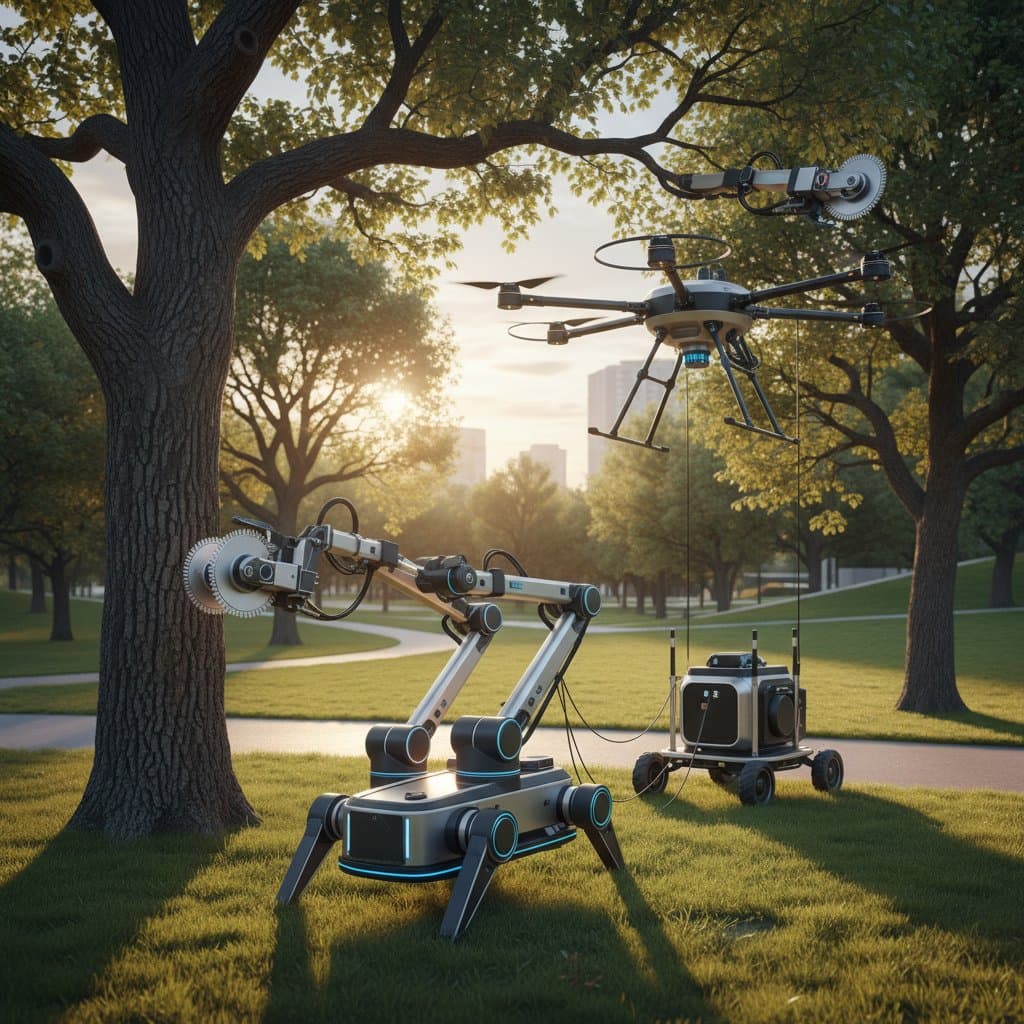
Robotic Tree Trimmers to Reduce Labor Costs by 50% by 2026
Advanced technology reshapes outdoor maintenance tasks, including tree care. Robotic trimmers now promise to halve labor expenses for trimming and pruning operations. Homeowners, landscapers, and tree service experts stand to gain from streamlined planning, pricing, and execution of these essential activities.
This resource details the mechanics of robotic tree trimmers, their pricing structures, and comparisons to conventional approaches. It examines benefits, constraints, and practical implementations that position automated pruning as a viable option for modern tree management.
Robot Trimmer Pricing Overview
Pricing for robotic trimmers depends on operational capacity, extension range, and degree of automation. Early adopters face premium rates for pioneering models, but scaling production drives down costs for subsequent generations.
Average Costs Nationwide
Commercial robotic trimmers suited for landscaping or public spaces typically range from $5,000 to $15,000 per unit. Residential versions, designed for smaller properties, may launch below $3,000 as manufacturing expands. Packages often encompass the core device, docking station, and essential safety features.
Pricing by Application Scale
- Home settings: For properties with limited trees, rental options or community sharing programs keep expenses under $500 per season.
- Business and public sites: expansive areas like commercial lots or urban parks justify investments in fleets, with units handling 200 trees weekly.
- Service providers: Arborist firms recover upfront investments within months through labor savings and increased throughput on contracts.
Influential Pricing Elements
- Performance specifications: Greater elevation, finer cut accuracy, and enhanced navigation elevate costs.
- Autonomy features: Independent operation commands higher prices than operator-assisted or guided systems.
- Upkeep and upgrades: Scheduled alignments and software enhancements sustain reliability.
- Power systems: Extended-duration batteries minimize interruptions and boost value.
- Site and vegetation demands: Rugged terrains or thick foliage necessitate advanced detectors or add-ons.
Balancing these elements enables robotic systems to lower yearly tree care budgets by as much as 50 percent, particularly in expansive operations.
Categories of Robotic Tree Trimmers
Technological progress introduces specialized robotic trimmer variants tailored to diverse requirements. Variations differ in independence, movement, and handling of intricate tasks.
Independent Ground-Based Trimmers
These devices function solo on turf, akin to automated lawn cutters. Equipped with detection arrays and visual feeds, they maneuver past barriers and deploy adjustable limbs to shape lower branches and hedges.
Advantages:
- Functions unattended for extended periods
- Minimizes physical effort significantly
- Suited for regular, accessible pruning
Drawbacks:
- Restricted to lower elevations
- Demands unobstructed surfaces for travel
Elevated Drone-Mounted Trimmers
These airborne units feature stabilized platforms with targeted cutting tools. They excel at upper limbs or inaccessible spots that traditionally require elevated access equipment.
Advantages:
- Accesses elevated or irregular positions
- Lowers worker exposure to hazards
- Covers broad zones swiftly
Drawbacks:
- Constrained flight duration
- Demands operator proficiency for deployment
Hybrid Vehicle-Integrated Trimmers
Attached to trucks or mobile bases, these setups merge directed oversight with programmed precision. Users position the apparatus, after which automated extensions execute guided incisions.
Advantages:
- Manages substantial workloads
- Provides oversight alongside mechanization
- Navigates elaborate branch networks
Drawbacks:
- Involves relocation and preparation
- Exceeds basic unit investments
These categories address specific scenarios. Residential users often select portable ground models, whereas specialists prefer aerial or mounted options for scope and speed.
Self-Managed versus Expert-Assisted Trimming
Robotic trimmers encourage independent use among property owners, yet the choice between personal operation and specialist engagement hinges on tree dimensions and intricacy.
Benefits of Independent Use:
- Cuts recurring service fees
- Allows flexible timing
- Limits risks with stable, low-level devices
Challenges of Independent Use:
- Struggles with height and detail on mature trees
- Involves setup and error resolution
- Risks harm from improper application
Engaging Specialists:
Arborist teams increasingly incorporate robotic tools into their arsenals. Opting for professionals grants access to informed equipment choices, compliance with standards, and promotion of optimal tree health.
Experts efficiently oversee vast estates and identify concerns such as infections or instability overlooked by machines. Many owners find value in a combined strategy: automated devices for standard care and pros for intensive or risky interventions.
Operating a Robotic Tree Trimmer
Effective and secure use of robotic trimmers involves thorough preparation, configuration, and supervision. These guidelines apply to owned units or coordinated professional efforts.
-
Evaluate Tree Conditions
Note variety, stature, and health status. Pinpoint limbs for removal and confirm robotic accessibility. -
Choose Appropriate Equipment
Select ground, aerial, or hybrid based on extension, power, and navigation matching tree scale. -
Secure the Site
Remove clutter, items, or hindrances from operational routes. Relocate animals and individuals from the area. -
Configure Operations
Define perimeters and targets for self-guiding units. Map secure trajectories for flights or advances in others. -
Conduct Trial Runs
Initiate brief sessions to test detection, sightlines, and precision. Refine settings prior to complete engagement. -
Supervise Execution
Watch activities closely near boundaries or thick growth. Halt or adjust for emerging barriers. -
Post-Operation Review
Clean cutting edges, inspect residue accumulation, and recharge power sources. Apply updates to sustain efficacy.
Adhering to this sequence ensures robotic trimmers deliver reliable upkeep with emphasis on security and exactness.
Strategies for Effective Automated Pruning
- Conduct Frequent Checks: Automation supports, but manual reviews confirm vitality and equilibrium.
- Install Updates: Vendor patches refine evasion and incision quality.
- Incorporate Manual Touches: Employ handheld tools for refinements beyond mechanical limits.
- Align Detectors: Accurate tuning avoids excess cuts or impacts.
- Time Interventions: Align activities with growth cycles to prevent plant strain.
Common Queries on Robotic Tree Trimmers
Do robotic trimmers pose risks near residences?
Modern units incorporate halt mechanisms triggered by proximity alerts, safeguarding people, animals, and structures. Defined zones and correct initialization amplify protection.
Are large trees compatible with robotic trimmers?
Sophisticated aerial or integrated models access substantial heights, though entry-level residential devices suit modest sizes. Extensive or crowded specimens warrant expert input.
Is internet required for robotic trimmers?
Core functions rely on onboard processing and proximity scans. Select models enable wireless oversight, patching, and logging as enhancements.
What upkeep do robotic trimmers demand?
Tasks remain light relative to manual gear. Blade sanitation, sensor verification, and code refreshes require brief attention post-session.
Will robotic trimmers supplant arborists?
Automation augments rather than displaces skilled judgment. Professionals address nuanced cuts, health diagnostics, and stability evaluations beyond machine scope.
Can robotic trimmers function in adverse conditions?
Operations suit clear, stable weather. Moisture, gusts, or storms disrupt guidance and heighten dangers.
Integrating Robotics into Tree Maintenance Routines
Robotic trimmers alter approaches to tree stewardship for individuals and firms alike. They yield uniform outcomes, trim expenses, and elevate security protocols. As development continues, achieving 50 percent cost reductions appears attainable.
Property managers benefit from blending automated routines with periodic specialist consultations for comprehensive care. Evaluate options, assess provider feedback, and seek advice from those versed in both mechanical and manual techniques before commitment.