
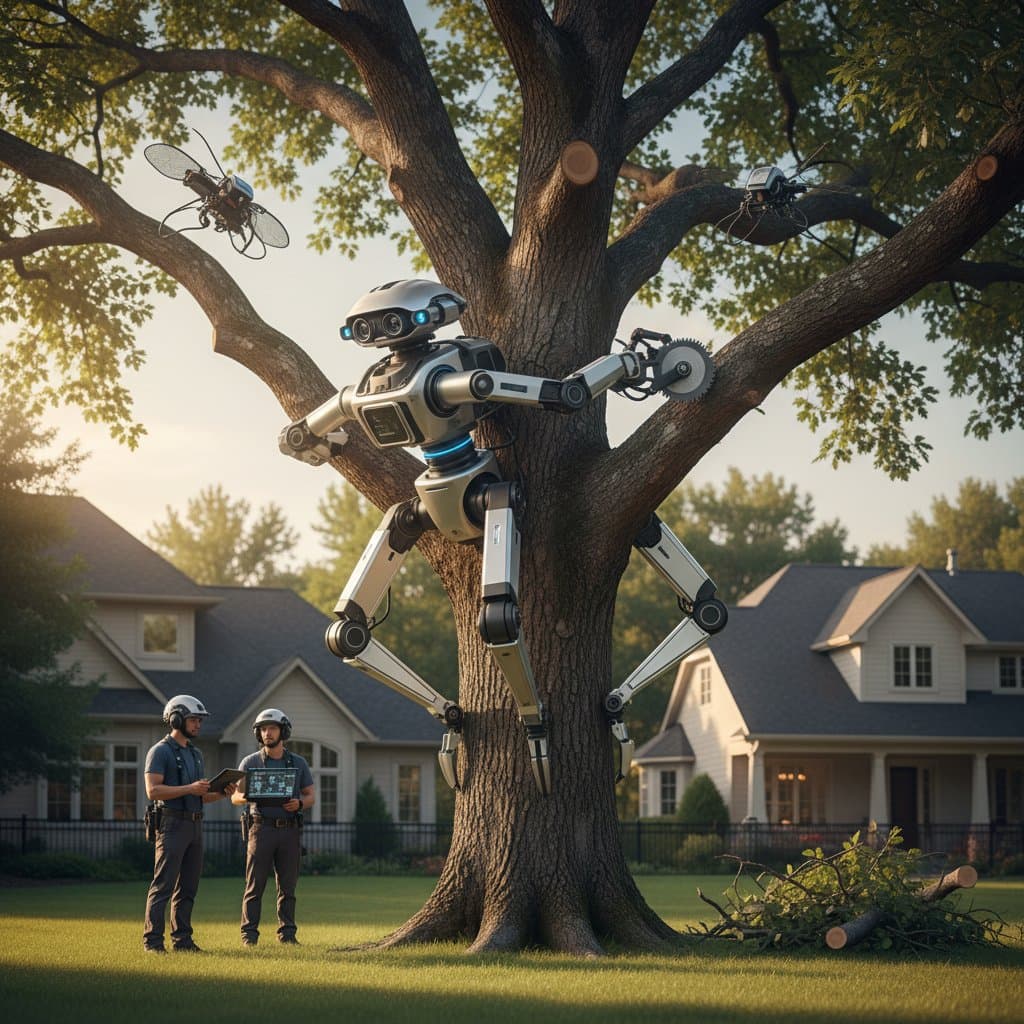
Robot Climbers Reduce Tree Trimming Time by 70 Percent
Tree trimming robots are revolutionizing the management of tall and hard-to-reach trees for arborists and homeowners. These automated climbing devices complete precision pruning tasks in a fraction of the time required by human crews, with initial studies indicating a reduction in trimming time of up to 70 percent. By integrating advanced robotics, artificial intelligence, and principles of arboriculture, robot climbers deliver faster, safer, and more uniform tree maintenance.
This technology shifts community approaches to tree care. Professional arborists now deploy robotic assistants that ascend trunks, assess branches needing attention, and execute cuts with high precision. The outcome includes neater pruning and minimal impact on nearby landscapes.
How Automated Tree Climbers Operate
Robot tree climbers employ gripping arms, rotating wheels, and compact sensors to ascend tree trunks and maneuver along branches. Units feature cameras and laser rangefinders to evaluate bark texture and branch density. These tools enable the robot to select secure ascent routes and pinpoint limbs for trimming.
When in position, the robot deploys specialized cutting tools for clean, accurate prunes. Operations follow programmed guidelines that replicate the judgment of a certified arborist, such as avoiding cuts larger than recommended diameters or preserving branch collars. Remote monitoring allows a single operator to supervise several robots simultaneously, enhancing overall productivity and minimizing personnel requirements.
Primary Advantages of Robotic Tree Trimming
Robot climbers excel in balancing safety, speed, and accuracy, providing clear benefits for both homeowners and professionals. Key advantages include:
- Accelerated task completion: Robots operate without rest, substantially shortening overall trimming durations.
- Enhanced worker safety: Humans avoid hazardous climbs or tool handling in precarious spots.
- Uniform outcomes: Pruning algorithms adhere strictly to arboricultural best practices for every cut.
- Minimized site disturbance: These compact devices bypass the need for bucket trucks or heavy machinery that might harm turf or pavement.
- Cost savings over time: Although upfront costs exceed traditional methods, lower labor expenses and quicker service delivery yield long-term affordability.
Scenarios Where Robotic Trimming Excels
Robotic systems prove most valuable in specific settings and tree varieties. They perform optimally on:
- Tall trees with straight trunks, like pines, palms, and oaks, facilitating efficient vertical navigation.
- Urban and suburban environments with restricted access for bulky equipment.
- Commercial sites demanding regular upkeep with limited tolerance for operational interruptions.
In crowded residential areas, a single compact robot replaces an entire crew and vehicle, enabling discreet and streamlined work without obstructing roads or access points. For instance, trimming a row of mature oaks in a city park becomes feasible during off-peak hours, preserving daily routines.
Homeowner Use Versus Professional Robotic Services
Homeowners may envision purchasing a personal tree trimming robot, yet these devices demand specialized knowledge for safe operation. Calibration and upkeep are essential to guarantee adherence to pruning standards that support tree vitality. Incorrect settings risk damaging structural integrity or inducing undue stress on the plant.
Professionals recommend engaging certified services for robotic applications. Trained operators integrate robot capabilities with on-site assessments, ensuring comprehensive care that extends beyond mere trimming to include health evaluations.
Selecting a Reliable Provider for Automated Tree Services
When evaluating options for robotic tree trimming, consider these factors to secure quality results:
- Operator certification: Verify that the individual holds arborist credentials, demonstrating knowledge of tree biology and growth dynamics.
- Robot model suitability: Inquire about the equipment's capacity for your tree's trunk diameter and branch configuration.
- Safety protocols: Ensure the provider maintains insurance coverage and complies with industry safety regulations for both machines and personnel.
- Pricing details: Expect fees scaled to tree height, structural complexity, and site accessibility, often starting at several hundred dollars per tree.
- Post-service evaluation: Reputable services conduct thorough inspections to confirm cuts promote healthy regrowth and structural stability.
Frequently Asked Questions
What is the typical cost of robotic tree trimming?
Costs generally span from a few hundred dollars to several thousand per tree, influenced by factors such as height, condition, and location. While robots lower labor expenses, charges for supervision and equipment upkeep contribute to the final price.
Does robotic trimming pose risks to tree health?
No, provided a certified arborist oversees the process. Robots adhere to established pruning guidelines that avoid excessive removal and safeguard long-term tree vigor.
Are robots equipped to address storm-damaged trees?
Certain advanced models manage minor storm damage, but severely compromised or unstable trees require human intervention to assess risks and ensure secure removal.
Will robots eventually supplant human arborists?
Robots complement rather than replace experts. They tackle routine or high-risk activities, allowing arborists to focus on diagnostic and strategic care decisions.
How quickly can a robot complete a trimming job?
For most trees, a robot finishes in under one-third the duration of a traditional manual team, varying by size and density.
Advancing Tree Maintenance Through Automation
As robotic climbers gain adoption, tree care evolves toward greater efficiency and sustainability. Arborists and homeowners benefit from tools that prioritize precision and safety, fostering healthier urban forests. Explore professional services to integrate this technology into your property management routine, ensuring trees thrive amid growing environmental demands.