
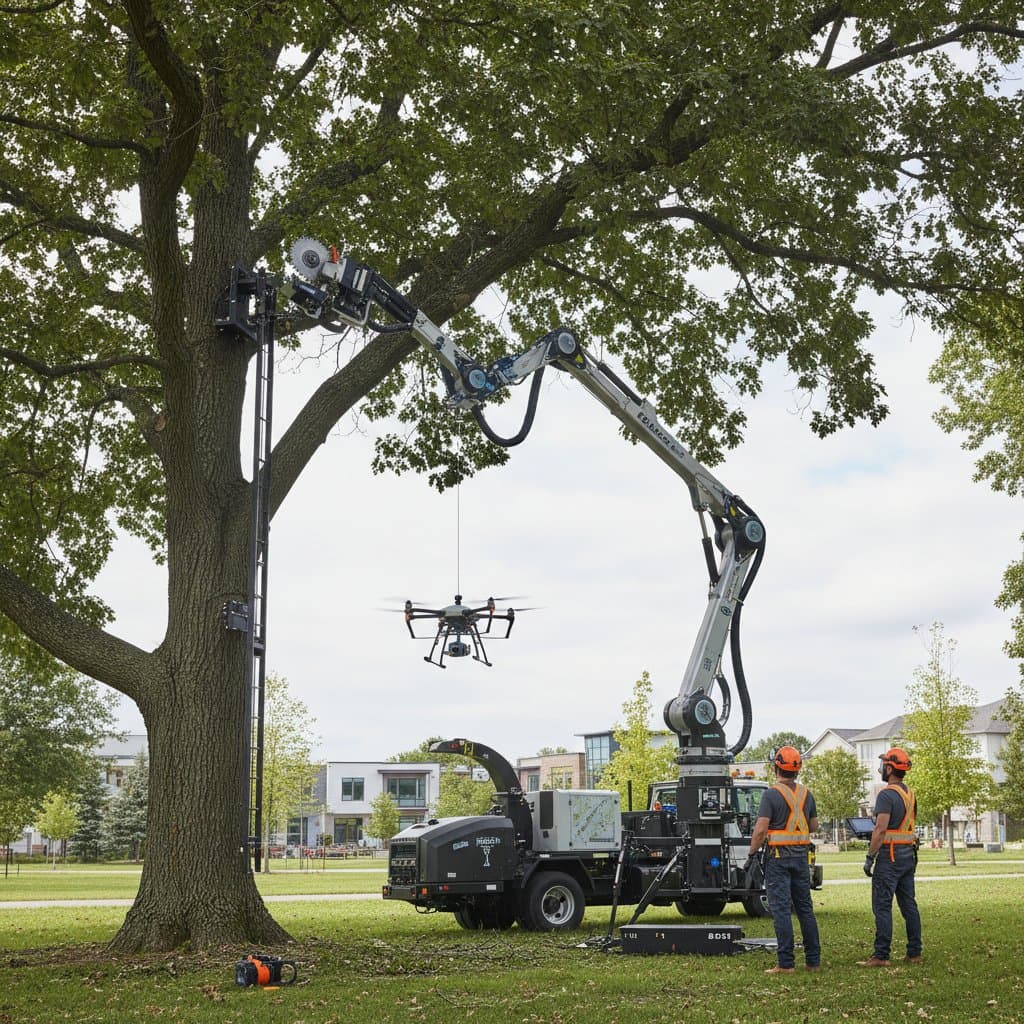
Robotic Climbers Revolutionize Tree Trimming This Year
Tree trimming ranks among the most demanding and dangerous tasks in outdoor maintenance. Workers must scale tall trunks, wield chainsaws while perched on branches, and demand a blend of physical strength, technical skill, and unwavering focus. Robotic climbers now alter this landscape by delivering safe, efficient, and intelligent automation to a field long reliant on human effort alone. This guide details the mechanics of robotic tree trimming technology, associated costs, comparisons to traditional approaches, and essential considerations for homeowners engaging automated pruning services.
Robotic Tree Trimming Cost
National Average Cost
Costs for robotic tree trimming fall into moderate to high ranges, influenced by task complexity and equipment specifics. Homeowners typically encounter rates comparable to standard services, with opportunities for savings through ongoing maintenance. These prices account for sophisticated machinery, trained personnel, and the accuracy of robotic implements.
Cost by Project Size and Type
- Small Trees (under 20 feet): These projects prove most economical, as robotic climbers finish swiftly with little preparation.
- Medium Trees (20 to 50 feet): Expenses sit in the middle tier, reflecting extended ascent periods and intricate pruning demands.
- Large or Mature Trees (over 50 feet): Premium pricing applies here, necessitating robust robots that secure thick trunks and navigate crowded foliage.
Key Cost Factors
Multiple elements shape the total expense of a robotic tree trimming endeavor:
- Tree Size and Species: Bigger, leafier specimens demand more time for thorough work.
- Accessibility: Proximity to buildings or electrical lines might necessitate human support, extending operational duration.
- Technology Type: Units featuring artificial intelligence and lidar detection incur higher usage fees.
- Service Provider: Firms equipped with cutting-edge robots command elevated charges.
- Frequency of Maintenance: Scheduled sessions reduce cumulative costs by curbing unchecked growth.
Types of Robotic Tree Trimming Technology
Robotic solutions for tree trimming vary widely, tailored to diverse settings and requirements. Each category addresses unique challenges in arboriculture.
Autonomous Robotic Climbers
These self-directed robots latch onto tree trunks and navigate independently. Equipped with sensors, they ascend, evaluate branch layouts, and execute exact cuts free from direct human input.
Pros:
- Achieve peak automation for streamlined workflows
- Access hazardous zones beyond safe human reach
- Deliver uniform, neat incisions that foster tree vitality
Cons:
- Demand substantial upfront capital from operators
- Suit only certain trunk dimensions and contours
- Necessitate regular adjustments and upkeep
Remote-Controlled Robotic Climbers
Operators direct these devices via handheld controllers or tablets, relying on live video streams to steer motions and incisions.
Pros:
- Enable meticulous handling of elaborate tasks
- Adapt well to asymmetrical tree forms
- Permit expert supervision minus bodily peril
Cons:
- Proceed more deliberately than autonomous variants
- Call for proficient handlers versed in controls
- Face constraints from battery capacity on extensive assignments
Hybrid Systems
Hybrid setups merge machine autonomy with operator input. Algorithms handle routine navigation, while professionals decide on final trims.
Pros:
- Integrate human insight with mechanical precision
- Accommodate varied species and foliage thicknesses
- Minimize chances of excessive or erroneous pruning
Cons:
- Rely on qualified staff for effectiveness
- Incur added expenses from combined functionalities
- Depend on reliable signals for oversight
Drone-Assisted Trimming Robots
Emerging integrations pair drones with compact arms or direct terrestrial robots using overhead surveys. Such systems spot issues and outline optimal paths.
Pros:
- Excel on expansive estates or lofty specimens
- Shorten preparation via skyward assessments
- Yield insights for sustained tree monitoring
Cons:
- Offer reduced shearing power versus climbers
- Suffer from atmospheric interference on flights
- May require regulatory approvals in select locales
DIY vs. Hiring a Professional
Consumer-grade robotic tree trimming remains unavailable for do-it-yourself applications. Professionals who invest in and manage this equipment serve most residential needs. Pursuing rental or purchase without expertise invites financial loss and hazards.
DIY Approach:
- Challenges: Steep acquisition prices, operational intricacies, and threats to vegetation or surroundings.
- Potential Savings: Negligible after accounting for education and gear outlays.
- Risks: Personal harm, improper cuts, and device failures.
Hiring a Professional:
- Benefits: Specialized knowledge, risk mitigation, and cutting-edge tools.
- Efficiency: Machines outperform crews in speed and uniformity.
- Warranty and Support: Providers often include aftercare reviews and assurances against defects.
Recommendation: Engage certified robotic trimming experts to secure accuracy, safety, and enduring advantages. The systems demand professional handling for optimal performance.
How to Schedule a Robotic Tree Trimming Service
- Assess Your Trees: Catalog trees needing attention, recording dimensions, types, and access points.
- Research Providers: Seek regional firms specializing in robotic or automated care; scrutinize feedback and qualifications.
- Request an Inspection: Expect on-site or drone evaluations to gauge robotic compatibility.
- Get an Estimate: Solicit itemized proposals covering personnel, tech deployment, and debris removal.
- Schedule the Service: Select a slot free of obstacles like cars or animals to facilitate operations.
- Monitor the Process: View proceedings remotely if permitted; certain firms share real-time visuals.
- Review Results: Examine outcomes for adherence to standards and tidiness; address future care as needed.
Tips for Successful Robotic Tree Maintenance
- Schedule Regular Trimming: Periodic sessions sustain health and ease robotic workloads.
- Stay Clear During Operation: Blades and drives pose dangers; confine children and animals inside.
- Monitor Tree Health: Post-trim recovery varies; observe for distress indicators or ailments.
- Combine with Traditional Care: Deploy robots for elevation and security issues, but consult manual specialists for in-depth checks.
- Ask for Data Reports: Providers frequently supply logs of interventions, aiding growth and condition tracking.
Frequently Asked Questions
How do robotic climbers trim trees?
Motorized clamps and flexible limbs propel these devices up trunks, deploying accurate shears for branches. Guidance from detectors and visuals ensures protection of vital parts while upholding equilibrium.
Are robotic tree trimmers safe around power lines?
Integrated alerts sense nearby threats like wires or edifices, prompting halts or reroutes. Operations near energized lines always involve expert supervision and stringent safeguards.
Can robotic tree trimming damage my trees?
Proper use yields milder results than hand methods, with calculated angles and smooth edges aiding recovery. Issues arise mainly from operator errors or pre-existing tree frailties.
How long does a robotic trimming job take?
Timelines hinge on scale and state. Compact trees finish in under an hour; expansive or tangled ones span multiple hours. Machines advance quicker, bypassing rests and ladder shifts.
Do robotic trimming services require special permits?
Standard residential rules suffice in most cases. Drone or heavy gear use near thoroughfares or infrastructure might prompt provider filings.
What types of trees are suitable for robotic trimming?
Broadleaf and coniferous varieties work if trunks match grip specifications. Uneven textures or forked stems may need supplementary hybrid or hands-on aid.
Advancing Your Arbor Care with Robotics
Robotic climbers expand the horizons of tree management, infusing accuracy, security, and reliability into routines once shaped by manual toil. Homeowners gain from healthier specimens, lowered hazards, and eco-friendly practices that curb excess removal.
Technological progress will embed these tools deeper into service arsenals, heralding an age of smart, responsible stewardship. To realize these gains, contact area providers versed in robotic applications. Inquire into their setups, accreditations, and care plans to cultivate resilient, vibrant landscapes enduringly.