
How Robotic Climbers Cut Tree Pruning Time by 60 Percent by 2026
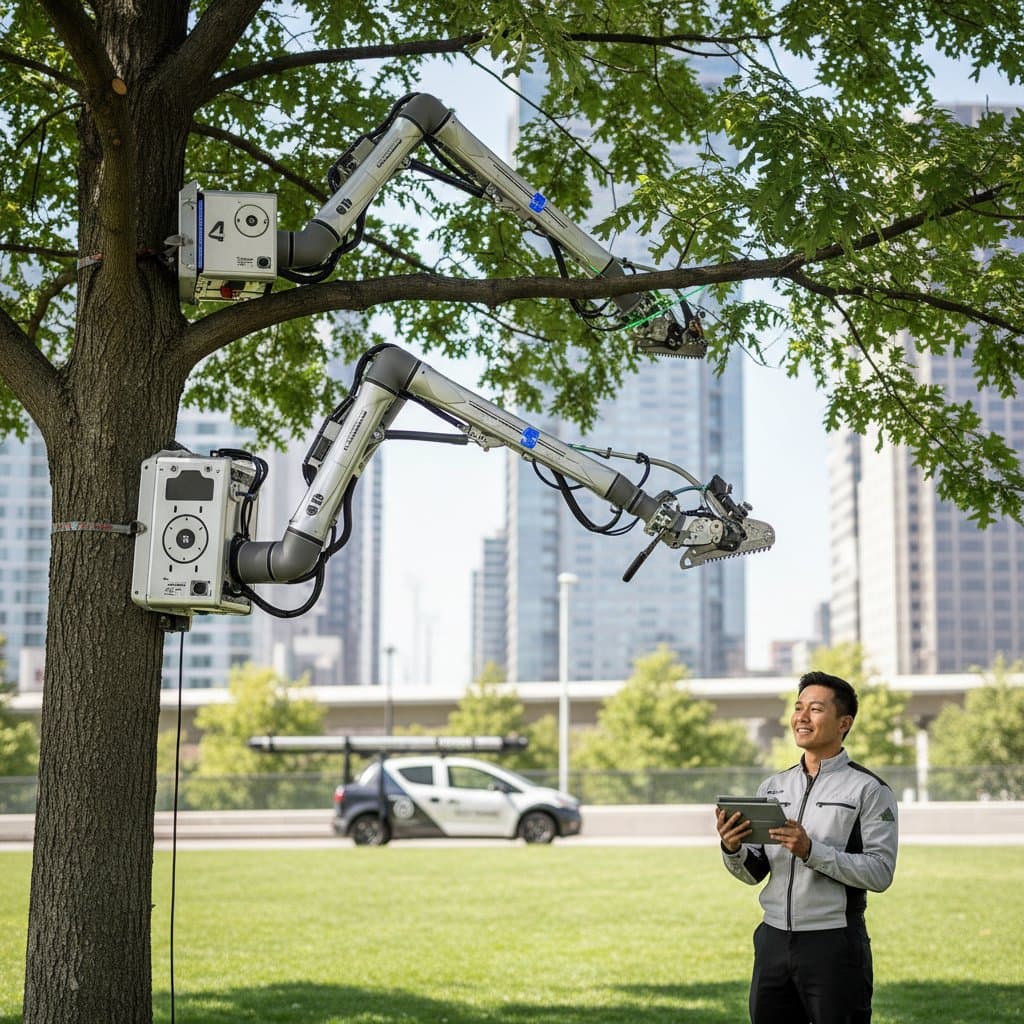
Tree maintenance enters a transformative phase with the introduction of robotic climbers. These devices reshape the approaches arborists employ for pruning, trimming, and inspecting trees. They deliver accelerated outcomes, elevated safety measures, and diminished long-term expenses for residential owners and commercial managers alike. Projections indicate that robotic climbers will reduce pruning durations by up to 60 percent, yielding substantial financial benefits and bolstering safety throughout the arboriculture sector.
This resource outlines the essentials of robotic tree pruning, associated expenses, pricing determinants, and the rationale behind automation's influence on professional tree management.
What Is Robotic Tree Pruning?
Robotic tree pruning employs automated climbing devices to sever or eliminate branches. These units secure themselves to the trunk and ascend vertically, executing exact incisions via integrated saws or shears. Operators control them remotely or program them to adhere to predefined pruning protocols. The objective remains to replicate the proficiency of an expert arborist, while minimizing duration, hazards, and physical exertion.
Average Costs for Robotic Tree Pruning
Costs for robotic tree pruning typically span from $250 to $1,200 per tree, influenced by factors such as tree dimensions, health status, and site specifics. During initial adoption, residential clients may encounter marginally higher fees, though widespread availability promises price reductions in the near future.
| Tree Size | Average Cost Range |
|---|---|
| Small Tree (under 30 ft) | $250 – $400 |
| Medium Tree (30-60 ft) | $400 – $800 |
| Large Tree (over 60 ft) | $800 – $1,200 |
These figures encompass the robotic procedure and subsequent debris clearance. Supplementary tasks, including canopy reduction, waste transport, or stump removal, elevate the total expenditure.
Factors Influencing Robotic Tree Pruning Costs
Tree Size
Greater tree dimensions necessitate extended operation periods, intricate navigation routes, and increased energy consumption. Robotic units might require repeated ascents or custom fittings to manage expansive crowns, thereby elevating expenses.
Tree Condition
Vigorous trees facilitate straightforward pruning, as limbs react consistently to severance. Compromised or deteriorating timber hampers robotic efficiency, compelling sensors to adapt to yielding textures and uneven contours. Such adjustments prolong the task and increment charges.
Tree Species
Varieties featuring thick foliage, such as oak or maple, necessitate heightened accuracy and additional severance cycles. Conversely, sparser types like birch or pine permit swifter processing. Bark texture further impacts adhesion during ascent, affecting preparation duration and overall pricing.
Location and Accessibility
Proximity to structures, barriers, or electrical lines demands meticulous robotic configuration to prevent harm. Restricted entry may involve extra securing mechanisms, hoisting apparatus, or compact models, all of which contribute to higher fees.
Time of Year
Seasonal growth patterns affect rates. Robotic pruning proves optimal in quiescent periods with sparse foliage. In vigorous expansion phases or dense-leaf seasons, reduced visibility burdens navigation systems, extending service intervals and costs.
Urgency
Immediate interventions, like addressing storm-induced branch failures, incur premiums for rapid robotic deployment. Providers frequently apply surcharges for expedited or off-schedule engagements.
The Robotic Pruning Procedure
Individuals unfamiliar with this innovation often seek clarity on the arrival and execution by a robotic team. The sequence emphasizes structure, security, and rapidity.
-
Initial Evaluation and Estimation
An accredited arborist or specialist appraises the tree's scale, variety, and vitality. This analysis informs a computerized pruning blueprint and financial projection. -
Site Readiness
Potential impediments, such as outdoor furnishings or automobiles, receive relocation. The ascent trajectory clears of obstructions, with protective perimeters established around adjacent areas. -
Device Installation and Adjustment
Clamps or rollers affix the robot to the base. Integrated sensors chart the arbor's framework, documenting limb inclinations and thicknesses for targeted interventions. -
Execution of Automated Pruning
The unit climbs, excising limbs per the outlined scheme. Certain models incorporate visual feeds and artificial intelligence to pinpoint necrotic or afflicted sections dynamically. Remote oversight allows for operator adjustments as required. -
Debris Management and Verification
Post-operation, teams gather severed materials. The arborist examines the tree's equilibrium and condition, verifying that incisions foster sustained development.
DIY Approaches Versus Professional Robotic Services
Robotic pruning appears straightforward, yet it entails sophisticated equipment and inherent dangers.
Scenarios for DIY Efforts
- Minor adjustments on diminutive trees below 15 feet in height.
- Extraction of petite, accessible lower limbs without elevation or robust implements.
- Fundamental contouring of shrubs using portable powered cutters.
Scenarios Requiring Professional Intervention
- Arbors exceeding 20 feet or positioned near utility lines.
- Specimens exhibiting instability, hollows, or pathologies.
- Instances demanding exact severances to safeguard arbor vitality.
- Sites necessitating policy safeguards and oversight by qualified arborists.
Engaging a specialist robotic service affords indemnity, sophisticated tools, and personnel versed in botanical principles and mechanical functions.
Guidelines for Selecting a Robotic Tree Pruning Provider
Choosing an appropriate provider guarantees security, productivity, and equitable valuation. Consider these strategies for informed selection.
-
Verify Qualifications and Coverage
Confirm employment of certified arborists alongside comprehensive liability and employee protection policies. Such measures shield against incidents or asset impairments. -
Inquire on Technology Specifications
Robotic variants differ in capability. Probe the models utilized, embedded safeguards, and extent of human monitoring throughout operations. -
Solicit Comparative Proposals
Obtain no fewer than three assessments. Scrutinize inclusions like waste disposal or base eradication. Discounted bids may omit vital components. -
Examine Portfolios and Testimonials
Solicit visual documentation of prior robotic engagements. Digital feedback discloses reliability in performance delivery. -
Secure Written Specifications
The agreement must delineate pruning extent, clearance duties, and final pricing. Documented terms avert subsequent disputes.
Frequently Asked Questions
What Is the Cost to Prune a Large Oak Tree Using Robotics?
Robotic pruning for a substantial oak generally falls between $800 and $1,200. The species' robust foliage extends severance duration and power demands, surpassing expenses for less demanding varieties.
Does Robotic Pruning Prove More Economical Than Manual Methods?
Initial robotic sessions may command higher fees, yet cumulative savings emerge from abbreviated labor and task spans. Mainstream integration anticipates parity or superiority over conventional pricing.
How Do Robotic Climbers Navigate Tree Ascents?
These devices employ adaptive gripping mechanisms or clamps suited to trunk girth. Navigation depends on sensory arrays, imaging devices, and stabilization instruments to sustain equilibrium and adherence during vertical and lateral progression.
Do Robotic Systems Pose Risks to Tree Integrity?
Affirmative safeguards ensure targeted incisions at optimal orientations, encouraging robust regeneration. They curtail cortical injury and mitigate excessive removal relative to hand-operated techniques.
Can Robots Facilitate Complete Tree Removal?
Advanced configurations support partial dismantling, though comprehensive extraction demands manual oversight for major sectional divisions. Robots excel in limb management, canopy refinement, and upkeep.
Which Season Optimizes Robotic Pruning?
Quiescent intervals, absent active expansion, suit best. Minimal foliage enhances sensory clarity and accelerates incision healing.
Does Homeowners Insurance Encompass Robotic Pruning?
Standard policies exclude regular upkeep such as pruning. Storm-related hazard mitigation via robotics may qualify for partial recovery; consult your insurer prior to arrangements.
The Impact of Robotic Pruning on Arboriculture
Automation transcends mere innovation in tree services. It resolves persistent obstacles for practitioners and property stewards.
- Enhanced Safety: Ground-based operation spares personnel from elevation perils and tool-related exposures.
- Accelerated Execution: Uninterrupted functionality bypasses human exhaustion, achieving up to 60 percent reductions in pruning intervals.
- Superior Accuracy: Vision-directed instruments pinpoint severance locations, preserving structural integrity and advancing future vitality.
- Economic Advantages: Streamlined processes curtail personnel needs and on-site durations, progressively diminishing service tariffs.
- Ecological Gains: Electrically powered operations supplant fuel dependency, lessening atmospheric pollutants and auditory disturbances.
Steps to Implement Robotic Tree Care
For properties with elevated or inaccessible arbors, robotic pruning offers secure and streamlined alternatives. Initiate contact with regional arborist firms to explore robotic availability. Evaluate proposals, scrutinize technical attributes, and validate protective measures.
Advancing automation positions robotic climbers as conventional tools in expert arboriculture. Early integration enables time conservation, hazard minimization, and precise landscape preservation. From solitary yard specimens to expansive grounds, these mechanisms ensure refined severances, protected workflows, and dependable outcomes per engagement.