
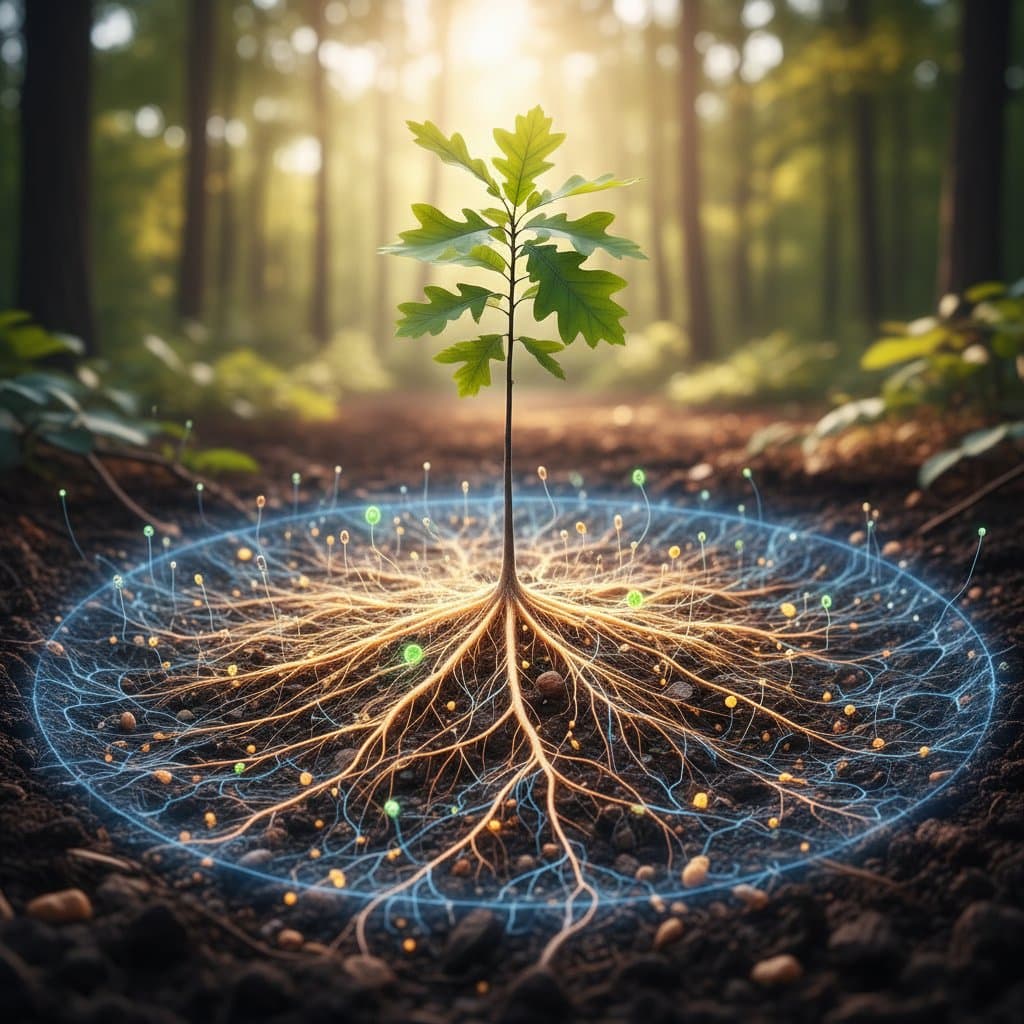
Why New Trees Need Mycorrhizal Fungi to Survive
Newly planted trees often face challenges establishing roots in unfamiliar soil. A mycorrhizal boost dramatically improves survival rates by enhancing root development and nutrient absorption. This natural partnership between tree roots and beneficial fungi enables young trees to adapt quickly, grow more rapidly, and resist environmental stresses more effectively than untreated trees.
Transplanting exposes roots to new conditions, including reduced moisture and scarce nutrients. Introducing mycorrhizal fungi at planting time forms a vital connection between roots and the soil ecosystem. This link improves water uptake, provides access to essential minerals, and builds defenses against drought, disease, and transplant shock. Homeowners who grasp the role of mycorrhizae make a wise investment in sustained landscape vitality.
What Are Mycorrhizal Fungi?
Mycorrhizal fungi consist of microscopic organisms that establish a mutualistic bond with tree roots. The term mycorrhiza translates to fungus root. These fungi colonize root systems and extend thread-like structures known as hyphae into the adjacent soil. This network functions as an underground web, amplifying the root's exploratory capacity well beyond its inherent boundaries.
Two primary types of mycorrhizal fungi aid trees:
- Ectomycorrhizal fungi create a sheath encircling the exterior of roots. They commonly partner with oaks, pines, birches, and beeches.
- Endomycorrhizal fungi, or arbuscular mycorrhizae, enter root cells directly. They support a broad array of trees, shrubs, and grasses.
Both types facilitate superior absorption of water and nutrients by trees. In exchange, the fungi obtain carbohydrates from the tree via photosynthesis. This reciprocal arrangement fortifies the overall soil microbiome.
Why New Trees Struggle Without Mycorrhizae
Trees in natural forests benefit from an established fungal network in the soil. Residential and urban settings frequently lack this network. Factors such as construction, soil grading, chemical fertilizers, and compaction eradicate native fungal populations. Consequently, newly planted trees encounter multiple obstacles:
- Limited root reach: Absent fungal extensions, roots fail to locate sufficient water and minerals.
- Nutrient deficiency: Soils depleted of organic matter exhibit reduced microbial diversity, hindering nutrient cycling.
- Transplant shock: The process of digging and replanting damages fine roots essential for water absorption, heightening dehydration risks.
- Poor soil structure: Compacted ground impedes oxygen circulation, complicating root respiration and expansion.
- Weakened resistance: Trees lacking microbial allies prove more vulnerable to diseases, pests, and stresses.
Incorporating a mycorrhizal inoculant during planting reinstates this essential biological link. It revives the dynamic network absent in contemporary soils.
How Mycorrhizal Boosts Work
A mycorrhizal boost delivers concentrated fungal spores to the planting area. These spores activate and bond with the tree's roots, initiating a symbiotic alliance. Once rooted, the fungi generate a broad hyphal web that stretches several feet past the root ball.
This web serves as an auxiliary root system. It extracts nutrients such as phosphorus, nitrogen, and micronutrients inaccessible to roots alone. The fungi also reserve and distribute water amid dry spells, maintaining stable hydration in the root zone.
Gradually, this biological framework enhances soil aggregation, forming durable particles. Such improvements yield greater aeration, superior drainage, and a nurturing habitat for additional beneficial microbes. The outcome includes accelerated tree growth, firmer establishment, and heightened stress tolerance.
Key Benefits of Mycorrhizal Inoculation for New Trees
Mycorrhizal inoculation yields prompt and enduring advantages. Homeowners observe these primary gains:
- Faster root establishment: Mycorrhizae expedite recovery from transplant shock through swift root system reconstruction.
- Improved nutrient uptake: Fungal webs retrieve phosphorus, potassium, calcium, and trace elements bound within soil particles.
- Enhanced drought tolerance: Mycorrhizal associations enable deeper penetration and efficient water retention, minimizing irrigation frequency.
- Stronger disease resistance: Fungi form a defensive layer around roots, impeding pathogen entry.
- Increased growth rate: Partnered trees exhibit robust upper growth and expanded canopies.
- Better soil health: Fungal operations foster beneficial bacteria and earthworms, elevating soil integrity and productivity.
These effects accumulate, fostering stability for the tree and adjacent plants.
When and How to Apply Mycorrhizal Boosts
Apply mycorrhizal fungi during planting to maximize contact with root surfaces and prompt colonization. Methods depend on product form and scenario.
- Granular or powdered inoculants: Blend into backfill soil or apply directly to the root ball prior to planting.
- Liquid inoculants: Dilute in water and saturate the planting hole or root area post-positioning.
- Root dip preparations: Form a slurry and immerse bare roots before installation.
For established trees, employ soil injection or root-zone drenching to introduce fungi, anticipating extended colonization periods. Adhere to product guidelines on dosage and positioning; excess application yields no added value.
Understanding the Soil Microbiome Connection
The soil microbiome encompasses microorganisms like bacteria, fungi, protozoa, and nematodes residing in soil. A equilibrated microbiome promotes nutrient cycling and plant vitality. Mycorrhizal fungi rank among its pivotal elements.
Soil operates as an subterranean economy where organisms exchange resources. Bacteria break down organic materials to liberate nutrients. Fungi convey these to plant roots. Roots supply sugars that sustain the network. Disruptions diminish soil productivity.
A mycorrhizal boost reinstates equilibrium by enhancing microbial variety. It transforms inert or compacted soil into a vibrant system that sustains trees over decades.
DIY vs. Hiring a Professional
Homeowners manage mycorrhizal applications effectively for modest projects. Professionals, however, provide expertise in soil testing, fungal matching, and precise dosing. They integrate treatments with mulching, irrigation, and pruning for comprehensive care.
DIY suits container or small-scale plantings, emphasizing timing and moisture retention. Fungi require live root contact and damp conditions for attachment. Refrain from synthetic fertilizers or fungicides post-treatment to safeguard development.
Professionals excel with large specimens, valuable trees, or adverse soils. Their involvement curtails watering demands, mortality, and promotes enduring vigor, justifying the expense.
Choosing the Right Mycorrhizal Product
Mycorrhizal products differ in quality and composition. Select those specifying fungal species over vague descriptions. A blend of ecto- and endomycorrhizal types accommodates diverse trees.
Evaluate these factors:
- Tree type: Oaks and pines favor ectomycorrhizae; maples and fruit trees align with endomycorrhizae.
- Soil condition: Disturbed or sandy soils demand elevated rates for colonization.
- Application format: Opt for granular, liquid, or powder based on planting approach.
- Storage and freshness: Viable spores deteriorate; utilize within expiration dates.
Seek advice from arborists or nursery staff to align products with trees and soils.
Common Mistakes to Avoid
Homeowners occasionally undermine treatments through oversights. Sidestep these issues:
- Applying chemical fertilizers post-inoculation: Elevated phosphorus hampers fungal proliferation.
- Permitting soil dryness: Spores necessitate moisture for germination and adhesion.
- Planting excessively deep: Reduced oxygen slows colonization.
- Neglecting soil vitality: Mycorrhizae flourish in organic-rich, uncompacted earth.
- Combining with fungicides: These eradicate beneficial fungi alongside pathogens.
Proper techniques ensure rapid establishment and maximal advantages.
Frequently Asked Questions
How long does it take for mycorrhizal fungi to colonize new tree roots?
Colonization commences in weeks under optimal conditions. Factors like moisture, temperature, and soil quality influence pace. The network expands throughout the tree's lifespan once initiated.
Can I apply mycorrhizal fungi to older trees?
Yes, integration with mature roots requires more time. Inject or drench near the drip line to target active fine roots. Maintain consistent moisture for efficacy.
Are mycorrhizal inoculants safe for pets and wildlife?
Commercial products derive from natural soil organisms and pose low risks to pets, humans, and wildlife. Review labels for precise safety information.
Do mycorrhizal fungi replace the need for fertilizer?
No, they enhance uptake alongside fertilization. In fertile soils, they lessen chemical reliance, yet nutrient additions remain necessary in deficient areas.
Can I use mycorrhizal fungi with container-grown trees?
Yes, these trees benefit greatly from inoculation due to limited natural exposure. Incorporate into potting mix or drench during landscape transfer.
Will mycorrhizal fungi survive winter or dry periods?
Established networks endure seasonal changes, including cold and aridity, by adapting to host trees. Dormancy occurs during extremes, resuming activity with favorable conditions.
How can I tell if my tree has a healthy mycorrhizal network?
Signs include vigorous growth, lush leaves, and drought resilience. Soil inspection may reveal white hyphal threads near roots, indicating active colonization.
Sustaining Tree Vitality Over Time
Incorporating mycorrhizal fungi establishes a robust base for tree longevity. It nurtures a harmonious soil ecosystem that bolsters roots, accelerates development, and heightens adaptability.
Prepare your new trees for enduring success. Consult local tree specialists or nursery professionals to explore mycorrhizal options tailored to your landscape.