
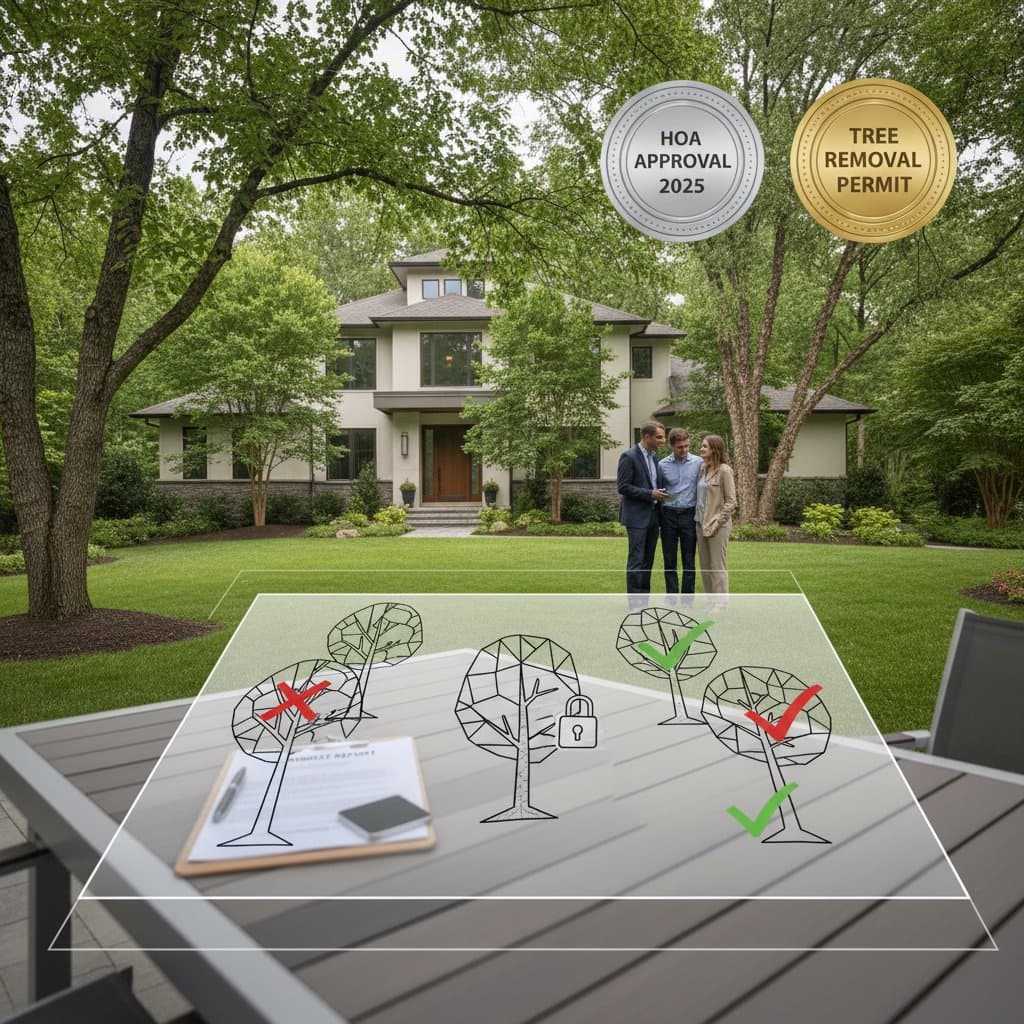
HOA Controls More Than You Think About Your Trees
Owning a home in a community governed by a Homeowners Association (HOA) offers benefits such as well-maintained common areas and consistent neighborhood aesthetics. However, HOA rules regarding trees on your property can introduce unexpected complexities. Homeowners often discover that their HOA exerts significant influence over tree planting, pruning, and removal, which can lead to fines, disputes, or legal issues if not handled properly.
This guide details HOA tree regulations, their impact on property owners, and strategies for effective navigation. It covers approval requirements for trimming or removing trees, homeowner rights, and collaboration with your HOA to sustain a safe and attractive landscape.
What Are HOA Tree Rules?
HOA tree rules consist of community guidelines that regulate the planting, maintenance, and removal of trees in the neighborhood. These regulations appear in the HOA's governing documents, particularly the Covenants, Conditions, and Restrictions (CC&Rs). The purpose is to promote uniformity, safeguard property values, and enhance safety in shared areas.
These rules generally apply to both private lots and common spaces. Consequently, even trees located entirely on your property may require HOA approval prior to any trimming or removal.
Average Tree Removal Costs for HOA-Regulated Properties
In an HOA-governed community, tree removal costs typically fall between $400 and $2,000, influenced by the tree's size, location, and condition. The national average stands at approximately $850 for a medium-sized tree. HOAs frequently mandate professional services and proof of insurance, which may elevate expenses slightly.
| Tree Size | Average Cost Range |
|---|---|
| Small Tree (under 30 ft) | $150 - $500 |
| Medium Tree (30 - 60 ft) | $500 - $1,200 |
| Large Tree (over 60 ft) | $1,200 - $2,500 |
| Stump Grinding (per stump) | $100 - $400 |
Costs fluctuate based on accessibility, proximity to structures, and HOA demands for a certified arborist report prior to removal.
Factors Affecting the Cost and Approval Process
Multiple elements shape the cost and timeline for tree work under HOA supervision. Grasping these factors enables better planning and minimizes delays.
Tree Size
Larger trees demand greater labor, advanced equipment, and enhanced safety measures, thereby raising costs. HOAs commonly subject large trees to extra scrutiny, as their removal could alter the neighborhood's tree canopy or visual appeal.
Tree Condition
Trees afflicted by disease or decline often necessitate prompt removal to avert damage or hazards from falling branches. HOAs accelerate approvals for such hazardous trees, particularly when a certified arborist substantiates the danger.
Tree Species
Certain communities safeguard particular species, like oaks or palms, for their ecological or historical value. Removing these typically involves securing special permits and obtaining HOA board consent.
Location and Accessibility
Trees positioned near sidewalks, fences, or property boundaries may require supplementary documentation or neighbor approvals from the HOA. Restricted access can inflate removal expenses, as crews might need to transport equipment manually.
Local Ordinances
Urban forestry laws in many cities intersect with HOA rules. Securing both municipal and HOA approvals becomes necessary for tree removal, especially for mature specimens near public areas.
Urgency
Removals prompted by emergencies, such as storm damage, incur higher fees but receive quicker approvals. Document any damage with photographs and inform your HOA promptly to prevent future conflicts.
The HOA Tree Management Process
Familiarity with the standard HOA procedure for tree requests reduces time and aggravation. Although processes differ among associations, most adhere to these steps:
-
Submit a Request for Approval
File a formal tree work application with the HOA management or board. Specify the tree species, exact location, and justification for trimming or removal. -
Arborist Evaluation
The HOA might insist on an assessment by a certified arborist to evaluate health or risks. You could supply the report, or the HOA may commission it independently. -
Board Review and Decision
The board or architectural committee examines the request against community standards and local laws. Outcomes include approval, denial, or requests for additional details. -
Permit and Compliance Check
Where required by law, obtain a municipal tree removal permit, either through you or the HOA. Verification of this approval precedes any on-site work. -
Professional Tree Work
Engage a licensed, insured tree service provider. HOAs typically verify insurance coverage and contractor licensing before permitting the job. -
**Cleanup and Replanting
Post-removal, replace the tree with a specified species or size to preserve the community's landscaping equilibrium.
DIY Tree Work vs. Hiring a Professional Under HOA Rules
While DIY tree care appeals to many, HOA involvement demands caution regarding permissible actions.
When DIY Is Allowed
Homeowners may undertake basic tasks such as:
- Pruning small branches less than 2 inches in diameter
- Applying mulch or fertilizer to trees on their lot
- Watering trees and checking for pests or diseases
Consult HOA guidelines first, as even minor pruning might necessitate prior notification.
When You Must Hire a Professional
Opt for experts in these scenarios:
- Trees that are large, tall, or adjacent to buildings or utility lines
- Projects entailing full removal or substantial pruning
- Situations requiring arborist certification
- Cases involving permits or insurance verification
Professionals guarantee adherence to rules, prioritize safety, and shield your property. HOAs impose fines for unapproved or hazardous DIY efforts.
How to Work Effectively with Your HOA
Although HOA tree rules can challenge, structured approaches streamline interactions.
1. Review Your Governing Documents
Examine the CC&Rs and landscaping policies thoroughly. These specify permissible actions, approval needs, and violation consequences.
2. Communicate Early and Often
Alert your HOA at the outset of any planned tree work. Supply detailed descriptions and photographs to clarify intentions and prevent miscommunications.
3. Keep Records
Retain all correspondence, approvals, and invoices from contractors. Such records prove essential in resolving potential disputes.
4. Hire Qualified Contractors
Select tree services with valid licenses, insurance, and relevant experience. HOAs often demand evidence of liability and workers' compensation coverage.
5. Follow Up After Work Is Completed
Inform the HOA upon job completion, including before-and-after images. This step affirms compliance and fosters board goodwill.
Frequently Asked Questions
How much does it cost to remove a large tree in an HOA community?
For a tree exceeding 60 feet, expect costs from $1,200 to $2,500. Variables include the tree's health, site access, and stipulations for permits or replacement planting by the HOA or municipality.
Is it cheaper to trim a tree or remove it?
Trimming proves more economical, averaging $200 to $600, versus over $1,000 for removal. Consistent trimming supports tree vitality and may forestall the need for extraction.
Can an HOA force me to remove a tree?
Yes, if the tree endangers safety, harms communal areas, or breaches landscaping standards. The HOA provides written notice and a compliance deadline.
What if my neighbor’s tree is damaging my property?
Notify your neighbor and HOA in writing initially. The HOA can intervene if regulations on height or boundaries apply. Escalate to legal or arborist advice if unresolved.
Does homeowners insurance cover tree removal?
Coverage applies if a tree falls from a covered event like wind or lightning and impacts insured structures. It excludes removals of healthy or declining trees absent damage.
Can I plant new trees without HOA approval?
Most HOAs mandate pre-approval for plantings to ensure aesthetic harmony and avoid issues with roots or canopies. Verify rules to evade fines or mandates to replant.
What happens if I remove a tree without HOA approval?
Penalties may include fines, enforced replanting, or litigation. Some HOAs charge equivalents to mature tree replacement costs, potentially thousands of dollars.
Do HOAs have to follow city tree ordinances?
Yes, HOAs adhere to municipal or county protections. HOA approval alone may not suffice; city permits remain required for protected or heritage trees.
Safeguarding Your Landscape Through Compliance
HOA tree regulations reconcile community standards with personal property rights. Adhering to these guidelines upholds safety, enhances curb appeal, and bolsters long-term property values.
Stay proactive by reviewing documents, securing approvals, and partnering with knowledgeable professionals. This approach equips you to manage hazards like unstable branches or encroaching roots effectively, ensuring your property remains secure, regulation-compliant, and visually appealing over time.