
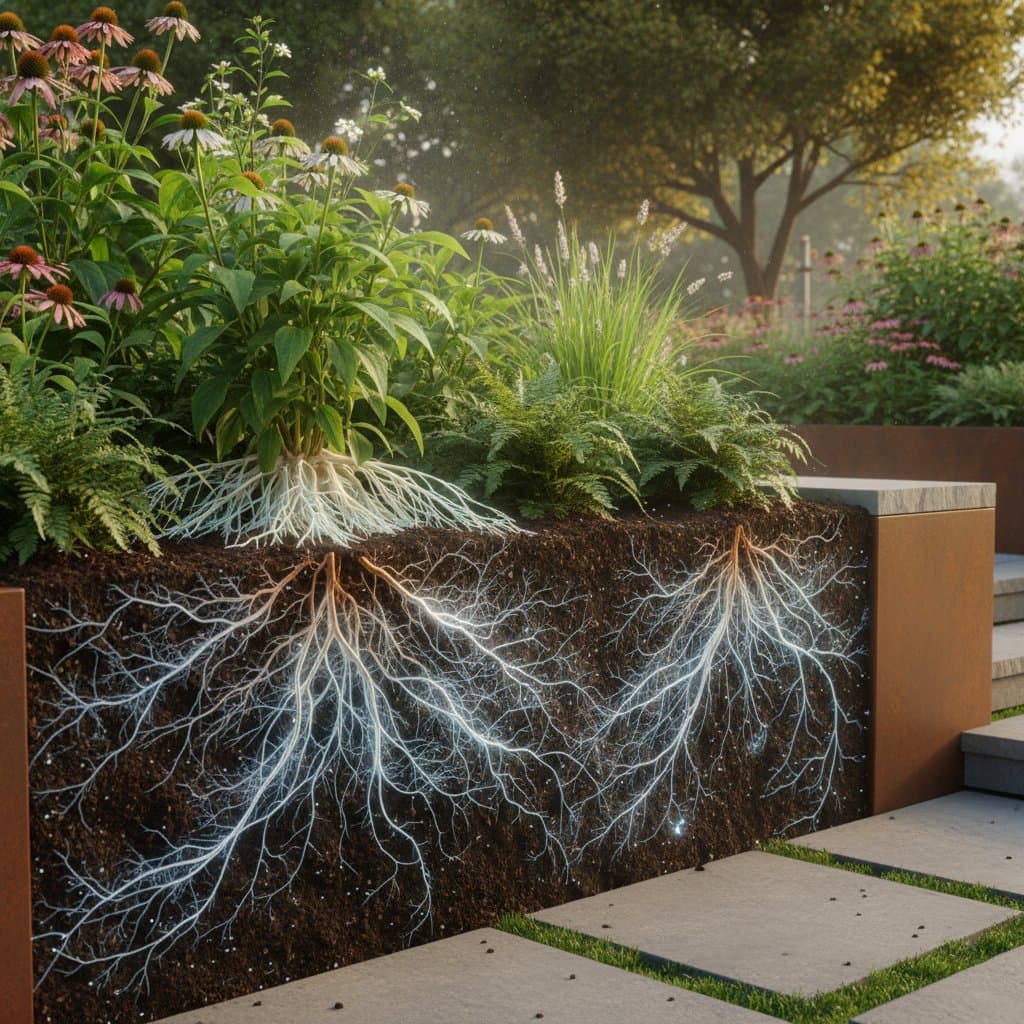
Why Mycelium Will Boost Roots in 2026 Landscapes
Healthy soil forms the foundation of every thriving landscape. Many homeowners overlook the living networks beneath the surface that sustain this vitality. Mycelium, the underground fungal network, connects plant roots and facilitates nutrient transfer, serving as a powerful natural ally in soil health.
As sustainable landscaping practices gain prominence, mycelium emerges as a transformative element in growing, maintaining, and rejuvenating outdoor spaces. This guide details mycelium's nature, its role in strengthening root systems, and its potential to revolutionize soil health and landscape design. Readers will discover how fungal networks enhance water retention, increase plant resilience, and foster healthier gardens without reliance on chemicals or frequent irrigation.
What is Mycelium?
Mycelium consists of thread-like fungal structures that inhabit soil, wood, and organic matter. These structures form extensive underground networks that link plant roots in a symbiotic association called mycorrhizae. Through this partnership, plants exchange nutrients, water, and chemical signals.
Mycelium functions as the soil's communication system, akin to an underground internet. Fine fungal threads interconnect plants, enabling efficient nutrient sharing and signaling. Such networks promote root development, improve soil structure, and elevate overall landscape health.
Average Costs to Integrate Mycelium into Landscaping
Costs for mycelium-based soil treatments vary by property size, existing soil conditions, and service scope, such as spore inoculation or comprehensive soil restoration.
| Factor | Average Cost Range |
|---|---|
| Small Garden (under 1,000 sq ft) | $150 - $300 |
| Medium Yard (1,000 to 5,000 sq ft) | $300 - $800 |
| Large Property or Estate | $800 - $2,000+ |
| Mycorrhizal Root Treatment (per tree or shrub) | $20 - $60 |
| Soil Inoculant for Lawns (per application) | $50 - $150 |
Product types and application methods influence prices. Homeowners can opt for DIY kits in smaller areas, whereas professionals handle extensive or intricate landscapes.
Factors Affecting the Cost and Effectiveness of Mycelium Landscaping
Soil Composition
Sandy or clay-heavy soils often need supplemental organic matter to nurture fungal growth. Mycelium flourishes in well-aerated soil enriched with organic nutrients. Addressing poor structure through preparation can raise initial expenses.
Existing Plant Health
Robust roots establish firmer mycorrhizal bonds. Diseased or stressed trees and shrubs may necessitate prior soil conditioning or nutrient adjustments to support successful fungal integration.
Moisture and Drainage
Fungal networks develop optimally in moist, well-drained conditions. Dry or saturated zones might demand irrigation modifications or drainage enhancements before inoculation.
Local Climate
Humid, warm areas naturally foster mycelium expansion, whereas dry regions could require repeated applications. Environmental factors dictate the pace of network establishment.
Application Method
Homeowners might sprinkle granular inoculants on the surface, but professionals often inject spores into deeper root zones. Though more expensive, deeper methods yield quicker, enduring outcomes.
The Mycelium Integration Process
Professionals integrate mycelium through structured steps to guarantee effective introduction and ongoing viability.
-
Soil Assessment and Testing
Experts analyze organic content, pH, and microbial activity to select compatible fungal species for the site. -
Site Preparation
Compacted or polluted soil receives aeration and amendments like compost or biochar to prepare a welcoming habitat for fungi. -
Inoculation
Spores integrate directly near roots or via irrigation. Blending into mulch or compost ensures uniform distribution. -
Root Integration
Fungi attach to roots, broadening access to resources and enhancing absorption. Expansion occurs over weeks as the network grows. -
Monitoring and Maintenance
Follow-up evaluations confirm network activity. Periodic organic additions sustain benefits over time.
DIY vs. Hiring a Professional Mycelium Service
When to DIY
- Target small gardens or potted plants.
- Confirm soil already contains ample organic matter.
- Source quality mycorrhizal inoculants and adhere to application guidelines.
DIY approaches suit modest projects, demanding steady moisture and time for growth.
When to Hire a Pro
- Manage large trees, thick beds, or hardened soil.
- Require testing and tailored fungal selection.
- Seek assured outcomes with microbiology oversight.
Experts deploy advanced tools and verified spores for profound penetration, yielding durable networks with low upkeep.
How to Hire a Mycelium or Soil Health Specialist
-
Verify Professional Credentials
Seek certified arborists, soil scientists, or landscapers versed in fungal biology and regenerative practices. -
Ask for Soil Testing
Reputable providers start with analysis to choose suitable fungal strains. -
Compare Multiple Estimates
Obtain three quotes, reviewing inclusions like preparation, application, and monitoring. -
Review References and Results
Request testimonials or project images demonstrating fungal enhancements. -
Confirm Maintenance Plans
Ensure advice on irrigation and organic support for evolving fungal systems.
Frequently Asked Questions (FAQs)
What makes mycelium so beneficial for plant roots?
Mycelium adheres to roots, extending their range to inaccessible areas. This boosts water and nutrient uptake while stabilizing soil. Enzymes from the fungi liberate bound nutrients in organic debris for plant use.
Can mycelium replace fertilizer?
Mycelium supplements rather than fully substitutes fertilizers, minimizing synthetic needs. Established networks recycle organics and channel nutrients to roots, building a self-regulating ecosystem.
How long does it take for mycelium to colonize soil?
Timeline depends on soil quality and fungi type. In fertile, organic soils, growth improvements emerge in weeks. Challenging soils may extend full integration to months.
Does mycelium work for all plant types?
Trees, shrubs, and perennials generally thrive with mycorrhizae. Grasses and vegetables vary by species; specialists pair strains to specific plants.
Is it safe to add mycelium to an existing lawn?
Treatments pose no risk to turf or pets, fortifying roots against drought and refining soil. Apply granules via spreaders or compost blends.
How does mycelium help with erosion control?
Networks aggregate soil particles, curbing runoff and bolstering slopes or water-adjacent areas. This stabilization pairs with root reinforcement.
Will mycelium survive through seasonal changes?
Established mycelium endures by dormancy in harsh conditions, reactivating with favorable moisture and temperature.
Can I mix mycelium with mulch or compost?
Integration with organics accelerates spore dispersal as fungi utilize decomposition for proliferation.
How does mycelium compare to chemical soil enhancers?
Mycelium fosters enduring ecosystems versus fleeting chemical boosts, enhancing structure, diversity, and vitality sustainably.
What is the connection between mycelium and carbon storage?
Fungi sequester carbon from decay into stable soil forms, aiding plant health and environmental carbon retention.
Establishing Enduring Soil Vitality Through Fungal Integration
Mycelium adoption signals a move to biologically driven landscapes that minimize chemical use. Homeowners gain drought-resistant, disease-warding yards via mycorrhizal enhancement.
These networks link plants and soil in symbiotic efficiency, amplifying biodiversity and aesthetic appeal. Implementation, whether self-directed or expert-led, yields robust roots, streamlined care, and ecosystems in natural balance.