
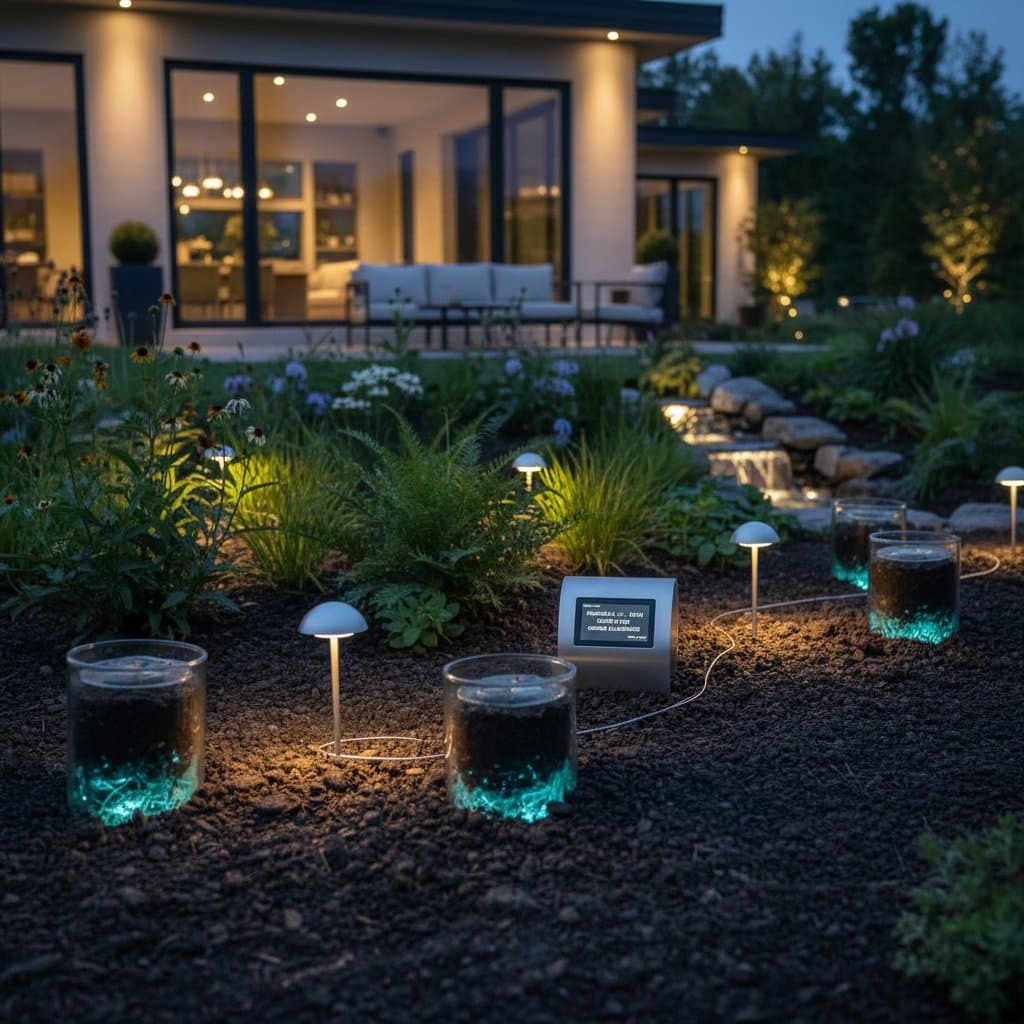
Harnessing Garden Microbes: Soil Batteries for Sustainable Outdoor Power
Homeowners and landscape designers seek innovative methods to energize outdoor areas with minimal environmental impact. Conventional lighting setups depend on extensive wiring, grid electricity, or prominent solar arrays that increase expenses and disrupt aesthetics. Soil battery technology offers a novel alternative by leveraging the inherent electrochemical processes in soil to produce electricity. This approach revolutionizes the creation of sustainable landscapes that remain visually appealing and operationally efficient.
This article details the mechanics of soil batteries, their contributions to landscape sustainability, and practical steps for incorporation into various outdoor settings.
Understanding Soil Battery Technology
A soil battery functions as a bio-electrochemical cell that generates electricity through microbial metabolism in the soil. Microorganisms decompose organic materials, releasing electrons in the process. Electrodes embedded in the ground capture these electrons, forming a continuous low-voltage current suitable for powering items such as LED pathway lights, soil moisture sensors, or wireless irrigation controllers. Unlike traditional batteries, this system requires no external energy input or chemical replacements, relying instead on the soil's natural ecosystem.
Transforming Landscape Energy with Soil Batteries
Soil batteries shift the paradigm of power generation in landscape architecture by establishing a symbiotic relationship between technology and the environment. They eliminate dependence on non-renewable energy sources or intricate photovoltaic installations, fostering a harmonious integration of power production within natural terrains. Landscapes equipped with this technology achieve enhanced functionality while promoting biodiversity and resource conservation.
Principal Advantages
-
Environmental Harmony: The process utilizes existing microbial ecosystems, producing no emissions or waste products that harm the surroundings.
-
Minimal Upkeep: Systems operate indefinitely with routine soil nurturing, avoiding the need for battery swaps or fuel additions.
-
Aesthetic Integration: Buried components maintain the pristine appearance of gardens, lawns, and pathways without visible infrastructure.
-
Economic Efficiency: Initial investments yield long-term reductions in utility bills and maintenance labor, often recouping costs within three to five years through energy savings.
Elements Affecting Soil Battery Efficiency
Soil Characteristics
Soils abundant in organic matter, such as loamy or compost-enriched types, support robust microbial populations that yield higher electron outputs, potentially generating up to 0.5 volts per electrode pair. In contrast, clay-heavy or nutrient-poor soils benefit from additions like leaf mulch or worm castings to boost microbial density and conductivity.
Hydration Conditions
Optimal performance occurs in soils with 20 to 30 percent moisture content, where microbes remain active and electron transfer is efficient. Implement drip irrigation or mulch layers to sustain hydration during dry spells, preventing output drops of up to 50 percent in arid conditions.
Environmental Influences
Temperatures between 15 and 25 degrees Celsius accelerate microbial activity, ensuring consistent power in temperate zones. In regions with harsh winters, insulate electrode zones or pair with auxiliary solar backups to maintain functionality, as activity may decline by 70 percent below freezing.
Electrode Specifications
Select materials like graphite or titanium for their resistance to soil corrosion, which extends system life beyond a decade. Electrode surface area influences current strength; larger setups with multiple anodes and cathodes can scale output proportionally for broader applications.
Step-by-Step Installation of Soil Batteries
-
Evaluate the Site: Select areas with fertile, well-drained soil. Perform tests using pH kits and microbial assays to confirm organic levels above 5 percent and active bacterial counts.
-
Design the Configuration: Calculate required wattage based on device specifications, such as 5 watts for a string of 10 LED lights. Sketch electrode layouts, spacing them 30 to 50 centimeters apart to maximize electron flow.
-
Deploy the Components: Drive anodes and cathodes into the soil at depths of 20 to 40 centimeters, avoiding root zones. Secure connections with waterproof junctions and route low-voltage cables to target devices.
-
Verify Output: Use a multimeter to check voltage, aiming for 0.3 to 0.8 volts initially. Fine-tune by adjusting depth or adding conductive amendments if readings fall short.
-
Incorporate and Sustain: Link to powered elements like automated sprinklers or security sensors. Preserve efficacy through annual soil aeration, organic top-dressing, and moisture monitoring.
Options for Installation: DIY Versus Expert Assistance
Self-Guided Setup
For compact projects, such as illuminating a 10-meter garden path, starter kits with pre-assembled electrodes simplify the process. Participants must study basic electrochemistry and soil biology to troubleshoot issues like inconsistent output from uneven microbial distribution.
Expert-Led Implementation
Larger estates or multifaceted designs demand collaboration with certified landscapers and electrical specialists. These professionals conduct comprehensive site analyses, integrate with existing smart home systems, and comply with local regulations for buried utilities, ensuring durable and code-compliant results.
Selecting an Appropriate Soil Battery Solution
-
Assess Power Demands: Tally the total load, for instance, 2 watts per light fixture, to determine electrode quantity.
-
Verify Soil Suitability: Employ lab services for detailed profiles on nutrient density and pH balance between 6.0 and 7.5.
-
Examine Specifications: Prioritize units with documented field trials showing at least 80 percent uptime and multi-year guarantees.
-
Consider Expansion Potential: Opt for modular designs that allow additional electrodes for growing landscapes without full system overhauls.
Frequently Asked Questions on Soil Batteries
What Is the Expected Lifespan of a Soil Battery?
Under vigilant soil management, these systems endure 5 to 10 years, with microbial communities regenerating naturally to sustain output.
Are Soil Batteries Capable of Supporting Extensive Lighting Networks?
They excel in low-demand scenarios but serve effectively as hybrids with grid or solar sources for high-wattage needs, contributing 20 to 30 percent of total power.
Do Soil Batteries Pose Risks to Vegetation or Animals?
The technology operates passively within the soil profile, introducing no toxins or electromagnetic fields that affect plant health or pet safety.
Will Soil Batteries Perform Across Diverse Climates?
Adaptability varies; tropical areas yield peak efficiency, while arid or polar zones require enhancements like humidity-retaining gels for viable operation.
Advancing Your Landscape with Integrated Energy Solutions
Soil batteries empower designers and homeowners to cultivate resilient outdoor environments that harmonize innovation with nature. By embedding this technology, spaces gain reliable, green power that enhances usability and ecological value for generations.