
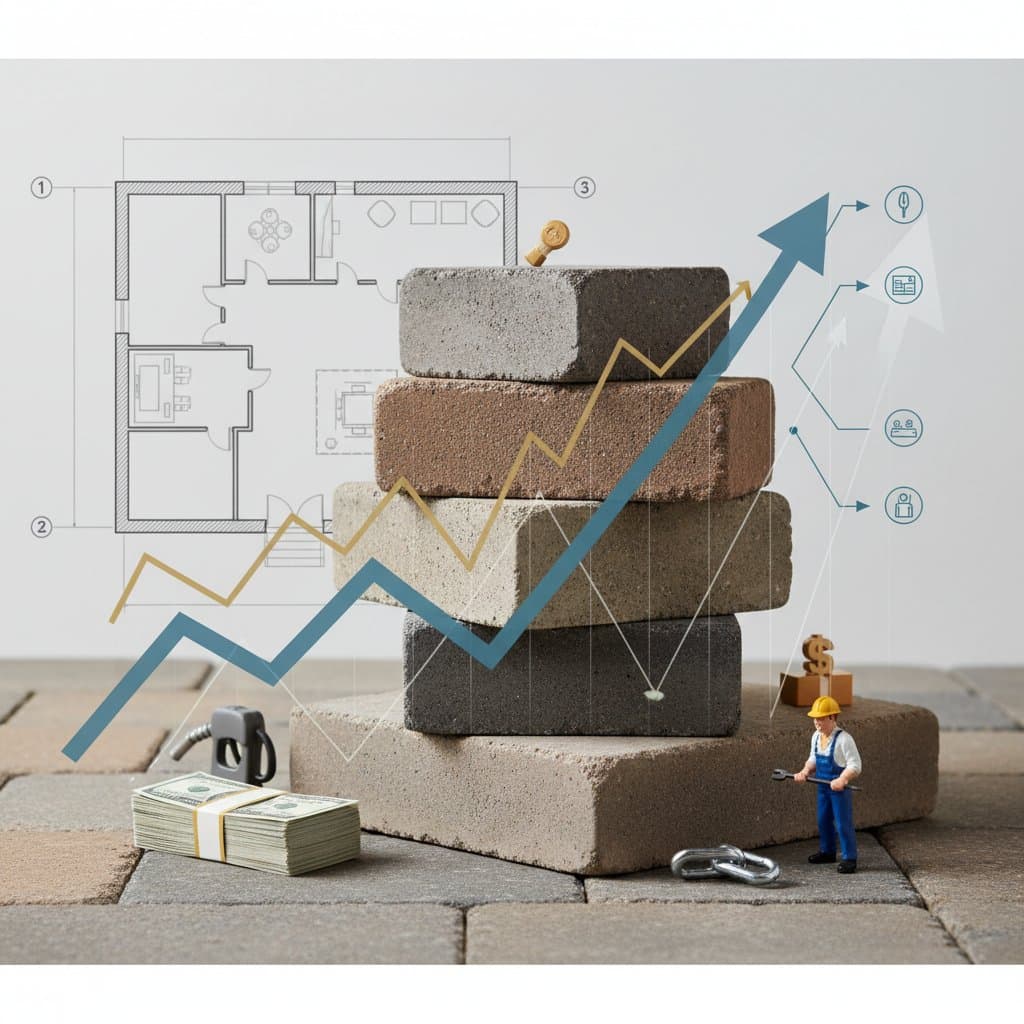
Why Paver Prices Have Increased by 35 Percent: An Explanation of Hardscape Inflation
Paver prices have risen by approximately 35 percent in recent years. This surge stems from a combination of material shortages, elevated labor expenses, and increased transportation costs. Homeowners planning patios, driveways, or walkways often encounter budgeting challenges due to these shifts.
Grasping the reasons for these price increases enables informed decisions for landscaping projects. Knowledge of cost components and influencing factors allows for confident planning and prevention of unexpected expenses.
Key Factors Driving the Rise in Paver Costs
Multiple linked elements contribute to higher paver prices. Materials, transportation, and labor each experience significant cost escalations, impacting the total amount homeowners pay.
1. Elevated Material Costs
Pavers consist of concrete, brick, or natural stone. The raw inputs for these materials have grown more expensive to produce and deliver. Cement, sand, and aggregates require higher production and transport expenditures.
Manufacturers depend on imported pigments, sealants, and additives, which face global shipping pressures. Fuel price increases elevate mining, mixing, and delivery costs across the supply chain. Concrete paver production involves energy-heavy kilns and machinery, leading to reported cost hikes. Natural stone pavers, sourced through quarrying and distant transport, prove particularly vulnerable to these fluctuations.
2. Labor Shortages and Wage Increases
Skilled labor commands higher rates. Landscaping firms struggle with shortages of workers qualified to install pavers, construct retaining walls, and complete intricate hardscapes. Contractors raise wages to secure and keep personnel, passing these expenses to clients.
Shortages extend project durations. Tasks that previously required one week may now demand ten days, raising contractor overhead through prolonged equipment rentals and crew payments. Such extensions directly affect overall project pricing.
3. Increased Transportation and Fuel Expenses
The weight of pavers makes transport from factories or quarries to sites expensive. Fuel cost rises directly inflate shipping charges. Delivery fees, previously steady, continue to climb.
Properties in rural or inaccessible areas face amplified transportation impacts. Suppliers implement fuel surcharges to counter volatile gas prices, adding to homeowner bills despite aiding supplier stability.
4. Supply Chain Disruptions and Inventory Constraints
Global supply chain challenges affect construction and landscaping goods broadly. Paver producers encounter delays in molds, dyes, or equipment parts, curtailing output and extending wait times while boosting demand for existing stock.
Tightened supply prompts distributors and retailers to adjust prices for inventory management. Homeowners seeking particular colors or patterns often pay extra for scarce options.
Variations in Paver Types and Their Pricing
Paver costs differ by material, design intricacy, and source. These distinctions shape selection based on budget and goals.
- Concrete pavers offer affordability, though cement and energy costs have lifted prices. They generally fall in the low to moderate range per square foot.
- Brick pavers incur higher costs from energy-intensive clay production and firing, plus potential import freight.
- Natural stone pavers, including granite, travertine, or bluestone, demand premium pricing. Quarrying, cutting, and shipping elevate them to two or three times the cost of concrete options.
Long-term benefits vary. Concrete pavers provide durability and simple replacement, whereas natural stone delivers superior aesthetics and lifespan. Selection hinges on design objectives, financial limits, and upkeep preferences.
The Installation Process for Pavers: Cost Breakdown
Installation accounts for a substantial share of expenses. Correct execution ensures longevity, preventing shifts or cracks over decades.
- Site Preparation: Workers clear existing surfaces, excavate soil, and establish a stable base using heavy machinery and labor.
- Base and Bedding Layers: Crushed stone and sand undergo compaction for a level foundation, incorporating material and equipment costs.
- Paver Placement: Units position precisely for patterns and alignment, relying on skilled labor for even spacing and grading.
- Cutting and Edging: Trimming accommodates edges, curves, or steps, demanding additional time and expertise.
- Joint Filling and Compaction: Sand or polymeric fillers enter joints, followed by surface compaction to secure the layout.
Every stage involves specialized tools, supplies, and professionals. Escalations in these areas naturally raise total project costs.
Weighing DIY Installation Against Professional Services
Certain homeowners explore self-installation to cut labor expenses. While this approach lowers immediate outlays, errors in execution pose risks like uneven surfaces, poor drainage, and early failures.
Professionals provide knowledge, tools, and guarantees on quality. Initial costs exceed DIY, yet benefits include enhanced durability and reduced future fixes. For elaborate layouts or expansive zones, expert involvement yields superior results and value.
Strategies to Control Paver Expenses While Preserving Quality
Effective methods exist to manage budgets without sacrificing outcomes.
- Select materials produced nearby to minimize shipping fees.
- Opt for straightforward designs with standard shapes and patterns, avoiding custom modifications.
- Time projects for off-peak seasons, when contractors propose sharper rates.
- Solicit bids from trusted hardscape specialists to evaluate costs and schedules.
- Blend elements, such as pairing concrete pavers with gravel or mulch accents, for economical elegance.
These tactics extend resources while upholding standards and attractiveness.
FAQ: Addressing Frequent Queries on Paver Price Surges
Why Have Paver Prices Escalated Rapidly?
Primary causes include elevated raw material prices, rising labor compensation, and costlier transport. Supply chain interruptions further constrain stock, intensifying price pressures.
Do Pavers Justify the Investment?
Affirmative. Pavers stand out for resilience and appeal in hardscaping. They enhance property worth over time with minimal upkeep compared to poured concrete.
What Steps Reduce Costs for a New Patio or Driveway?
Prioritize local pavers, eschew complex patterns, and secure quotes from multiple contractors. Forward planning secures optimal availability and equitable pricing.
Securing Value in Your Hardscape Project
Strategic awareness of cost drivers empowers effective budgeting. By prioritizing durable materials and reliable installation, homeowners realize lasting enhancements to their outdoor spaces. This approach safeguards investments against inflation while delivering functional beauty.