
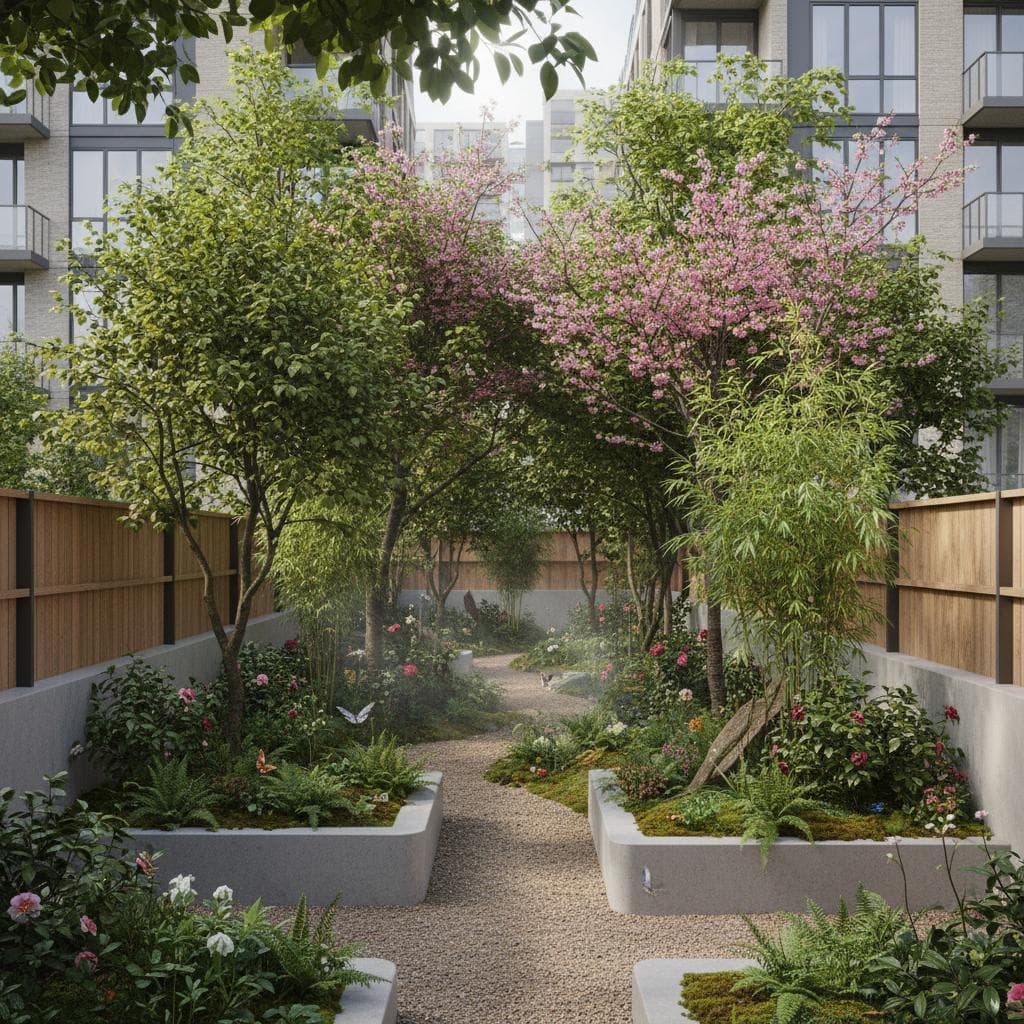
Micro-Forests: The Miyawaki Method for Urban Yards
A micro-forest based on the Miyawaki method represents a fast-growing, self-sustaining woodland established in a compact area. Homeowners can convert limited outdoor spaces into vibrant ecosystems that enhance air quality, mitigate urban heat, and draw in wildlife. These dense plantings mature up to ten times faster than traditional landscapes, positioning them as a practical option for city dwellers seeking environmental impact.
Developed by Japanese botanist Akira Miyawaki, this technique emulates the stratified structure of natural forests through the use of indigenous plants. Property owners select and plant local trees, shrubs, and groundcovers in close proximity to foster a durable green area that promotes biodiversity with little ongoing effort. This strategy delivers tangible aesthetic appeal alongside significant ecological contributions.
Understanding the Miyawaki Method
The Miyawaki method prioritizes the revival of indigenous ecosystems over decorative landscaping. Practitioners plant a diverse array of species native to their locale, organizing them into four layers: tall canopy trees, understory sub-trees, shrubs, and herbaceous groundcovers. Such stratification reflects wild forest dynamics, where plants mutually benefit from shared resources like soil nutrients and protective shading.
A standard micro-forest incorporates 20 to 30 native varieties positioned at intervals of one to two feet. This arrangement stimulates vigorous root growth, which anchors the soil and boosts moisture retention. Over a short period, typically two to three years, the planting achieves independence, demonstrating resistance to dry spells and insect pressures.
Key Benefits of Micro-Forests
Micro-forests offer substantial environmental and functional gains that surpass their modest footprint. Key advantages encompass:
- Enhanced air quality via heightened carbon sequestration and oxygen release
- Greater biodiversity through habitats tailored for pollinators, birds, and small mammals
- Decreased stormwater runoff thanks to fortified soil and extensive root networks
- Cooler local temperatures in built environments from effective shading
- Visual and psychological uplift as serene retreats fostering nature immersion
These installations advance broader sustainability by diminishing dependence on resource-intensive lawns that rely on synthetic fertilizers, excessive irrigation, and frequent upkeep.
Creating a Micro-Forest at Home
Establishing a micro-forest demands thoughtful site evaluation and groundwork. Adhere to these steps for optimal results:
- Evaluate the location. Observe exposure to sunlight, soil drainage patterns, and current plant life. Select a spot with partial to full sun and permeable earth.
- Identify suitable native species. Reach out to regional extension offices or qualified arborists for recommendations on trees and shrubs adapted to local climates.
- Amend the soil. Till hard-packed areas and incorporate organic materials like compost to enrich fertility and structure.
- Plant in dense configuration. Position young plants approximately one foot apart to cover the designated space, encouraging inter-plant rivalry that accelerates development.
- Apply mulch and irrigate. Spread a generous mulch layer to conserve water. Provide consistent watering for the initial two years to support root establishment.
As the vegetation develops, intervention reduces to pruning deceased limbs or removing encroaching weeds periodically.
DIY Versus Professional Installation
Numerous homeowners manage small micro-forest projects independently, leveraging accessible resources for planting. However, engaging a certified arborist or ecological landscaper guarantees precise species choices and thorough soil conditioning. Experts also provide ongoing oversight and adjustments, especially beneficial for expansive sites or compromised terrains.
Frequently Asked Questions
What is the ideal size for a micro-forest?
A plot as small as 100 square feet can foster notable biodiversity. Expansive areas permit more complex layering and species diversity, though contributions occur at any scale.
How much time passes before a micro-forest matures?
Dense foliage emerges in two to three years, with initial maturity attained in under ten years.
Is it advisable to incorporate non-native species?
Native selections prove superior, as they thrive in regional conditions, sustain local fauna, and demand reduced care.
Do micro-forests invite pest issues?
Vigorous micro-forests maintain internal equilibrium. Predatory insects and avian residents naturally regulate populations.
What upkeep follows the establishment phase?
Beyond the first two years, irrigation becomes infrequent. Renew mulch annually and trim as needed to sustain vitality.
Establish a Lasting Urban Oasis
Implementing a micro-forest restores equilibrium to city settings through the Miyawaki approach. Homeowners achieve this transformation independently or with expert support, yielding a robust natural refuge that elevates both personal well-being and communal ecology.