
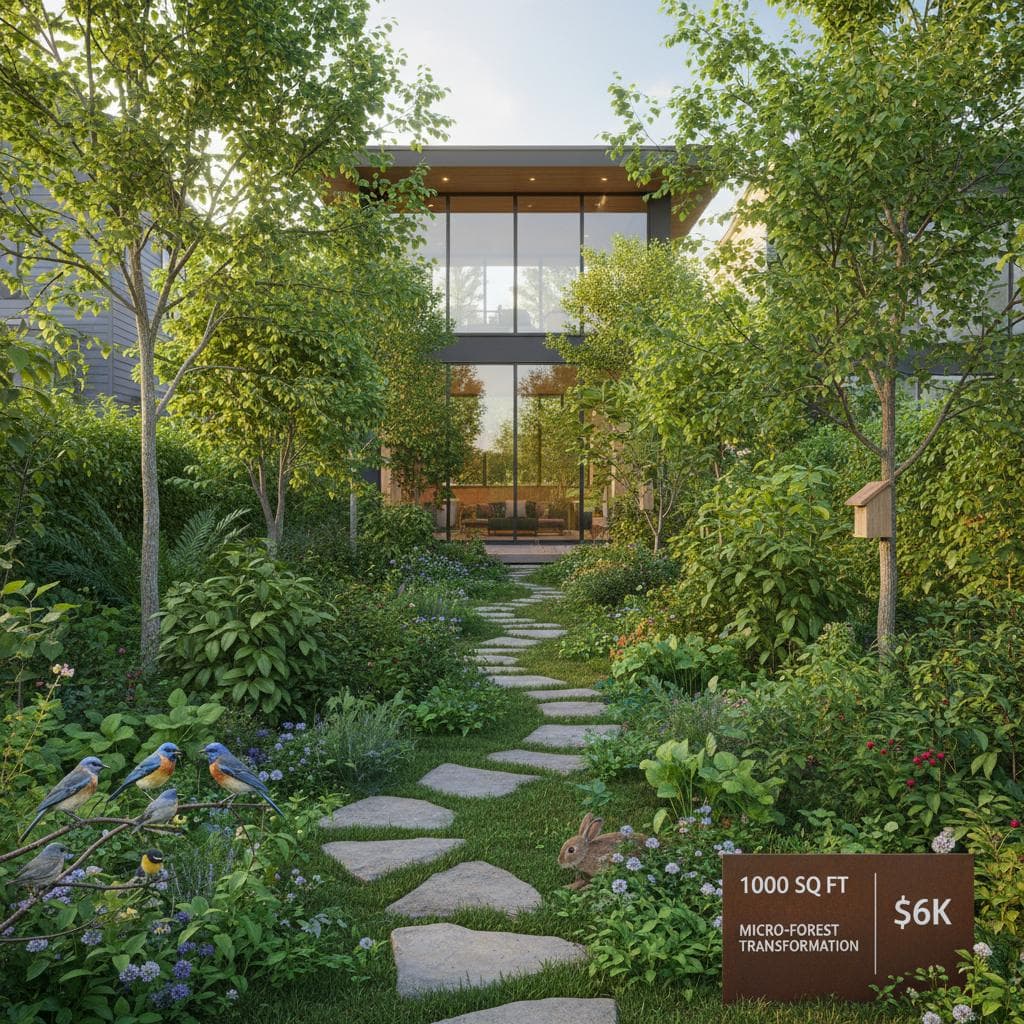
1000 Sq Ft Micro-Forests: The 2026 Trend Reshaping Urban Yards
Homeowners increasingly seek ways to integrate nature into limited spaces, and the 1000 sq ft micro-forest stands out as a practical solution. This approach converts modest backyards into dense, layered woodlands that foster biodiversity and environmental benefits. Beyond aesthetics, these forests improve air quality, reduce urban heat, and manage stormwater effectively. The following sections detail the essentials, from definition to implementation, empowering you to assess feasibility for your property.
Understanding Micro-Forests
A micro-forest represents a compact, densely planted woodland that replicates the multilayered structure of a natural forest. Confined to areas like 1000 square feet, it employs the Miyawaki method to accelerate tree growth by up to ten times compared to traditional planting. This technique prioritizes native species arranged in canopy, understory, shrub, and groundcover layers, creating a resilient ecosystem. Once rooted, the forest demands little intervention, evolving into a habitat for birds, insects, and other wildlife within years.
Installation Costs for a 1000 Sq Ft Micro-Forest
Establishing a 1000 sq ft micro-forest typically costs between $4,000 and $8,000, with $6,000 serving as the average for standard professional setups. This figure accounts for soil amendment, native plant procurement, and labor. Variations arise from site conditions and added features, but careful planning keeps expenses manageable.
| Factor | Average Cost Range |
|---|---|
| Basic DIY with Native Saplings | $2,000 - $3,500 |
| Professional Installation | $4,000 - $8,000 |
| Premium with Irrigation and Paths | $8,000 - $12,000 |
Local material prices and labor rates influence totals; for instance, urban areas may incur higher delivery fees.
Key Factors Influencing Micro-Forest Expenses
Selecting Trees and Plants
Opt for native varieties such as oaks, maples, or birches, which thrive in regional climates and support local pollinators. These choices minimize long-term care while keeping costs low, often under $5 per sapling in bulk. Exotic or non-native options inflate budgets due to sourcing challenges and higher failure risks.
Preparing the Soil
Effective soil work ensures robust root systems, starting with testing pH and nutrient levels. Incorporate compost at a rate of two inches deep and biochar to enhance water retention, adding roughly $300 to $500. This investment pays off through faster establishment and reduced future amendments.
Evaluating Site Access
Properties with straightforward backyard entry allow efficient material transport, holding costs steady. Challenging access, such as narrow gates or sloped terrain, may require hand-carrying supplies, increasing labor by 20 to 30 percent. Survey your site early to anticipate these hurdles.
Incorporating Irrigation and Drainage
The Miyawaki method builds drought tolerance, yet initial irrigation aids survival in the first season. A simple drip system, installed for $500 to $1,000, delivers precise watering; pair it with mulch to conserve moisture. For rainy regions, focus on drainage features like swales to prevent waterlogging.
Designing for Complexity
Basic grids of plants keep designs affordable and straightforward. To add appeal, integrate elements such as gravel paths for access or benches for enjoyment, which may raise costs by $1,000 or more. Balance functionality with budget by sketching layouts in advance.
Step-by-Step Process for Creating a Micro-Forest
-
Conduct Site Assessment and Planning
Professionals or informed homeowners analyze sunlight exposure, soil composition, and drainage patterns. Identify wind directions and existing vegetation to select compatible natives. This phase, lasting one to two days, sets the foundation for success. -
Prepare the Soil
Till the area to a depth of 18 inches for aeration, then mix in organic matter like leaf compost. Aim for a nutrient-rich base that supports microbial life, avoiding chemical fertilizers. Allow the soil to settle for a week before planting. -
Choose Species and Plan Layout
Assemble a diverse palette, targeting 30 to 50 species per 1000 sq ft for resilience. Position taller trees centrally, shrubs along edges, and groundcovers to fill gaps, mimicking forest succession. Use graph paper or software for precise spacing at three to five feet apart. -
Plant and Apply Mulch
Plant 50 to 100 saplings per 100 sq ft in clusters, ensuring roots spread without competition. Cover the surface with three inches of organic mulch to lock in moisture and deter weeds. Water deeply immediately after to settle the plants. -
Provide Initial Care and Monitoring
Water every three to five days for the first year, adjusting for rainfall. Monitor for pests or nutrient deficiencies, intervening minimally to let natural processes take hold. By year two, reduce inputs as the canopy forms. -
Observe Long-Term Development
Track growth milestones, such as height increases of two to three feet annually. Introduce bird feeders or insect hotels to accelerate biodiversity. Over a decade, the space matures into a shaded, vibrant retreat.
Deciding Between DIY and Professional Installation
| Option | Ideal Scenarios | Advantages | Drawbacks |
|---|---|---|---|
| DIY Approach | Budget-limited projects or small test plots | Cost savings, personal involvement in selection | Demands research on species, potential errors in density |
| Professional Expertise | Full-scale transformations or complex sites | Tailored designs, guaranteed ecological balance | Elevated initial investment |
DIY suits enthusiasts with gardening experience, starting with seed catalogs from local nurseries. Professionals excel in optimizing density and integrating site-specific solutions, often providing warranties.
Guidelines for Selecting a Micro-Forest Specialist
-
Verify Expertise in Miyawaki Techniques
Seek firms with documented projects in dense planting or native restoration. Certifications from ecological organizations add credibility. -
Examine Past Work
Request portfolios featuring before-and-after images or references from similar yard sizes. Visit installations to assess maturity and health. -
Obtain Comparative Estimates
Solicit at least three bids detailing breakdowns for labor, materials, and timelines. Negotiate inclusions like follow-up visits. -
Prioritize Native Plant Commitments
Confirm sourcing from regional suppliers to ensure adaptation and low water needs. Avoid services pushing generic nursery stock. -
Secure a Comprehensive Proposal
Demand specifics on plant lists, planting schedules, and three-year growth projections. Include clauses for adjustments based on soil tests.
Common Questions About Micro-Forests
What is the typical cost for a 1000 sq ft micro-forest?
Homeowners allocate $4,000 to $8,000, factoring in professional help, soil enhancements, and basic plants. DIY efforts trim this to $2,000 through self-sourcing.
How quickly does a micro-forest mature?
The Miyawaki method enables trees to reach 10 to 20 feet in 10 years, with understory filling in sooner for full coverage.
When should planting occur?
Spring or fall provides optimal conditions, with cooler weather aiding root growth before summer heat or winter dormancy.
Is a micro-forest viable for tiny yards?
Areas as small as 500 sq ft work well; scale density accordingly to maintain ecological layers without overcrowding.
What ongoing care do micro-forests need?
Year one requires consistent watering and weeding; thereafter, annual mulch refresh and selective pruning suffice.
Cultivate Lasting Green Spaces
Micro-forests challenge conventional yard maintenance by prioritizing ecological depth over manicured lawns. They deliver cooling shade, enriched soil, and wildlife corridors in urban settings. Begin with a site evaluation to launch your project, fostering a legacy of sustainability that benefits your home and community for decades.