
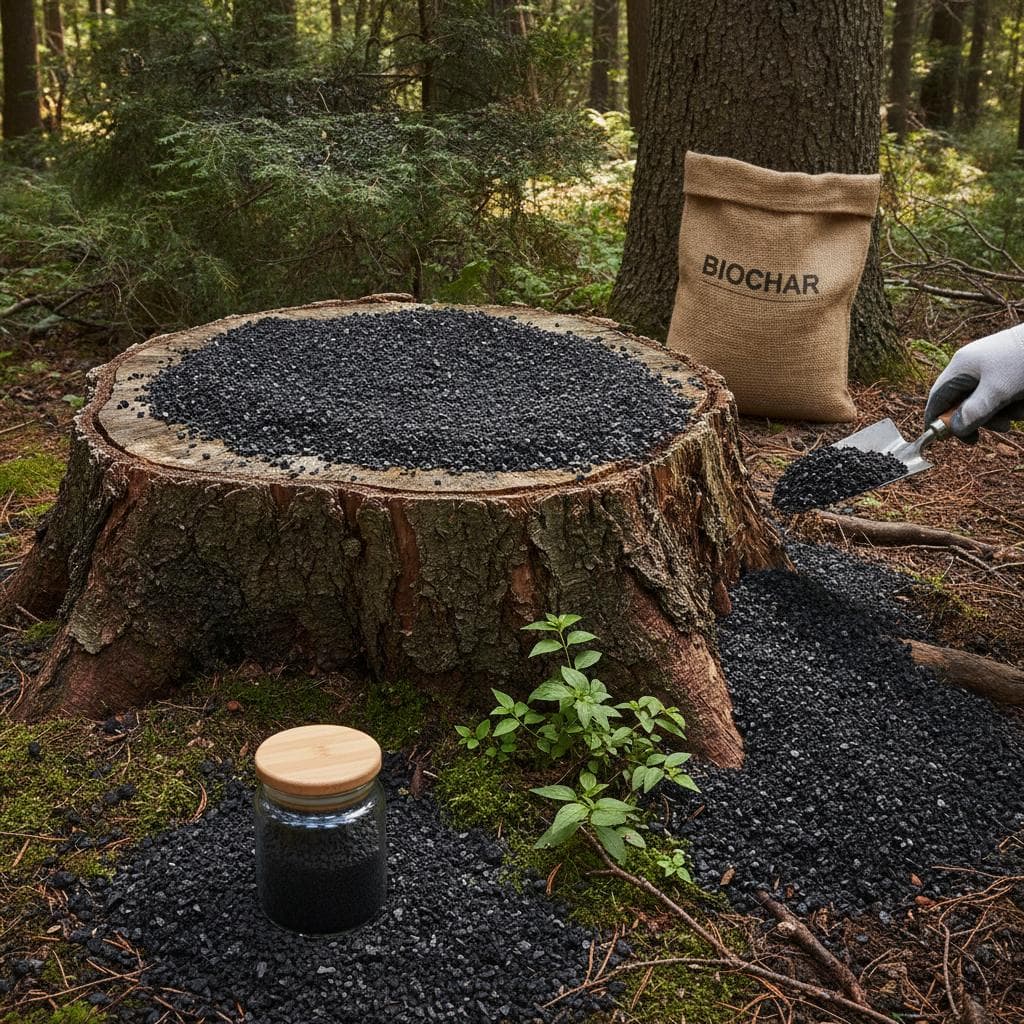
Biochar Kills Stump Regrowth in 3 Days Naturally
When a tree is removed, the remaining stump can quickly become a frustrating problem. Many homeowners notice new shoots sprouting from the stump or roots. These sprouts threaten to undo the work of removal. Chemical stump killers can be effective but often raise concerns about soil health, groundwater contamination, and safety for pets or children.
A natural alternative is biochar. This carbon-rich material stops stump regrowth fast while improving soil quality. This guide explains how biochar kills stump regrowth in just three days and how to use it safely for eco-friendly removal.
What is Biochar?
Biochar is a natural soil amendmentorganic material, such as wood or crop waste, in a low-oxygen environment. The process, called pyrolysis, leaves behind a porous charcoal-like substance that locks in carbon and enhances soil fertility. When applied to a stump, biochar interrupts the stump's ability to regenerate by cutting off nutrient and moisture exchange.
Average Cost to Use Biochar for Stump Removal
The cost of using biochar for stump removal is modest compared to chemical or mechanical methods. On average, homeowners spend between $10 and $50 per stump, depending on size and application method.
| Factor | Average Cost Range |
|---|---|
| Small Stump (under 12 in. diameter) | $10 - $20 |
| Medium Stump (12-24 in. diameter) | $20 - $35 |
| Large Stump (over 24 in. diameter) | $35 - $50 |
Factors Affecting Biochar Stump Treatment Results
Stump Size
Larger stumps require more biochar and deeper application for complete coverage. A small stump may show results within three days. Extensive root systems might need reapplication.
Tree Species
Hardwoods like oak and maple tend to resist decay longer than softwoods such as pine. Species with dense wood may take slightly more time for the biochar to fully inhibit regrowth.
Moisture Level
Biochar works best in slightly moist conditions. Too much water can dilute its effectiveness. Extremely dry soil may slow the absorption process.
Application Technique
Even coverage is key. Mixing biochar into the stump surface and around the root zone ensures the material reaches the living tissues responsible for regrowth.
The Biochar Stump Removal Process
- Prepare the stump. Cut the stump as close to the ground as possible and drill several holes about two inches deep across the surface.
- Mix the biochar. Blend biochar with a small amount of water or compost to create a damp mixture.
- Apply the mixture. Fill the drilled holes and spread the mixture across the top and surrounding soil.
- Cover and wait. Cover the area with a tarp or mulch to maintain moisture. Within three days, the stump will begin to dry out and lose its ability to sprout.
- Monitor and reapply if needed. Check after a week. If shoots appear, apply another thin layer to complete the process.
DIY vs. Hiring a Professional
Homeowners can safely apply biochar on small or medium stumps using basic garden tools. This approach is ideal for those who prefer a chemical-free method. For large stumps, difficult access, or multiple trees, hiring a professional ensures even application and proper soil restoration. Arborists can also combine biochar treatment with stump grinding or soil remediation.
How to Choose a Tree Service
- Verify licensing and insurance.
- Ask about experience with eco-friendly removal methods.
- Request a written estimate for both stump grinding and biochar application.
- Check reviews or references from previous clients.
- Confirm debris removal and site cleanup are included.
Implementing Biochar Treatment
Biochar offers a fast, natural way to stop stump regrowth while enriching the soil beneath your landscape. Whether you apply it yourself or hire a professional, this method protects your property from unwanted sprouts and chemical exposure.