
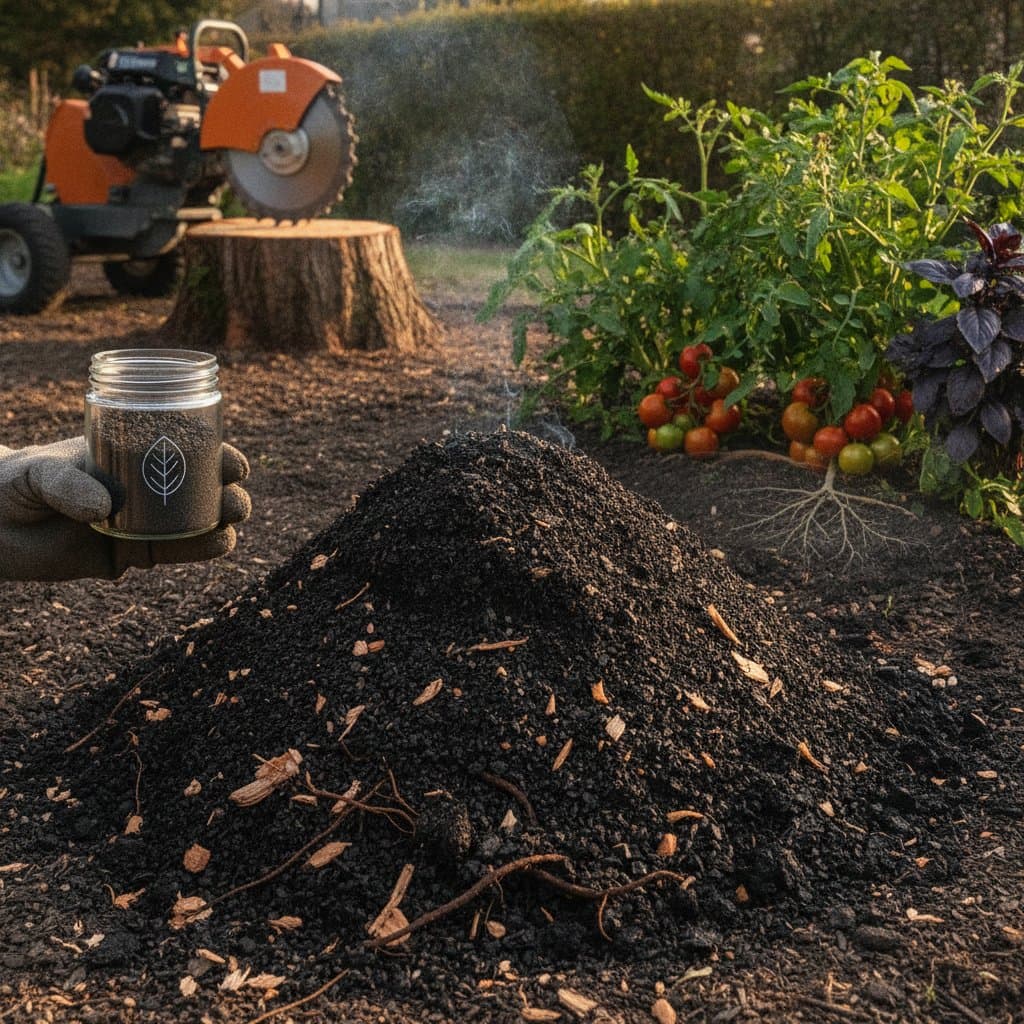
Stump Waste Becomes Biochar for Superior Soil Enrichment
When a tree is removed, the leftover stump and grinding waste often seem like an inconvenient byproduct. Yet with the right approach, this waste can become a powerful resource for the environment and your garden. Through a process called biochar production, stump waste can be transformed into a long-lasting soil amendment that improves fertility, boosts plant growth, and supports sustainable landscaping practices.
This guide explains how that transformation happens, why it benefits your soil, and how homeowners can take advantage of this eco-friendly solution.
What is Biochar?
Biochar is a form of charcoal made by heating organic material such as wood or stump waste in a low-oxygen environment. The process, called pyrolysis, locks carbon into a stable form that enhances soil structure, retains nutrients, and supports beneficial microbes. It is widely used in sustainable landscaping as a way to recycle natural waste into valuable soil enrichment material.
How Stump Waste Becomes Biochar
Turning stump waste into biochar starts with repurposing what would otherwise be discarded. Tree stumps and grinding debris are collected, dried, and fed into a pyrolysis system. Under controlled heat, the wood is converted into carbon-rich biochar rather than being burned into ash. This process prevents carbon from entering the atmosphere while creating a porous material that acts as a soil conditioner.
Key Steps in the Conversion Process
- Collection and Preparation: Stumps and tree waste are gathered after removal or grinding. Moisture levels are reduced to improve efficiency during pyrolysis.
- Pyrolysis Heating: The dried material is heated in a low-oxygen chamber. Heat breaks down the wood fibers, leaving behind pure carbon in the form of biochar.
- Cooling and Crushing: Once cooled, the biochar is crushed into smaller particles suitable for mixing into soil.
- Soil Integration: The final product is blended into garden beds, lawns, or landscape soil to enhance fertility and water retention.
Benefits of Using Biochar in Landscaping
Biochar provides multiple benefits that go beyond standard compost or mulch. It helps soil hold water, improves aeration, and provides a habitat for beneficial microorganisms. When used with organic compost, it can increase nutrient availability and reduce fertilizer needs. Its carbon stability also supports sustainable landscaping by reducing greenhouse gas emissions from decomposing waste.
Environmental and Economic Advantages
- Waste Reduction: Recycles stump grinding waste that would otherwise end up in landfills.
- Carbon Storage: Locks carbon into the soil for centuries, reducing atmospheric emissions.
- Cost Efficiency: Cuts long-term fertilizer costs due to improved nutrient retention.
- Sustainable Landscaping: Promotes a closed-loop system that benefits both the environment and property owners.
How Homeowners Can Access Biochar Services
Many professional tree removal and stump grinding companies now offer biochar production as part of their sustainable waste management programs. When hiring a service, ask if they can convert your stump waste into biochar or if they partner with local producers. Some landscapers also incorporate biochar installation into soil renovation or garden restoration projects.
Applying Biochar After Stump Removal
Transforming stump waste into biochar is one of the most efficient ways to turn a difficult cleanup task into a long-term soil investment. By choosing services that recycle tree waste into biochar, homeowners can enrich their soil, reduce waste, and support a more sustainable landscape. This simple shift helps ensure that every tree removal project contributes to a healthier, more resilient environment.