
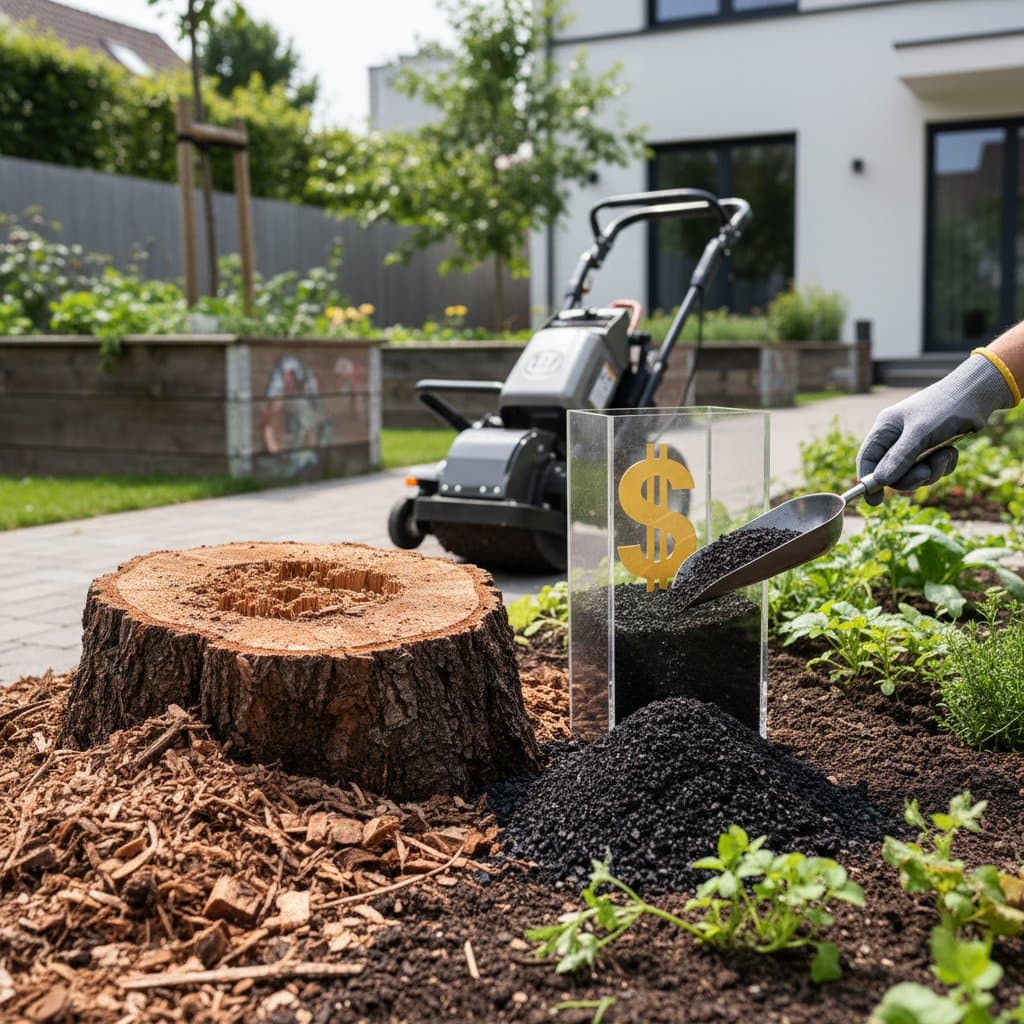
Stump Waste Turned Into Biochar for Soil Health
When a tree comes down, the leftover stump often feels like a costly burden. Most homeowners expect to pay for stump grinding or removal without getting anything in return. What few realize is that this so-called waste can actually become a valuable product. Through a process called biochar conversion, stump wood can be transformed into a soil-enhancing material worth up to $500 per cubic yard.
This guide explains how stump waste can become profit, how biochar improves soil health, and what steps to take if you want a sustainable approach to your next stump removal.
What Is Biochar?
Biochar is a form of charcoal produced from organic material, such as wood chips or stump waste, in a low-oxygen environment. This process, known as pyrolysis, locks carbon into a stable form that can remain in soil for decades. Biochar improves soil structure, increases nutrient retention, and supports beneficial microbes.
Gardeners and farmers use it as a powerful tool for healthier, more productive soil.
Average Cost and Value of Turning Stump Waste Into Biochar
Turning stump waste into biochar is not just good for the environment. It can be financially rewarding. The average cost to grind a stump usually ranges from $100 to $400, depending on size and accessibility. When converted into biochar, that same stump can yield $200 to $500 worth of product, depending on quality and volume.
| Stump Size and Type | Estimated Grinding Cost | Potential Biochar Value |
|---|---|---|
| Small (under 12 in.) | $100 to $150 | $100 to $200 |
| Medium (12 to 24 in.) | $150 to $250 | $200 to $350 |
| Large (over 24 in.) | $250 to $400 | $350 to $500 |
The difference lies in what happens after grinding. Instead of hauling away wood chips as waste, they can be processed into a reusable, eco-friendly material that benefits both your wallet and your soil.
Factors Affecting Biochar Production Value
Stump Size
Larger stumps naturally yield more raw material for biochar production. A big oak or maple stump can produce several cubic feet of biochar once processed, increasing overall profit potential.
Wood Type
Dense hardwoods like oak and hickory create high-quality biochar with greater carbon content. Softwoods like pine tend to produce lighter material with faster decomposition rates. Hardwood biochar generally commands higher market value.
Moisture Content
Dry wood burns more efficiently during pyrolysis, producing cleaner and higher-quality biochar. Freshly ground stumps may need to air-dry for several weeks before processing.
Equipment and Processing Method
Some tree service companies use specialized retort kilns or cone kilns to produce consistent, high-grade biochar. Others use smaller mobile systems that can operate on-site. The process used influences both quality and yield.
Local Demand
Urban gardeners, landscapers, and sustainable farms increasingly seek biochar for soil improvement. Areas with strong local demand can see higher resale prices for finished biochar.
The Biochar Conversion Process
Turning stump waste into biochar involves several structured steps. While the technology may sound complex, the process itself follows a clear sequence.
- Stump Grinding: The stump is ground into wood chips or chunks, creating manageable feedstock for conversion.
- Drying the Material: The chips are air-dried to reduce moisture levels, improving combustion efficiency during pyrolysis.
- Loading the Kiln: The dried material is placed into a low-oxygen chamber or kiln. This setup prevents complete burning and encourages carbon retention.
- Heating and Conversion: The material is heated at high temperatures until it carbonizes. The result is lightweight, porous biochar.
- Cooling and Collection: Once cooled, the biochar is screened, bagged, or mixed with compost to create a market-ready soil amendment.
- Application or Sale: Homeowners can use the biochar in their own gardens, or sell it to local nurseries, landscapers, or soil suppliers.
DIY vs. Hiring a Professional for Biochar Conversion
| Option | When It Makes Sense | Key Considerations |
|---|---|---|
| DIY Conversion | Suitable for small stumps and homeowners with access to a small pyrolysis drum or cone kiln. | Requires understanding of fire safety, temperature control, and local burn regulations. |
| Professional Service | Ideal for large stumps or multiple trees. Many tree service companies now offer biochar conversion with removal. | Ensures proper processing, consistent quality, and compliance with environmental guidelines. |
While DIY methods can be rewarding, professionals deliver higher yields and safer results. If your goal is to sell biochar or use it extensively, expert processing is the smarter route.
How to Choose a Tree Service That Offers Biochar Conversion
When hiring a stump removal professional who can convert waste into biochar, look for these qualifications:
- Certified Arborist Credentials to ensure safe and knowledgeable tree handling
- Experience with Sustainable Practices such as waste recycling or soil improvement
- Proper Equipment for grinding, drying, and safe pyrolysis
- Transparent Pricing that includes both removal and conversion costs
- Local References confirming successful biochar projects
Asking these questions helps ensure your stump waste is handled responsibly and turned into a valuable resource.
Common Questions About Stump Biochar
How much biochar can one stump produce?
A medium stump typically yields one to two cubic feet of finished biochar after processing and screening.
Is it really profitable to make biochar from stumps?
Profit depends on local demand and processing efficiency. Many homeowners recover removal costs and earn additional income by selling excess biochar.
Can I use stump biochar directly in my garden?
Yes. Mix one part biochar with two parts compost and apply it to planting beds. This blend improves water retention and nutrient availability.
Does every tree species make good biochar?
Hardwoods produce denser, longer-lasting biochar. Softwoods work but break down faster and may require more frequent applications.
Putting Biochar to Work
Apply the finished product to vegetable beds, flower borders, or new tree plantings. The material continues to improve soil structure for years while locking away carbon that would otherwise enter the atmosphere.