
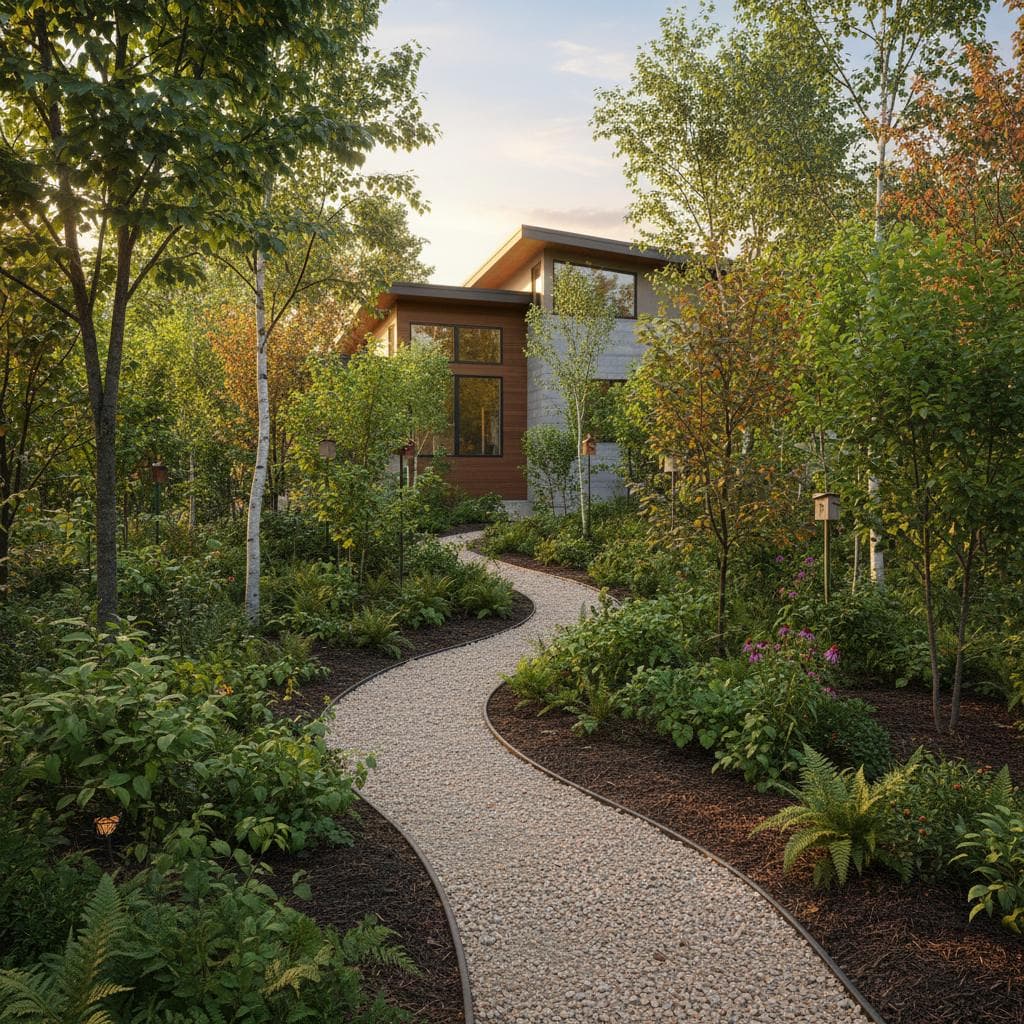
200 Trees in Your Driveway: The Micro-Forest Trend
Imagine pulling into your driveway and being greeted not by a plain lawn, but by a miniature forest filled with native trees, shrubs, and buzzing pollinators. This is the essence of the micro-forest trend. A movement reshaping home landscaping by turning small spaces into thriving ecosystems. Homeowners who once focused on manicured lawns are now planting dense clusters of trees to create vibrant, self-sustaining green spaces.
This article explains what a micro-forest is, how it works, and how you can create one even in the limited space of a suburban yard or driveway edge.
What is a Micro-Forest?
A micro-forest is a tightly planted, fast-growing cluster of native trees and shrubs designed to mimic the structure of a natural forest. Often built using the Miyawaki method, this approach encourages dense planting of multiple species to promote rapid growth, biodiversity, and resilience. Within just a few years, a micro-forest can transform a bare patch of ground into a lush, layered ecosystem that supports birds, insects, and soil health.
Average Micro-Forest Costs
The cost to plant a micro-forest varies depending on size, tree species, and site preparation. On average, homeowners spend between $2,000 and $8,000 for a small residential project of about 200 trees. A larger installation can cost more. Yet the long-term benefits in shade, air quality, and property value often outweigh the initial expense.
| Project Size | Average Cost Range |
|---|---|
| Small (100–200 trees) | $2,000–$4,000 |
| Medium (300–500 trees) | $4,000–$6,000 |
| Large (600+ trees) | $7,000–$10,000 |
Factors Affecting the Cost to Create a Micro-Forest
Tree Species and Diversity
Native plants are usually more affordable and better adapted to local soil and climate conditions. Exotic or ornamental species can increase costs. Native trees such as oak, maple, and pine tend to thrive with less maintenance.
Site Preparation
Clearing turf, improving soil, and adding mulch or compost can raise the total price. Poor soil may require extra amendments or drainage solutions before planting begins.
Location and Accessibility
A backyard or driveway with limited access for equipment may require more manual labor, increasing costs. Urban properties often face higher labor rates due to space constraints.
Irrigation Setup
Although micro-forests become self-sustaining after a few years, young trees need consistent moisture. Installing a simple drip irrigation system adds convenience but raises initial expenses.
Maintenance and Aftercare
Early maintenance, including weeding and watering, helps the forest establish strong roots. Hiring a professional for the first year of care can add to the budget but ensures higher survival rates.
The Micro-Forest Creation Process
-
Site Assessment
A professional or homeowner evaluates soil type, sunlight, and drainage to decide what species will thrive. -
Design and Species Selection
Choose a mix of native canopy, sub-canopy, shrub, and ground-cover species. This diversity mimics natural forest layers and promotes balanced growth. -
Soil Improvement
Organic compost and mulch are added to boost fertility and water retention. -
Dense Planting
Trees are planted close together, often three to five per square meter. This density encourages competition and faster vertical growth. -
Mulching and Watering
A thick mulch layer helps retain moisture and suppress weeds. Regular watering supports young trees during the establishment phase. -
Monitoring and Maintenance
For the first two to three years, the forest requires basic care. Once mature, it largely sustains itself with minimal intervention.
DIY vs. Hiring a Professional for Micro-Forest Landscaping
When to DIY
Homeowners with small plots and a passion for gardening can create a micro-forest themselves using seedlings and locally sourced compost. DIY is ideal for areas under 200 square feet or for adding a few native trees along a driveway.
When to Hire a Pro
For larger spaces, complex soil conditions, or high-density planting, hiring a professional arborist or ecological landscaper is safer and more effective. Experts understand local ecosystems, obtain any required permits, and ensure correct spacing and species diversity. Professional installation also helps guarantee long-term health and faster growth.
How to Hire a Micro-Forest Landscaping Service
- Check credentials. Look for landscapers experienced with the Miyawaki method or similar ecological planting techniques.
- Ask about native plant expertise. Ensure they prioritize native and pollinator-friendly species.
- Request multiple quotes. Comparing estimates helps identify fair pricing and comprehensive service packages.
- Confirm maintenance plans. Ask about watering schedules, weed control, and soil health monitoring for the first few years.
- Review past projects. Photos and references from prior installations reveal the company quality and reliability.
Frequently Asked Questions
How many trees can fit in a small driveway micro-forest?
Even a narrow strip beside a driveway can support 100 to 200 trees if planted densely using the Miyawaki method. These trees are usually small saplings that grow rapidly and form a layered canopy within a few years.
How long does it take for a micro-forest to mature?
Most micro-forests reach significant maturity in about three years. The dense planting speeds up growth, allowing trees to reach several feet in height quickly while developing deep root systems.
Is a micro-forest easy to maintain?
Yes. After the first few years of watering and weeding, the forest becomes self-sustaining. Fallen leaves create natural mulch, and the dense canopy suppresses weeds and retains soil moisture.
Can I plant a micro-forest in poor soil?
Yes, but the soil may need improvement with compost and organic matter before planting. Native species adapted to local conditions are usually more tolerant of challenging soils.
Will a micro-forest increase property value?
A well-designed micro-forest enhances curb appeal, reduces heat, and improves air quality. These environmental and aesthetic benefits often boost property value while reducing long-term maintenance costs compared to traditional lawns.
Growing a Living Legacy
Starting a micro-forest in your driveway or yard is more than a landscaping project. It is an investment in biodiversity, beauty, and sustainability. Each tree contributes to cleaner air, cooler surroundings, and a healthier environment for future generations.