
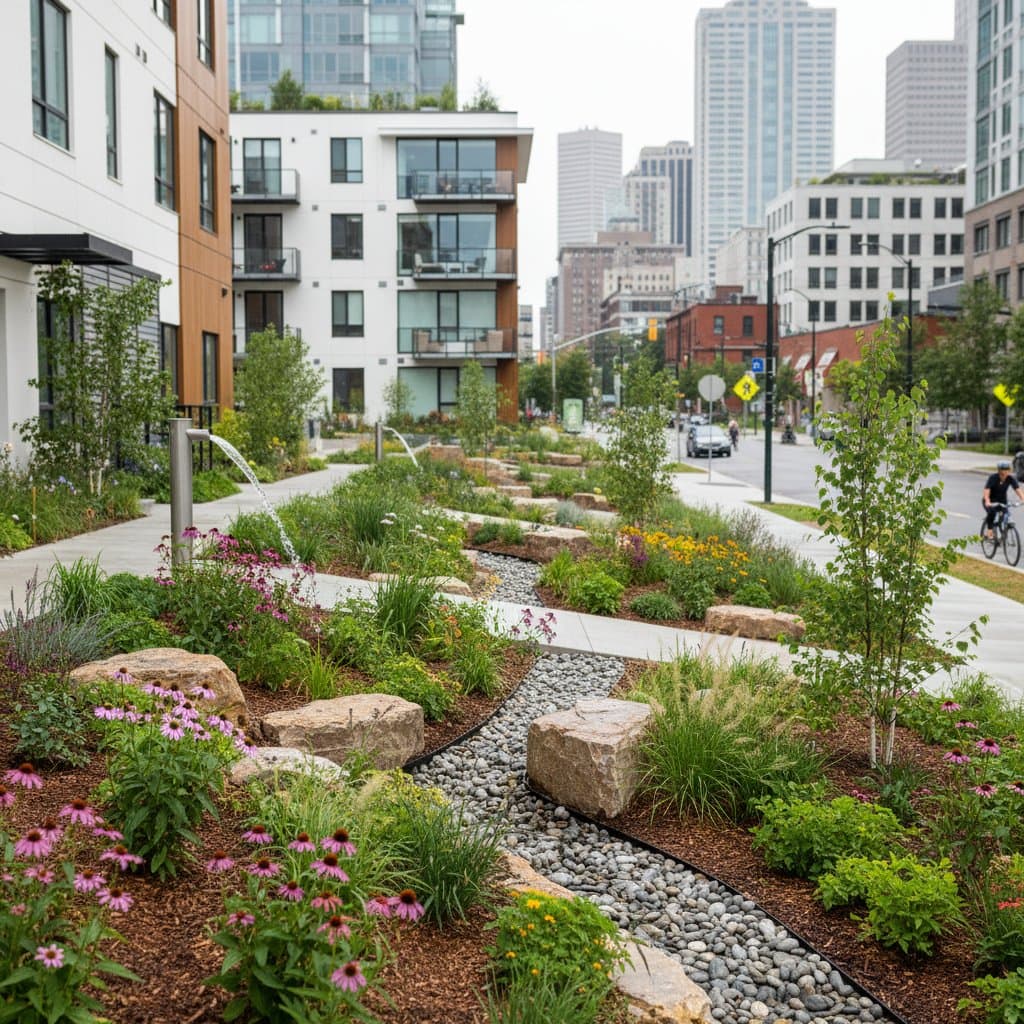
Across many regions, communities face heavier rainfall, more frequent flooding, and greater strain on stormwater systems. In response, eight cities have enacted environmental regulations that require homeowners and developers to install rain gardens on specific properties by July 2026. These measures promote green infrastructure to mitigate flooding, filter pollutants, and restore groundwater balance.
This guide details rain gardens, the reasons behind the mandates, compliance requirements for property owners, and effective installation or retrofit strategies. Homeowners, builders, and landscaping professionals will find practical insights to achieve compliance, enhance sustainability, and elevate property appeal.
What Is a Rain Garden?
A rain garden consists of a shallow, landscaped depression that captures and absorbs rainwater runoff from roofs, driveways, and lawns. It features native plants and permeable soil layers that enable water to infiltrate the ground rather than enter storm drains.
Distinct from standard garden beds, rain gardens manage targeted water volumes and remove contaminants like oil, fertilizers, and sediment before they impact waterways. This approach provides one of the most efficient and visually appealing stormwater solutions for residential settings.
Average Rain Garden Installation Costs
Installation costs for a rain garden depend on size, soil conditions, plant choices, and design elements. Typically, expenses range from $10 to $25 per square foot, with standard residential projects averaging $3,000 to $7,500.
| Garden Size | Average Cost Range |
|---|---|
| Small (under 100 sq. ft.) | $1,000 - $2,500 |
| Medium (100 - 300 sq. ft.) | $3,000 - $6,000 |
| Large (over 300 sq. ft.) | $7,000 - $12,000 |
Expenses rise with soil amendments, drainage modifications, or excavation in constrained areas.
Factors Affecting the Cost of a Rain Garden
Garden Size and Depth
Larger or deeper designs demand extensive excavation, soil enhancements, and additional plants, elevating labor and materials. Size the garden to correspond with impervious surfaces like roofs or pavement that produce runoff.
Soil Type and Drainage
Soils rich in clay or compaction require replacement or amendment with sand and compost for better infiltration. Conduct soil tests prior to work to gauge preparation needs; suboptimal drainage may double costs through added excavation and replacements.
Plant Selection
Opt for native species that endure alternating wet and dry periods. Mature plants or rare natives raise prices, whereas plugs or seeds lower upfront costs but prolong the establishment phase.
Location and Accessibility
Sites with limited equipment access or slopes necessitate extra grading and erosion controls. Urban properties incur higher fees from restricted space and permitting demands.
Design Complexity
Basic bowl shapes prove more economical than designs with varied planting zones, edging, or pathways. Tailored aesthetics demand greater time and skill, increasing overall expenses.
Regulatory Compliance
Mandates outline minimum standards, often requiring site evaluations or inspections. Professional consultations and permits contribute several hundred dollars to the total.
The Rain Garden Implementation Process
Effective installation follows structured steps to guarantee functionality and regulatory adherence.
-
Site Evaluation and Planning
Professionals assess runoff origins and choose sites where water gathers but drains within 48 hours. Maintain at least ten feet from foundations. -
Design and Permitting
Develop plans illustrating drainage, planting, and overflow routes per city guidelines. Secure approvals before excavation. -
Excavation and Grading
Excavate to six to twelve inches deep with a central slope. Amend with sand, compost, and topsoil for absorption. -
Planting and Mulching
Install native grasses, wildflowers, and shrubs suited to moisture levels. Apply mulch to conserve water and suppress weeds. -
Overflow and Drainage Installation
Incorporate outlets or spillways for surplus water. Perforated pipes may guide flow to deeper zones. -
Inspection and Maintenance Schedule
Undergo verification post-installation. Perform ongoing tasks like weeding and health checks for longevity.
DIY vs. Hiring a Professional for Rain Garden Installation
| Option | When It Makes Sense | Typical Considerations |
|---|---|---|
| DIY Installation | Small setups under 100 sq. ft. with favorable drainage. | Ideal for gardening enthusiasts with foundational skills; saves money but demands effort and study. |
| Professional Installation | Larger projects or regulated sites. | Guarantees code compliance, accurate grading, and optimal plants; manages permits and refinements. |
Homeowners may handle modest designs, yet regulated installations benefit from expert oversight to ensure performance in storms.
Why Cities Are Requiring Rain Gardens
These eight cities address outdated stormwater systems overwhelmed by rising precipitation and urban expansion. Mandates advance green management to curb flooding and purify water entering natural systems.
Rain gardens enable cities to:
- Manage stormwater onsite through infiltration.
- Alleviate sewer burdens in intense rains.
- Purify water via plant and soil filtration.
- Boost biodiversity with pollinator-friendly natives.
- Revitalize communities and property worth.
For residents, rain gardens fulfill obligations while fostering attractive, eco-friendly landscapes.
How to Comply With the New Rain Garden Rule
Residents in affected cities follow these steps for adherence:
-
Determine Applicability
Verify if your property qualifies, often targeting new builds, renovations, or high-runoff lots. Consult city resources. -
Obtain Professional Design Assistance
Engage certified experts to craft systems meeting standards. -
Submit Plans for Approval
Provide designs with calculations for capacity and infiltration; await clearance. -
Install According to Guidelines
Adhere to soil mixes, depths, and plants; preserve soil structure. -
Maintain the Garden
Conduct weeding, replacements, and cleanings routinely. -
Document Compliance
Retain records of work and inspections for sales or reviews.
Common Questions About Rain Gardens and Regulations
How much does it cost to install a rain garden under the new rule?
Regulated installations average $3,000 to $7,500 for homes, influenced by site specifics, complexity, and fees.
Are rain gardens mandatory for all homeowners?
Requirements vary by city, focusing on developments, remodels, or expansive impervious zones.
What kind of maintenance does a rain garden need?
Established gardens need seasonal weeding, mulching, and replanting. Post-storm checks clear pathways.
Can I receive financial incentives for installing a rain garden?
Certain cities provide rebates or credits for surpassing basics; inquire with stormwater offices.
What happens if I do not install a rain garden where required?
Expect fines, permit holds, or added fees for non-green compliance.
Does a rain garden attract mosquitoes?
Proper designs drain swiftly, avoiding breeding; address standing water promptly.
Can I choose my own plants?
Select from approved lists, favoring natives for resilience and ecology.
How do rain gardens differ from bioswales?
Rain gardens target localized runoff in compact areas; bioswales channel water linearly along slopes.
Steps Toward Sustainable Compliance
These mandates signal progress in resilient urban design. Property owners gain from proactive steps: evaluate drainage, seek experts, and select budget-aligned options to secure incentives and sidestep delays.