
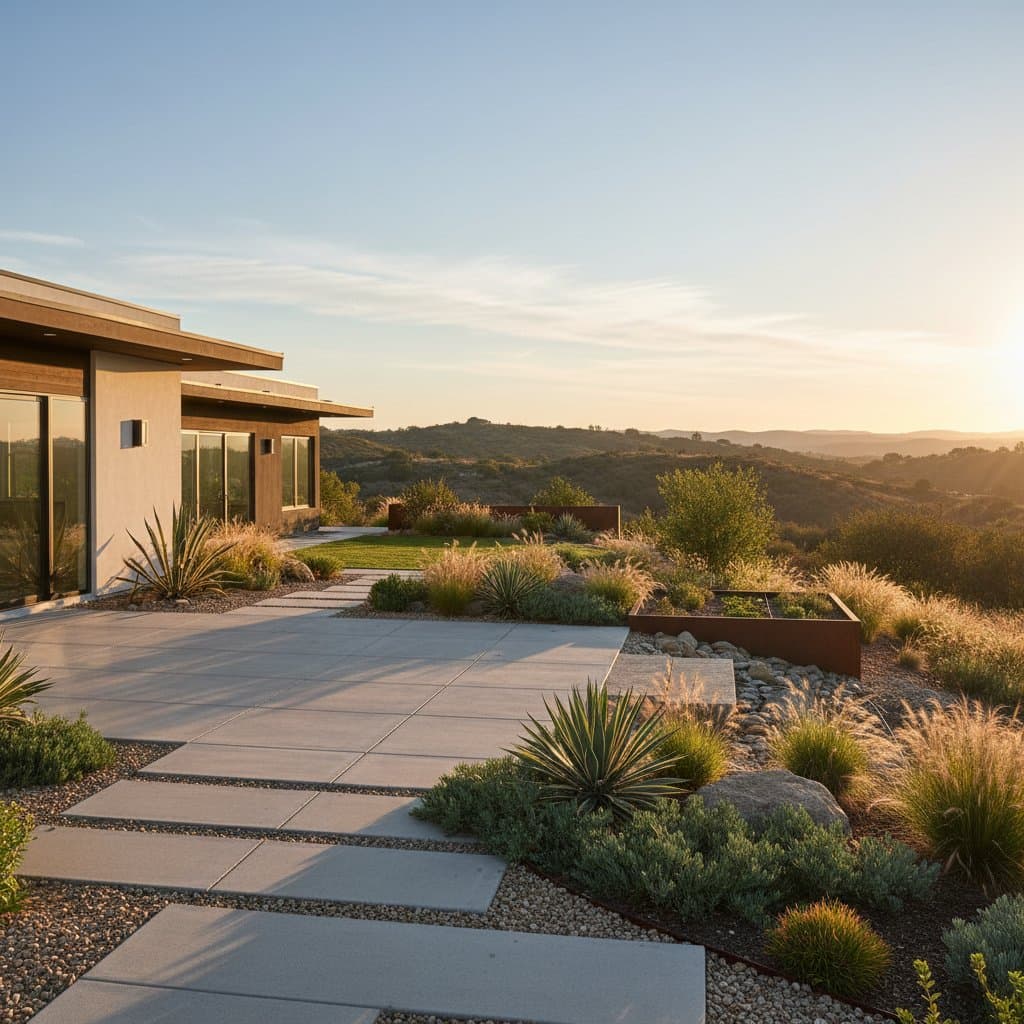
8 States Enforce Wildfire-Resistant Landscape Laws
Wildfires influence landscaping decisions across the United States. Several states have introduced regulations that prompt property owners to select plants, materials, and designs with fire resistance in mind. These measures extend beyond mere adherence to rules; they safeguard residences, neighborhoods, and ecosystems against severe fire impacts. Knowledge of these standards enables property owners to enhance safety while preserving attractive and effective outdoor areas.
Wildfire-Resistant Landscaping Requirements
Defensible Space Zones
State regulations prioritize the establishment of defensible space surrounding structures. This approach involves controlling vegetation and materials across designated zones to impede fire progression. Typically, three zones apply:
- Immediate Zone (0–5 feet): Eliminate all flammable elements here. Opt for gravel, pavers, or exposed soil in place of mulch, and exclude shrubs or trees adjacent to buildings.
- Intermediate Zone (5–30 feet): Plant low-growing species with adequate spacing and eliminate dead matter. Prune trees to ensure branches remain clear of roofs.
- Extended Zone (30–100 feet): Reduce tree density, remove underbrush, and minimize fuel accumulation to decrease fire severity upon approach to the property.
Restrictions on Plant Types
Certain states prohibit or discourage highly combustible species, including juniper, eucalyptus, and pine trees. Instead, regulations promote fire-resistant varieties characterized by elevated moisture levels, reduced resin, and gradual combustion. Recommended selections encompass manzanita hybrids, lavender, agave, and indigenous succulents that thrive in arid conditions.
Material and Maintenance Rules
Proximity to buildings demands non-flammable options such as decomposed granite, stone mulch, and metal borders. Regulations frequently require ongoing upkeep, including the clearance of fallen leaves, trimming of excessive growth, and gutter cleaning to avert ember accumulation.
States Leading the Way
California
California maintains one of the most comprehensive defensible space statutes. It delineates yard areas into zones with precise separation distances between plants and buildings. Local counties may impose additional criteria based on elevated fire hazards.
Pros: Detailed statewide directives paired with robust oversight.
Cons: Elevated expenses for compliance on expansive lots.
Oregon
Oregon's revised wildfire provisions target high-risk regions and specify approved plants, spacing protocols, and material specifications.
Pros: Adaptable to regional variations with homeowner education resources.
Cons: Ambiguity for properties in transitional risk categories.
Nevada
Nevada emphasizes defensible space and upkeep in areas adjacent to wildlands. Fire districts conduct routine property evaluations.
Pros: Effective community outreach initiatives.
Cons: Restricted variety of suitable plants in arid environments.
Washington
Washington incorporates wildfire-resistant landscaping within its construction and zoning frameworks.
Pros: Integrated strategy linking building and landscape standards.
Cons: Inconsistent application across counties.
Colorado
Colorado's protocols highlight defensible space alongside curated lists of fire-resistant plants. Numerous alpine communities enact supplementary local mandates.
Pros: Well-suited to elevated, parched terrains.
Cons: Reliance on local authority involvement for enforcement.
Utah
Utah advances defensible space through instructional programs and incentives for fire-adapted designs.
Pros: Focus on voluntary participation and owner awareness.
Cons: Limited structured enforcement processes.
Texas
Texas implements localized defensible space measures in fire-vulnerable districts.
Pros: Customized to regional flora.
Cons: Varied implementation by county.
Arizona
Arizona's Firewise initiative urges maintenance of defensible space with minimal-fuel vegetation.
Pros: Instructional focus with adaptable standards.
Cons: Absence of uniform statewide mandates affects uniformity.
DIY vs. Hiring a Professional
Homeowners can undertake wildfire-resistant modifications independently by adhering to state directives and committing to consistent care. Tasks include excising dry foliage, adding gravel perimeters, and incorporating low-flammability species. The primary difficulty lies in sustaining efforts against seasonal regrowth and debris.
Engaging a landscaper versed in fire mitigation provides distinct benefits. Such experts grasp zoning specifics, optimal plant arrangements, and regionally appropriate materials. They also integrate efficient irrigation to sustain plant vitality with minimal water use. For intricate sites or elevated-risk locales, expert input justifies the cost.
How to Create a Wildfire-Resistant Landscape
- Assess Your Risk: Consult maps from local fire agencies to determine your hazard classification.
- Plan and Design: Segment the property into defensible zones and choose compatible materials and flora.
- Remove Combustible Materials: Eliminate deceased plants, dry turf, and wood stacks close to edifices.
- Choose Fire-Resistant Plants: Select types featuring substantial moisture and minimal resin.
- Install Hardscaping: Deploy gravel, stone, or concrete adjacent to the residence rather than organic mulch.
- Maintain Regularly: Trim arboreal growth, clear eaves, and mow turf consistently.
Tips for Success
- Trim trees to maintain at least ten feet of clearance from roofs and vents.
- Substitute wooden fences adjoining the home with metal or stone alternatives near the building.
- Position firewood stacks and gas containers no closer than thirty feet to structures.
- Irrigate plants thoroughly yet sparingly to foster resilience against dry spells.
- Examine local codes annually, as fire designations and stipulations evolve.
Frequently Asked Questions
Do I need a permit for wildfire-resistant landscaping?
Most states exempt such work from permitting, provided compliance with defensible space criteria occurs. High-risk areas in select counties necessitate inspections.
What if my property spans multiple zones?
Properties crossing risk boundaries require adherence to the strictest applicable standards. Contact your local fire department for clarification on blended requirements.
How often should I maintain my landscape?
Perform inspections and upkeep at least twice yearly, with increased frequency during dry seasons to address emerging hazards promptly.
Achieving Lasting Protection
Implementing wildfire-resistant landscaping fortifies properties against threats while enhancing aesthetic and ecological value. Property owners who integrate these practices contribute to broader community resilience. Start with a risk assessment today to initiate sustainable changes that endure.