
Introduction
Tree waste, such as branches, stumps, and wood chips from landscaping or forestry operations, often represents a disposal challenge for homeowners and professionals. However, this material holds untapped potential as a resource for biochar production. Biochar transforms waste into a valuable product that enhances soil, sequesters carbon, and generates revenue streams.
The process involves heating biomass in low-oxygen environments to create a stable, carbon-rich charcoal. This approach not only reduces landfill use but also aligns with growing demands for sustainable practices. Readers will explore production methods, associated costs, and strategies to monetize biochar effectively.
Understanding Biochar
Biochar is a form of charcoal produced from organic materials like wood waste through pyrolysis, a thermal decomposition process. Unlike traditional charcoal used for fuel, biochar serves primarily as a soil amendment that improves fertility and water retention. Its porous structure allows it to bind nutrients and microbes, fostering healthier plant growth over extended periods.
The material's stability means it remains in soil for centuries, effectively locking away carbon dioxide from the atmosphere. This characteristic positions biochar as a key tool in carbon sequestration efforts. For those dealing with tree waste, converting it into biochar offers a practical way to contribute to environmental goals while creating economic value.
Production begins with sourcing clean biomass, free from contaminants like paints or chemicals. Suitable tree waste includes hardwood scraps, pine needles, and bark, which yield high-quality biochar. Testing small batches helps determine the optimal feedstock for specific applications, such as agriculture or gardening.
Key Benefits of Biochar Production
Turning tree waste into biochar yields multiple advantages beyond waste management. First, it cuts disposal costs significantly; hauling and landfilling wood debris can expense thousands annually for businesses. By producing biochar on-site, operations redirect these funds toward profitable outputs.
Environmentally, biochar production reduces greenhouse gas emissions compared to open burning or decomposition methods. The process captures carbon that would otherwise release methane in landfills. Additionally, the end product improves soil health, potentially increasing crop yields by 10 to 20 percent in amended fields.
Economically, biochar taps into emerging markets for carbon credits and premium soil products. Homeowners can sell small quantities locally, while larger producers supply farms or remediation projects. This versatility makes biochar a scalable opportunity, with demand projected to rise as sustainability regulations tighten.
Production Methods for Biochar
Several methods exist for producing biochar, ranging from simple setups for individuals to advanced systems for commercial use. Each approach balances cost, scale, and quality, allowing users to select based on their resources and goals. Understanding these options ensures efficient waste conversion.
DIY Kilns and Small-Scale Production
For homeowners or small operations, DIY kilns provide an accessible entry point. These can be constructed from metal drums or purchased as retort kits, costing under 500 dollars initially. The process involves layering tree waste in the kiln, sealing it, and heating with an external fire source to reach 400 to 700 degrees Celsius.
Pyrolysis occurs over 4 to 8 hours, producing biochar yields of 20 to 35 percent by weight from dry biomass. Ventilation controls oxygen levels to prevent combustion, ensuring the material carbonizes properly. Users must monitor temperatures to avoid incomplete reactions, which result in lower-quality product.
Post-production, quenching the biochar with water or soil stops the process and prepares it for use. This method suits batches of 50 to 200 pounds, ideal for garden applications or local sales. Safety measures, including protective gear and fire suppression, remain essential during operation.
Industrial Pyrolysis Systems
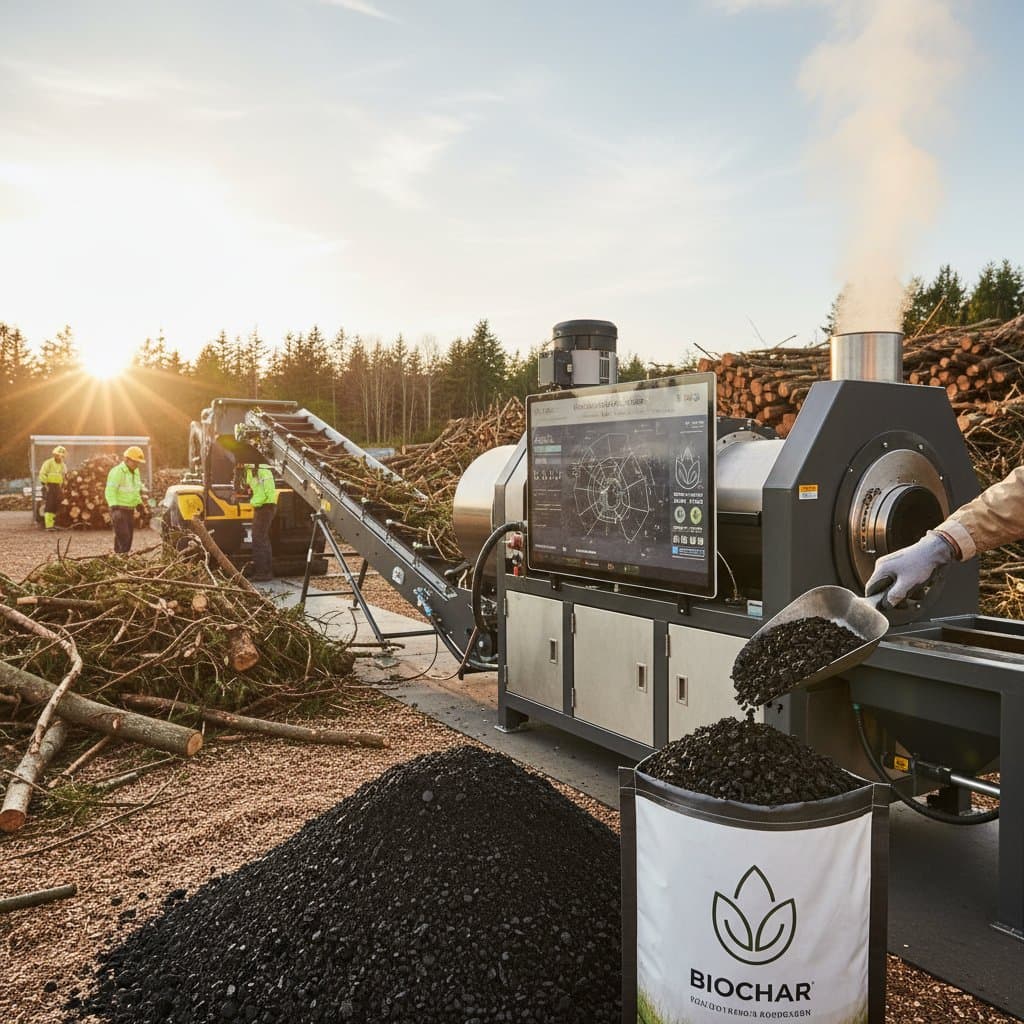
Larger-scale producers benefit from continuous pyrolysis units that process tons of tree waste daily. These systems use automated feeders and controlled atmospheres to achieve consistent biochar quality. Investments range from 50,000 to several million dollars, depending on capacity and features like gas capture for energy reuse.
Industrial setups often integrate with existing forestry or waste management operations. They handle diverse feedstocks, including mixed wood waste, and produce byproducts such as syngas for on-site power. Efficiency reaches 30 to 50 percent yield, with minimal emissions when equipped with filtration.
Maintenance involves regular cleaning of reactors and monitoring for wear. Certification for carbon credits requires tracking production data and verifying sequestration rates. Such systems enable partnerships with agricultural buyers, amplifying revenue potential.
Costs and Projections for 2026
Establishing biochar production involves upfront and ongoing expenses that vary by scale. For DIY setups, initial costs cover kilns, tools, and safety equipment, totaling around 300 to 1,000 dollars. Operational expenses include fuel for heating and labor, amounting to 50 to 100 dollars per batch.
Industrial installations demand higher capital, with modular units starting at 100,000 dollars. These include installation, permitting, and training, offset by grants for sustainable projects. By 2026, experts anticipate biochar production costs to decline 15 to 20 percent due to technological advancements and economies of scale.
Market prices for biochar currently range from 0.50 to 2 dollars per kilogram, influenced by quality and certification. Revenue projections for 2026 suggest a global market exceeding 3 billion dollars, driven by carbon removal incentives. Producers should budget for testing and packaging to meet buyer standards.
Steps to Launch Biochar Production
Starting biochar production requires a systematic approach to ensure success. Begin by assessing available tree waste volume and quality; aim for at least 1 ton annually for viability. Research local regulations on burning and emissions to secure necessary permits.
Next, select and acquire equipment suited to your scale. Test prototypes with small loads to refine techniques and evaluate output. Develop a business plan outlining sales channels, such as direct to farmers or online marketplaces.
- Collect and prepare biomass: Shred tree waste to uniform size for even heating.
- Set up production area: Choose a safe, ventilated site away from structures.
- Conduct pyrolysis: Follow method-specific protocols for temperature and duration.
- Process and store: Cool, grind if needed, and store in dry conditions.
- Market the product: Highlight benefits like carbon sequestration in promotions.
Scale gradually, reinvesting profits into improvements. Networking with sustainability groups provides insights and potential collaborations.
Capitalizing on Sustainability Opportunities
Biochar production positions users at the forefront of the carbon removal economy. As policies incentivize sequestration, certified biochar qualifies for credits valued at 100 to 300 dollars per ton of CO2 removed. This mechanism turns environmental action into direct financial returns.
Homeowners enhance property value through on-site soil improvements, while professionals diversify services with waste-to-value offerings. The practice fosters resilience against rising disposal fees and resource scarcity. Ultimately, biochar bridges waste management with profitable, planet-positive innovation.