
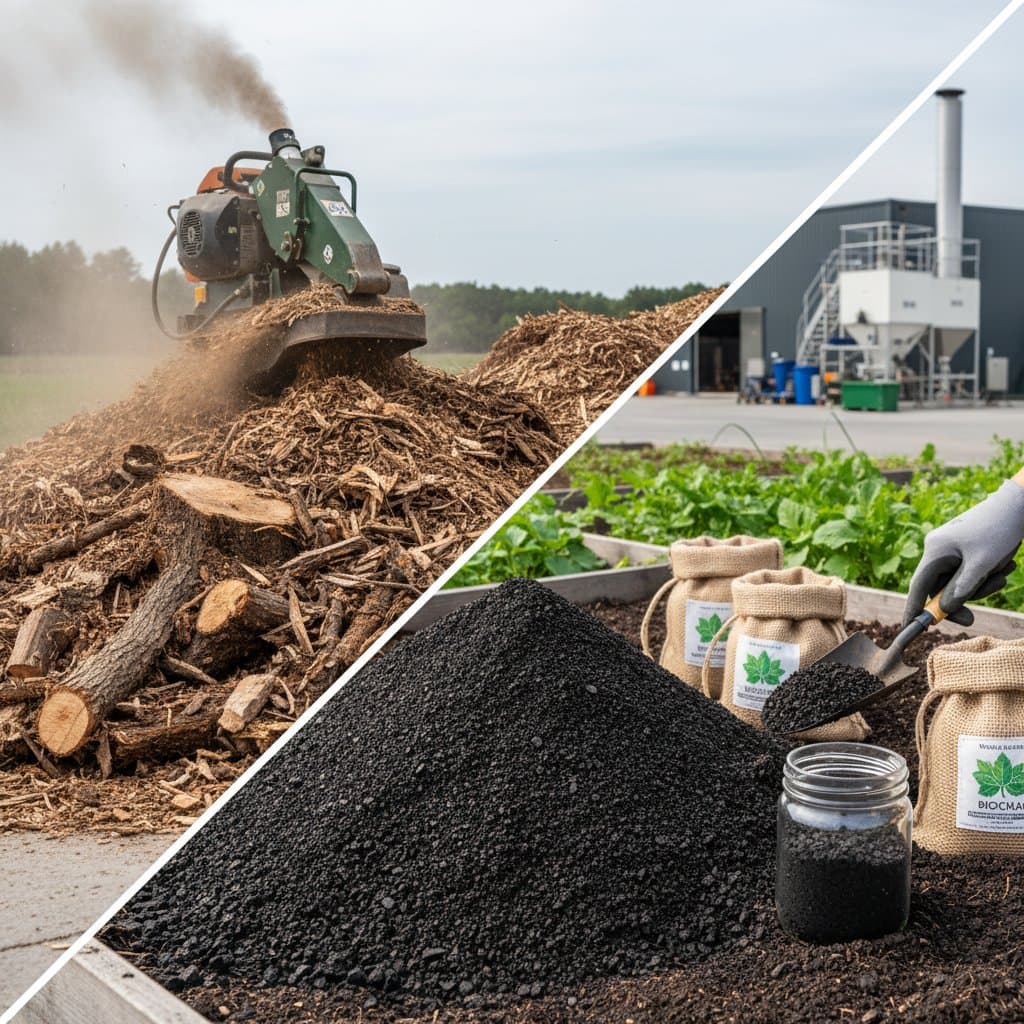
Convert Stump Waste to $200 per Ton Biochar
Tree stumps serve as more than mere remnants from removal projects. They hold significant financial and ecological value. Homeowners and tree service professionals can process this waste into biochar, a material that sells for up to $200 per ton. This method cuts disposal costs and supports carbon storage along with soil improvement.
Biochar production from stumps goes beyond simple revenue. The process encourages environmental responsibility, improves soil fertility, and builds a circular economy in tree care. Property managers and business owners aiming to boost margins benefit from learning this skill for sustained advantages.
Understanding Biochar and Its Benefits
Biochar forms as a stable, carbon-rich material through pyrolysis, which involves heating biomass in low-oxygen conditions. This thermal process releases volatile compounds as syngas and bio-oil, leaving behind a charcoal-like residue that remains in soil for hundreds of years.
The material offers several key benefits. It improves soil structure for enhanced aeration and water retention. Biochar also locks away carbon, helping to reduce greenhouse gas emissions. Farmers, landscapers, and gardeners seek out high-quality biochar from sustainable sources like stump wood, which supports local production and eco-friendly practices.
Unlocking Value from Stump Remnants
After stump removal, options often include grinding into mulch or paying haul-away fees of $50 to $200 per load, depending on local rates. Turning this material into biochar requires basic equipment and labor, transforming expenses into earnings.
Stump wood makes an ideal feedstock because of its high lignin levels, which produce strong, durable char. A typical stump yields 5 to 10 pounds of biochar. When scaled across multiple jobs, this adds up to tons of product valued at hundreds of dollars.
Step-by-Step Biochar Production Guide
Creating biochar from stump waste relies on controlled pyrolysis, focusing on temperature and oxygen control. These steps ensure consistent outcomes:
-
Gather and condition the material. Use a stump grinder to create small chips, then dry them in open air until moisture drops below 20 percent. This preparation maximizes efficiency during heating.
-
Charge the pyrolysis unit. Load the chips into a kiln, retort, or modified metal drum with a vent that limits oxygen entry. This setup encourages char formation rather than complete burning.
-
Apply controlled heating. Raise the temperature slowly to 400 to 700 degrees Celsius while restricting airflow. This allows gases to escape without breaking down the carbon framework.
-
Manage the cooling phase. Seal the unit after heating ends and allow it to cool in an oxygen-free space. Gradual cooling prevents spontaneous combustion.
-
Process the output. Break the cooled biochar into small granules and screen for even size. This prepares it for soil use or packaging for sale.
Adapt the scale to available resources. Home setups work well with simple barrels for small batches. Commercial operations use advanced reactors to handle larger volumes with greater precision.
Assessing Profitability and Market Opportunities
The biochar market grows as users shift toward natural soil enhancers instead of chemical alternatives. Prices range from $100 to $200 per ton, depending on quality, purity, and packaging.
Tree services benefit in multiple ways:
- They reduce costs for hauling and disposal.
- They create extra revenue from waste materials.
- They attract clients who prioritize sustainable methods.
- They may access carbon credits or environmental certifications.
Homeowners improve their properties by mixing biochar into garden beds or compost piles. It holds nutrients, supports beneficial microbes, and reduces water use over time.
Prioritizing Safety and Sustainability
Producing biochar requires careful attention to avoid hazards. Conduct all activities in open, well-ventilated outdoor areas far from structures or flammable items. Wear protective equipment, including gloves, safety goggles, and respirators.
Monitor the heating process closely and keep fire extinguishers nearby. On the environmental side, this method achieves negative carbon emissions by preventing the release of stored wood carbon through decay. It contributes to broader goals for atmospheric carbon reduction.
Options for Home and Professional Production
Home producers can make small amounts with basic equipment, as long as they follow safety guidelines. For larger quantities, partner with certified arborists or specialists who use industrial kilns. These experts ensure high efficiency and regulatory compliance.
Professionals often test the biochar for contaminants or carbon content to confirm its quality for agricultural or commercial applications. Such testing maintains standards regardless of production scale.
Frequently Asked Questions
How much biochar comes from one stump?
A medium-sized stump produces 5 to 10 pounds of biochar. Results vary based on wood type and starting moisture levels.
Can fresh stump grindings work for this process?
Yes, grindings process well, but dry them completely before heating. This step ensures even conversion and better final quality.
Does biochar work for all soil types?
Biochar benefits many soils, particularly sandy or nutrient-poor ones. Mix it with organic matter first to avoid short-term nutrient lockup.
Do permits apply to biochar production?
Small personal batches rarely need permission. Commercial operations should check local regulations on fire safety and emissions.
How should biochar be stored?
Keep it dry in breathable containers or bags, stored inside away from direct light. Proper storage maintains its effectiveness.
Building Profits Through Stump Biochar Initiatives
Converting stump waste into biochar lowers costs and provides a valuable soil product that enhances land health and carbon balance. Homeowners seeking green improvements or tree professionals expanding services find reliable paths to ongoing income.
Start your biochar efforts by reaching out to tree care experts or reviewing detailed production resources to make the most of wood waste.