
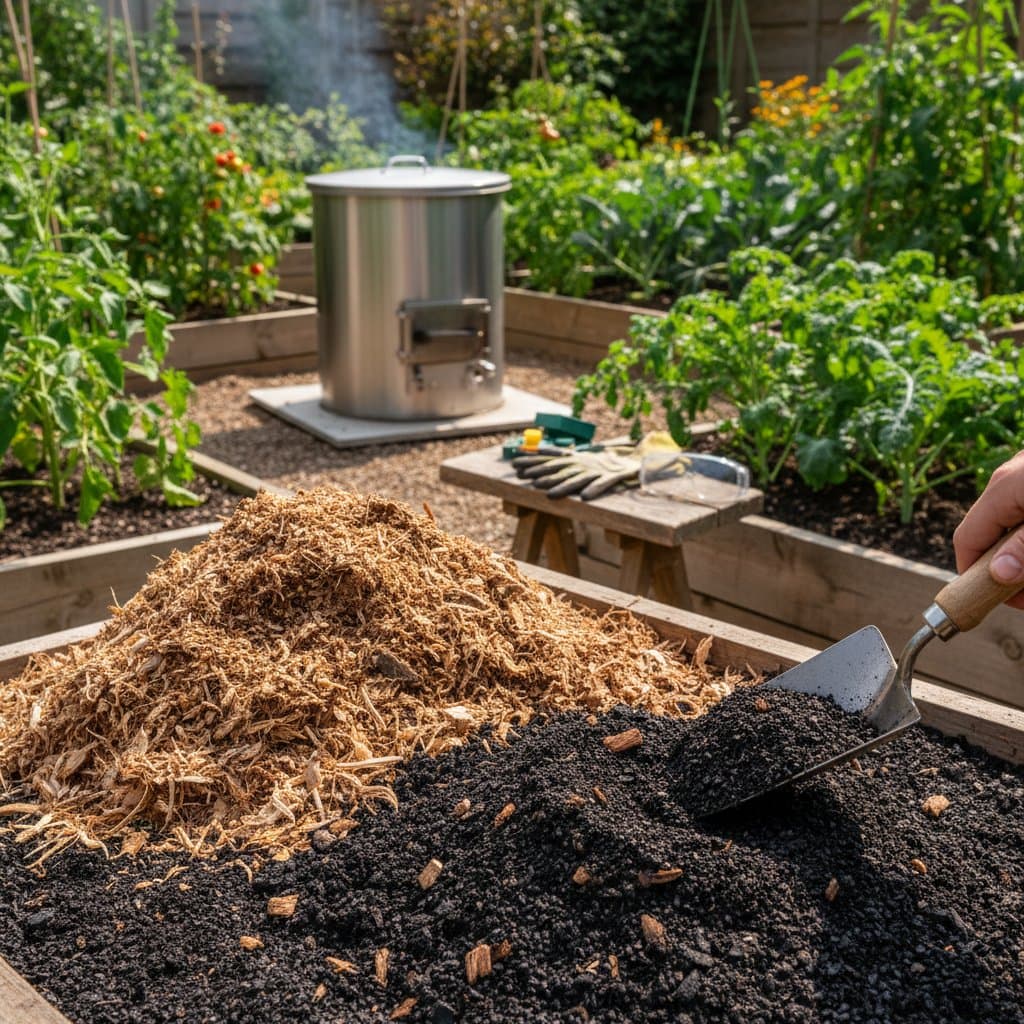
Transform Stump Grinding Waste into Nutrient-Rich Biochar
Tree removal projects frequently result in substantial piles of stump grinding waste, which homeowners often view as mere debris destined for disposal or gradual decomposition. Consider repurposing this material into biochar, a valuable soil amendment that enhances garden productivity. This process not only resolves waste management challenges but also contributes to environmental sustainability by sequestering carbon and improving soil quality.
The following sections detail biochar fundamentals, production methods using stump waste, application strategies, and long-term advantages. Homeowners gain practical knowledge to implement these techniques effectively, turning potential landfill contributions into assets for thriving landscapes.
Understanding Biochar Fundamentals
Biochar consists of carbon-rich charcoal produced through pyrolysis, a thermal decomposition process conducted in limited oxygen conditions. This method converts organic materials, such as wood chips from stump grinding, into a stable, porous substance that persists in soil for centuries. Unlike traditional charcoal used for fuel, biochar serves as a soil conditioner, fostering microbial habitats and facilitating nutrient exchange.
Pyrolysis occurs at temperatures between 400 and 700 degrees Celsius, depending on the equipment and desired properties. The resulting material features a high surface area, often exceeding 300 square meters per gram, which enables superior adsorption of water and minerals. Researchers recognize biochar's role in ancient agricultural practices, such as Amazonian terra preta soils, where it sustained fertility over millennia.
Rationale for Producing Biochar from Stump Waste
Utilizing stump grinding waste for biochar production diverts organic matter from landfills, where it would decompose anaerobically and release methane, a potent greenhouse gas. Instead, pyrolysis stabilizes the carbon, preventing its release into the atmosphere for hundreds of years. This approach aligns with circular economy principles, recycling tree remnants directly back into garden ecosystems.
Homeowners benefit from a cost-effective resource, as stump waste serves as an abundant, no-cost feedstock. Professional tree services often leave such material on-site, providing immediate access for processing. Beyond environmental gains, biochar application reduces irrigation needs by up to 20 percent in sandy soils, according to soil science studies, while enhancing crop yields in nutrient-poor environments.
Step-by-Step Biochar Production from Stump Waste
Producing biochar requires careful preparation and controlled conditions to ensure safety and efficiency. Individuals can manage small-scale operations at home with basic equipment, while larger quantities benefit from professional setups. Follow these steps to convert waste into usable biochar.
Step 1: Gather and Prepare Materials
Collect stump grinding waste promptly after tree removal to prevent contamination or weathering. Inspect and remove contaminants like rocks, soil, or metal fragments that could damage equipment or introduce impurities. Spread the chips in a thin layer under sunlight for several days until moisture content drops below 20 percent; test by squeezing a handful—if no water drips, it is ready.
Aim for uniform particle sizes between 1 and 5 centimeters to promote even heating. For every 100 kilograms of fresh waste, expect about 20 to 30 kilograms of finished biochar, depending on the wood type and process efficiency.
Step 2: Select and Load Equipment
Choose a suitable pyrolysis device, such as a 55-gallon metal drum modified with vents or a commercial cone kiln available from agricultural suppliers. Ensure the setup stands on non-flammable ground, away from structures or vegetation. Load the dried chips loosely to allow gas circulation, filling the container to about 80 percent capacity to prevent overflow during the reaction.
Seal the unit partially to restrict oxygen inflow, which is crucial for carbonization rather than combustion. Wear protective gear, including gloves, goggles, and a respirator, to handle potential smoke and heat.
Step 3: Initiate and Monitor Pyrolysis
Start the process by igniting the top layer with kindling or a propane torch, then cover to initiate smoldering. Maintain temperatures around 500 degrees Celsius by adjusting vents; use a thermocouple if available to track progress. The reaction typically lasts 4 to 8 hours, signaled by blue flames or steam emission turning to minimal smoke.
Observe for even conversion: the material should darken progressively without forming white ash, which indicates excess oxygen. Pause and adjust if hotspots develop, ensuring the entire batch processes uniformly.
Step 4: Quench and Stabilize the Product
Terminate the pyrolysis by sealing all vents completely or applying a fine water mist to smother remaining embers. Allow the unit to cool for at least 12 hours before opening, preventing re-ignition or steam burns. The cooled biochar appears as brittle, black fragments with a faint earthy aroma.
Transfer the product to a ventilated area for final drying if any moisture remains. This quenching step preserves the carbon structure, yielding biochar with 80 to 90 percent fixed carbon content.
Step 5: Process and Charge for Soil Use
Grind the cooled biochar into granules ranging from 1 millimeter to 1 centimeter using a hammer mill or manual crushing. To activate it, blend one part biochar with five parts compost or aged manure, then moisten with diluted organic fertilizer like worm castings tea. Let this mixture incubate for 2 to 4 weeks, allowing microbes to colonize the pores and load nutrients.
Charged biochar integrates seamlessly into soil without initially depleting available minerals. Test small batches in garden plots to observe pH effects, as untreated biochar can raise soil alkalinity slightly.
Key Advantages of Biochar in Garden Applications
Biochar elevates soil performance across multiple dimensions, making it indispensable for sustainable gardening. Its structure mimics natural humus, promoting conditions for robust plant growth.
- Soil Aeration and Drainage: Porous surfaces create channels for oxygen diffusion, reducing compaction in clay-heavy soils and preventing root rot.
- Water and Nutrient Holding: Absorbs up to five times its weight in water, minimizing runoff and ensuring steady moisture during dry spells.
- Microbial Habitat Enhancement: Vast internal surfaces shelter beneficial bacteria and fungi, boosting decomposition rates by 15 to 30 percent.
- Carbon Sequestration: Locks away 50 percent or more of the original biomass carbon, contributing to climate mitigation efforts.
- Fertilizer Efficiency: Retains cations like potassium and nitrogen, potentially cutting fertilizer use by 10 to 25 percent over seasons.
These benefits compound over time, with full effects visible after one to two growing cycles. In acidic soils, biochar buffers pH toward neutrality, supporting a wider range of crops.
Application Guidelines and Timing
Incorporate biochar into new garden beds during soil preparation or as a top-dress for existing plantings. For raised beds or vegetable plots, till it into the top 15 centimeters at 5 to 10 percent by volume—roughly 5 liters per square meter. Around trees and shrubs, apply 2 to 5 centimeters as mulch, watering thoroughly to settle it.
Timing matters: add in fall for winter integration or spring before planting to allow microbial establishment. In containers, limit to 5 percent of potting mix to avoid over-aeration. Monitor plant response and adjust rates based on soil type; sandy soils tolerate higher applications for improved retention.
Home-Based Versus Commercial Production Options
Home production suits occasional users with limited waste volumes, using improvised kilns for batches under 50 kilograms. This method demands vigilance for emissions control—position setups downwind and comply with local burn regulations. Costs remain low, often under 50 dollars for basic modifications.
Commercial services offer precision for larger scales, employing retorts that capture syngas for energy reuse and minimize particulates. Facilities process tons daily, providing certified biochar free of contaminants. Select providers based on feedstock acceptance policies, as some specialize in arborist waste.
Practices for Effective and Sustainable Integration
Source only untreated stump wood to avoid releasing harmful volatiles like creosote during heating. Always charge biochar prior to application, ensuring it delivers nutrients rather than drawing them from soil reserves. Pair it with cover crops or organic mulches to amplify decomposition and biodiversity.
Store excess biochar in breathable containers away from moisture, maintaining its porosity for up to a year. Reapply every 3 to 5 years, as gradual breakdown occurs, though core carbon remains stable. Track garden metrics like yield and water use to quantify improvements from this practice.
Sustaining Garden Vitality Through Biochar Renewal
Repurposing stump grinding waste into biochar closes the nutrient cycle from tree to soil, fostering resilient ecosystems. Homeowners achieve healthier plants with reduced inputs, while contributing to broader carbon reduction goals. Implement these methods to elevate garden outcomes and embrace waste as a pathway to renewal.