
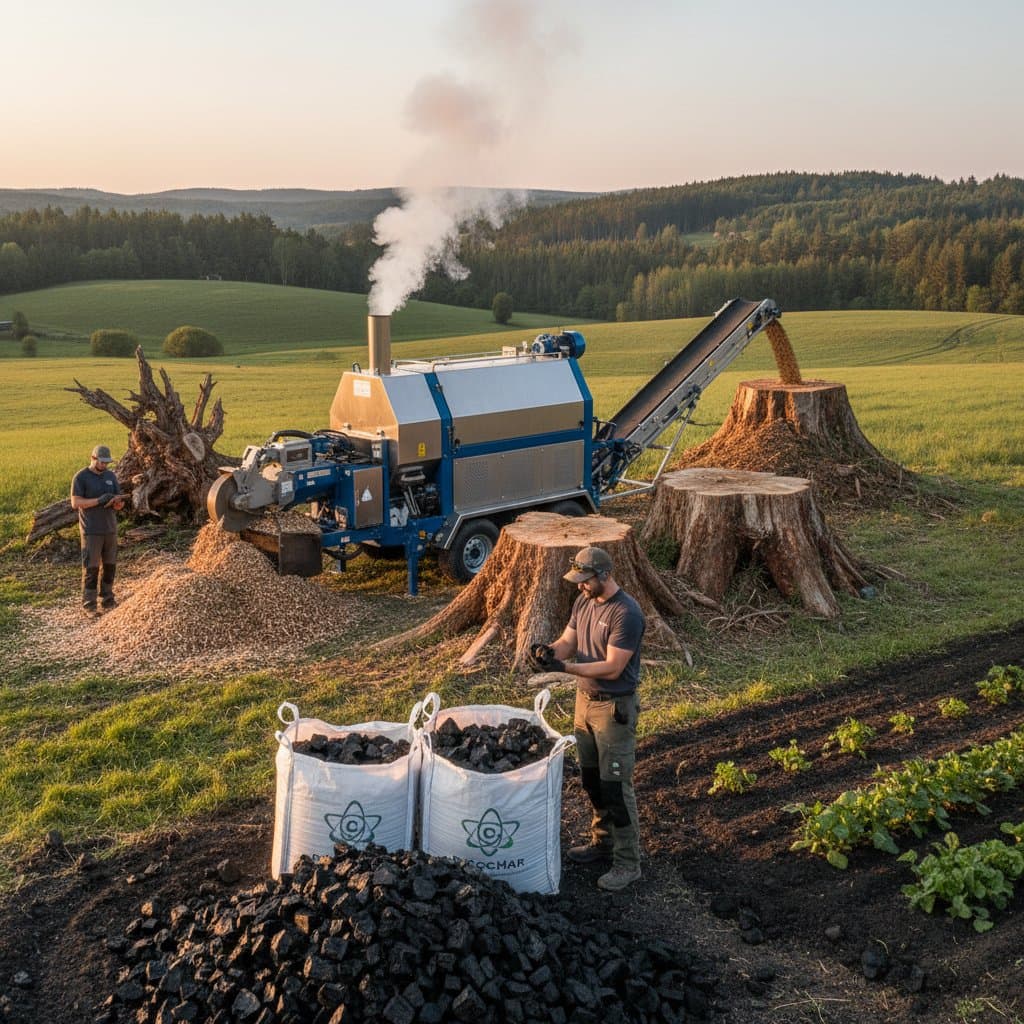
Transform Tree Stumps into Biochar Profit Streams
Tree removal frequently leaves behind persistent stumps that require grinding or disposal for homeowners and land managers. These remnants often represent mere obstacles. However, amid rising emphasis on sustainable land management and carbon-conscious practices, such stumps hold potential as valuable resources. Converting wood waste into biochar provides opportunities to lower disposal expenses, enhance soil quality, and generate revenue. This guide details the conversion of tree stumps into biochar, including production costs, methods, equipment needs, and steps for operations ranging from small to large scale.
Biochar Production Costs
National Averages
Biochar production costs from tree stumps vary based on equipment, scale, and feedstock type. Mobile units for small operations start at several thousand dollars, whereas advanced pyrolysis systems cost considerably more. Primary expenses encompass grinders or chippers, kilns or retort systems, heating fuel, and labor for processing and oversight.
Small-scale producers typically incur costs of several hundred to several thousand dollars per cycle, accounting for equipment use, upkeep, and workforce. These outlays can be recovered through sales to nearby farms, nurseries, or landscapers seeking biochar's soil benefits.
Costs by Scale
- Small-Scale Operations: A basic kiln or barrel configuration enables production of several hundred pounds per batch for homeowners or small contractors. Initial investments remain modest, and fuel often derives from the processed wood waste itself.
- Medium-Scale Operations: Contractors with steady stump access benefit from continuous-feed pyrolysis units that enhance efficiency. Such systems manage greater volumes and yield uniform, superior biochar.
- Commercial Operations: Industrial setups process multiple tons daily, involving substantial equipment expenses yet promising robust returns. These facilities supply agricultural, horticultural, and carbon credit sectors.
Principal Cost Elements
- Feedstock Preparation: Reducing stumps to chips or smaller fragments for optimal pyrolysis airflow and heating.
- Labor: Managing transport, handling, and process supervision.
- Equipment: Including kilns, retorts, grinders, and sieves.
- Energy: Propane, natural gas, or biomass to power the reactor.
- Packaging and Distribution: Bags, labels, and buyer delivery.
- Regulatory Compliance: Permits for environmental or air quality standards per local rules.
Biochar Production Systems
Biochar production employs various methods, each aligned with specific scales and feedstocks. Selection hinges on objectives, material availability, and financial resources.
Traditional Pit or Mound Kilns
This approach entails burning wood in a low-oxygen setting within a pit or earthen mound.
Advantages:
- Minimal setup expenses.
- Straightforward for limited batches.
- Relies on rudimentary tools and local materials.
Disadvantages:
- Difficult temperature and oxygen regulation.
- Variable biochar quality.
- Risk of elevated smoke if poorly controlled.
Retort Kilns
Retort systems use sealed vessels for indirect wood heating, capturing and repurposing released gases as fuel.
Advantages:
- Uniform, efficient combustion.
- Elevated yields and superior biochar quality.
- Reduced emissions relative to open methods.
Disadvantages:
- Demands technical expertise.
- Greater upfront costs.
- Requires ongoing maintenance and vigilance.
Continuous Pyrolysis Systems
These units sustain biomass input and biochar output for professional or industrial use.
Advantages:
- Superior efficiency and volume.
- Ideal for commercial production.
- Features automated temperature and oxygen controls.
Disadvantages:
- High acquisition and running costs.
- Necessitates reliable feedstock supply and skilled personnel.
DIY Approaches Versus Professional Services
Biochar creation suits DIY efforts for modest quantities, yet it requires rigorous safety, efficiency, and ecological adherence.
DIY Benefits:
- Reduced initial expenses.
- Opportunity to test diverse feedstocks.
- Promotes learning and personal sustainability.
DIY Drawbacks:
- Challenges in maintaining steady temperatures absent specialized gear.
- Ensuring minimal smoke to meet air standards.
- Extensive time for preparation and post-process cleanup.
Professional Benefits:
- Dependable, high-quality output.
- Enhanced efficiency and production rates.
- Established networks for market access and regulatory compliance with environmental and safety norms.
Criteria for Professional Engagement:
For substantial stump volumes or commercial sales, collaborate with processors or acquire industrial equipment to conserve time and mitigate risks. Homeowners or landscapers with limited waste may find DIY viable for sustainable amendment production.
Converting Tree Stumps to Biochar
The transformation process includes preparation, carbonization, and refinement to yield stable, marketable biochar.
1. Stump Preparation
- Grind or chip stumps into uniform pieces to facilitate even heating and airflow.
- Eliminate soil or debris to avoid contamination and inconsistent results.
- Dry the fragments for days or weeks based on size and initial moisture; drier material yields superior biochar.
2. Method Selection
- Opt for barrel kilns or pits in small runs: Load wood, ignite from above, and restrict oxygen via airflow management.
- Employ retorts or continuous systems for larger volumes to ensure reliability.
3. Carbonization Phase
- Initiate combustion gradually while observing smoke: Dense white smoke signals moisture release, thin blue indicates carbonization.
- Sustain heat until material blackens and lightens.
- Seal the unit or cover the pit to exclude oxygen upon completion, averting ash development.
4. Cooling and Quenching
- Permit natural cooling or apply minimal water to halt reactions.
- Refrain from excessive quenching to retain porosity and integrity.
5. Size Reduction and Sieving
- Fragment larger pieces with hammers or crushers.
- Sieve to achieve consistent particle sizes for packaging or soil integration.
6. Storage and Packaging
- House biochar in sealed bags or containers to maintain dryness.
- Apply labels detailing origin, advantages, and applications for marketing.
Strategies for Effective Production
- Regulate airflow precisely: Excess oxygen produces ash, insufficient hinders carbonization.
- Document batches with details on feedstock, temperatures, and durations to foster uniformity.
- Analyze samples for nutrients and pH to refine quality.
- Harness process-generated heat for wood drying or site warming.
- Forge alliances with local farms, compost facilities, and soil vendors to minimize shipping expenses.
Common Questions
Primary Uses of Stump-Derived Biochar
This biochar serves as a soil enhancer, boosting water retention, nutrient uptake, and microbial function. It facilitates carbon sequestration, suiting gardens, agriculture, and land restoration.
Profit Potential from Stump Biochar
Earnings vary with operation size, process optimization, and buyer networks. Modest local sales yield steady income for small producers; scaled ventures with reliable inputs and machinery achieve stronger margins. Integrating with stump removal services builds reliable revenue.
Permit Requirements
Certain regions mandate air quality or waste handling approvals, particularly for ongoing or expansive systems. Consult local environmental authorities prior to operations to address emissions and safety.
Suitable Stump Types
Most hardwood and softwood stumps qualify. Dense hardwoods such as oak or maple generate robust biochar; softwoods like pine yield lighter variants. Exclude chemically treated or painted wood to prevent impurities.
Optimal Storage Practices
Maintain biochar in dry, sheltered locations shielded from precipitation. Seal in bags or bins to block moisture, preserving efficacy and ease of use.
Biochar Versus Charcoal
Both result from oxygen-limited wood pyrolysis, yet biochar targets soil enhancement with its porous design for carbon retention and health benefits. Charcoal primarily fuels cooking or heating.
Launching Your Biochar Initiative
Converting tree stumps to biochar transcends recycling; it fosters economic and ecological gains through soil revitalization and emissions reduction. Homeowners and contractors alike can leverage this for viable, green enterprises.
Assess your wood waste volume and feasible scale first. Acquire matching equipment and trial small batches to perfect techniques. Upon achieving reliability, engage regional farmers, landscapers, or public entities valuing eco-products. Precision and dedication transform stumps into enduring income and sustainability sources.