
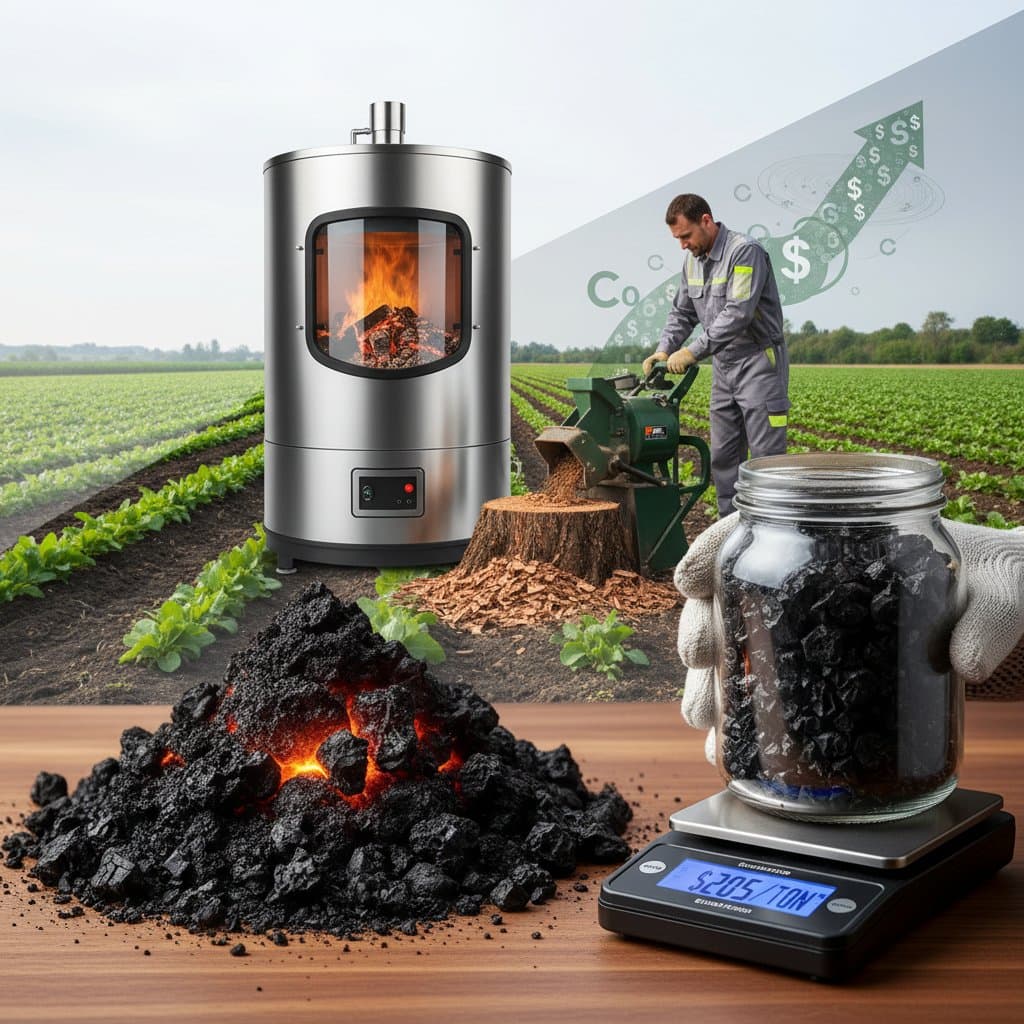
Key Challenges in Stump-to-Biochar Conversion
Producing biochar from tree stumps presents specific hurdles that influence efficiency and profitability. Addressing these early ensures smoother operations and higher yields.
- Stumps require drying prior to pyrolysis. Freshly cut wood needs several weeks to achieve the optimal moisture level of approximately 15 percent.
- Equipment selection involves options such as small-scale batch kilns, mobile retorts, or continuous units. The best fit aligns with production scale and site constraints.
- Labor demands include cutting, splitting, and loading materials. Streamlined processes lower costs and elevate margins.
- Energy management features in advanced systems capture excess heat for drying or other uses, enhancing overall efficiency.
Homeowners and small-scale operators who tackle these elements produce superior biochar, cut down on waste, and create additional revenue opportunities.
The Biochar Production Process: Step-by-Step
The conversion of stumps into biochar follows a precise sequence that balances technical precision with practical execution. Prioritizing safety and optimization yields reliable results. Below is a detailed guide to the process.
- Prepare the stumps: Clear away soil and debris, then slice the stumps into uniform pieces. Allow drying until moisture content drops to around 15 percent for optimal carbonization.
- Load the kiln or retort: Position the pieces to promote airflow, facilitating uniform heating and reducing incomplete burns.
- Initiate heating: Light the material and regulate oxygen intake to promote pyrolysis over full combustion. This step preserves carbon structure.
- Sustain carbonization: Hold temperatures steady as volatile gases escape, leaving behind stable carbon residue. Monitor to avoid over-charring.
- Cool and harvest: Seal the unit post-process to prevent re-ignition. After cooling, extract the biochar, grind it if needed, and sift for consistent particle size.
- Store and market: Pack the product into bags or bulk containers. Target buyers include gardeners, landscapers, and soil remediation initiatives.
Processing a batch requires four to eight hours, varying by stump volume and equipment size. Regular runs enable even modest setups to build consistent income.
Cost and Revenue Potential
Initial investments in biochar production pay off through substantial returns, particularly with efficient systems. Small-scale kilns range from $1,000 to $5,000, whereas industrial models exceed $15,000. Operational expenses for labor and energy fluctuate, though many designs recycle pyrolysis gases as fuel to minimize outlays.
High-grade biochar commands $200 to $400 per ton, influenced by purity, form, and market conditions. One average hardwood stump generates 10 to 25 pounds of product. Accumulating output from routine stump removals transforms disposal costs into viable earnings.
Operators often boost profits by mixing biochar with organic matter to form premium soil enhancers. Direct sales to eco-conscious clients, such as urban agriculture operations, further capitalize on demand for green products.
DIY Production Versus Professional Services
Homeowners handling limited stump volumes benefit from compact batch kilns, which support hands-on learning and small-scale output for personal or modest commercial use. Safety remains paramount: pyrolysis generates intense heat, fumes, and risks. Operate in open spaces with ventilation, use protective equipment, and adhere to fire codes.
Commercial-scale efforts or high-volume needs suit professional services with portable units. These experts process materials on-site, deliver uniform quality, and sometimes offer revenue-sharing models. Outsourcing avoids trial-and-error phases while guaranteeing compliance and efficiency.
Selecting a Reliable Biochar or Arborist Partner
Partnering with qualified experts streamlines stump conversion and safeguards outcomes. Evaluate candidates based on these criteria:
- Arborist certification: Verifies expertise in safe stump extraction and site management.
- Pyrolysis proficiency: Review past work and equipment specifications for relevance.
- Regulatory awareness: Confirm familiarity with local emissions and waste guidelines.
- Pricing clarity: Expect detailed breakdowns covering labor, energy, and projected yields.
- Environmental focus: Providers prioritizing sustainability yield biochar with enhanced properties.
A vetted professional optimizes safety, yield, and financial gains.
Frequently Asked Questions
How much biochar yields from one tree stump?
A medium hardwood stump produces 10 to 25 pounds, based on wood density and initial moisture. Larger specimens increase output proportionally.
Can a fire pit serve for biochar production?
Small quantities are feasible in a fire pit, but precise control over air and heat proves challenging. Dedicated kilns deliver better consistency and lower emissions.
Is biochar suitable for vegetable gardens?
Biochar enhances garden soil when activated with compost or nutrients, improving fertility and moisture retention without toxic byproducts.
Do I need a permit for home biochar production?
Requirements vary by location; small-scale operations often fall under general fire permits. Consult local authorities for air quality and burn regulations to ensure compliance.
How can I sell the biochar I produce?
Market through local nurseries, online platforms, or farmers' markets. Highlight sustainability benefits to attract gardeners and landscapers seeking premium amendments.
Can stump-derived biochar qualify for carbon credits?
Yes, certified biochar from verified sources contributes to carbon sequestration programs. Engage accredited verifiers to document and monetize environmental impacts.
Build a Profitable, Eco-Friendly Stump Management Strategy
Integrating biochar production into stump removal routines creates enduring value. This approach not only generates income exceeding $200 per ton but also advances soil restoration and emission reductions. Start small with preparation and equipment research, then scale as expertise grows. Professionals and homeowners who adopt these methods turn environmental challenges into sustainable opportunities.