
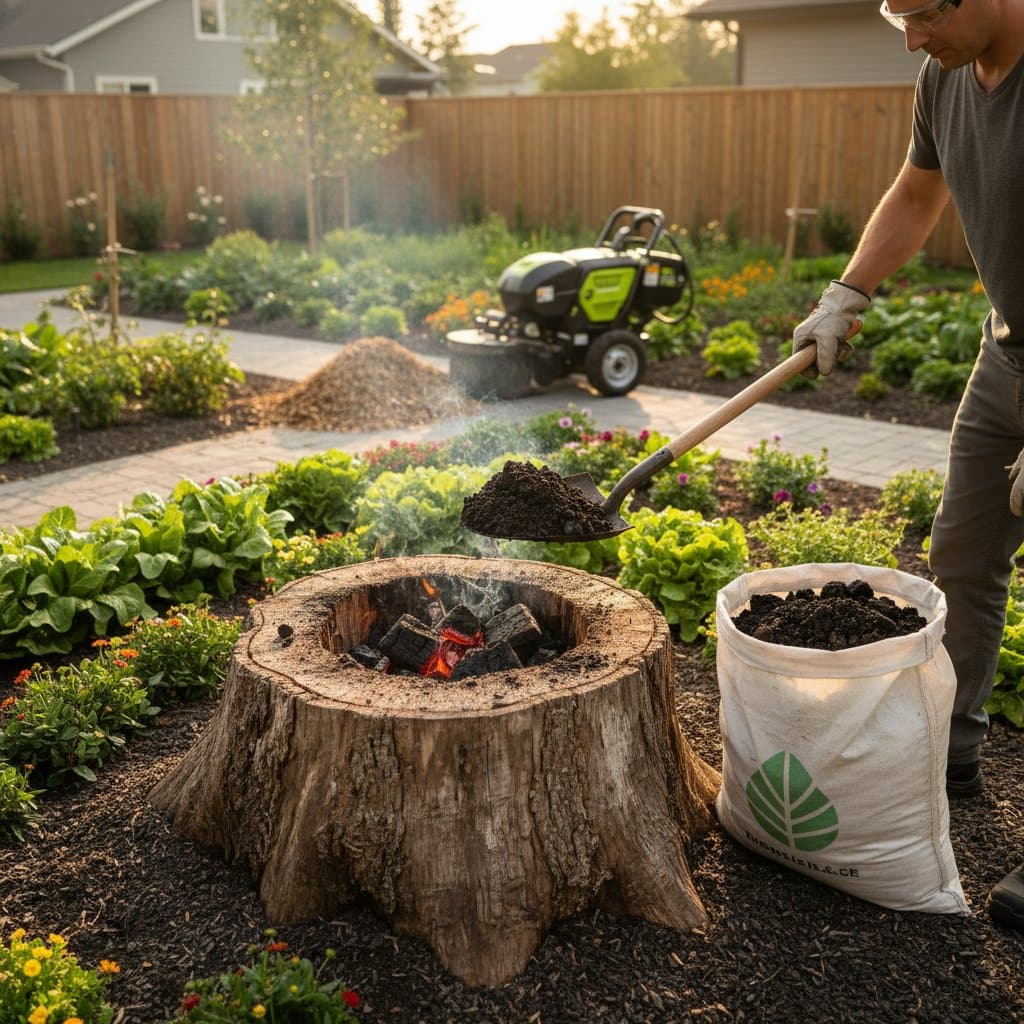
- Labor and transportation: Relocating heavy stump segments incurs fees, avoided through onsite processing.
- Local disposal charges: Biochar conversion bypasses landfill expenses completely.
Biochar Production Techniques from Stumps
Multiple approaches exist for biochar creation from stumps, each aligned with varying expertise and financial constraints.
Pit Kiln Approach
The pit kiln serves as the simplest choice for residential users. Dig a shallow trench, arrange stump wood for controlled combustion, and seal it to restrict oxygen.
Advantages:
- Minimal expense and straightforward assembly
- No specialized tools necessary
- Appropriate for small to medium volumes of stump material
Disadvantages:
- Reduced carbon efficiency
- Increased smoke generation
- Variable biochar consistency
Metal Drum Kiln
Repurpose a steel drum as a burn enclosure for precise control. This method suits modest quantities and yields improved results.
Advantages:
- Uniform biochar production
- Mobile and cost-effective design
- Diminished smoke and residue
Disadvantages:
- Restricted batch sizes
- Demands supervision throughout combustion
- Involves a moderate skill requirement
Retort System
Retort kilns employ indirect heating for superior purity and efficiency. Producers targeting sales favor this option.
Advantages:
- Premium, consistent biochar quality
- Optimal carbon preservation
- Low emission levels
Disadvantages:
- Elevated startup costs
- Demands technical configuration
- Less suitable for occasional use
Commercial-Scale Production
Homeowners or enterprises may acquire advanced units or collaborate with regional facilities.
Advantages:
- Expandable for revenue generation
- Reliable output standards
- Opportunities for distribution to agricultural buyers
Disadvantages:
- High equipment investments
- Adherence to regulatory standards required
- Dependence on steady raw material sources
Evaluating DIY Production Against Professional Services
Biochar from stumps rewards personal involvement, though suitability varies.
DIY Benefits:
- Eliminates disposal expenditures
- Grants complete process oversight
- Fosters knowledge in environmental stewardship
DIY Obstacles:
- Necessitates protective equipment and fire code compliance
- Demands significant time for substantial stumps
- Results hinge on method and tools employed
Professional Services:
Experts manage grinding, relocation, and conversion with efficiency. Certain arborist firms provide biochar processing as an optional feature, utilizing advanced kilns for premium products that fetch higher rates.
Scenarios for Professional Engagement:
- Multiple large stumps present
- Regional rules prohibit open flames
- Marketable biochar quality desired
Step-by-Step Guide to Biochar Creation from Tree Stumps
Execute these procedures to convert stumps into beneficial garden material.
-
Evaluate the Stump
Determine size, wood type, and state. Hardwoods yield compact biochar, whereas deteriorated stumps offer reduced viable content. -
Select Production Technique
Opt for pit, drum, or retort based on resources and project scope. -
Prepare Raw Material
Reduce the stump to uniform chips or fragments. Fine particles ensure even charring and optimal biochar formation. -
Build the Kiln Setup
- For a pit kiln, excavate a shallow depression and reinforce with stones or metal sheeting.
- For a drum kiln, install base vents on a steel barrel and fit a detachable cover.
- For a retort, assemble an enclosed vessel within a secondary heating apparatus.
-
Initiate Combustion
Light the top layer to promote gradual downward pyrolysis. Restrict airflow by partially covering as charring advances. -
Oversee the Reaction
Maintain fire boundaries and prevent excess burning. Aim for charring without ashing. -
Extinguish and Temper
Upon achieving full char with residual glow, douse with water or seal for gradual cooling. This secures carbon integrity. -
Process and Preserve
Fragment the cooled biochar and store in airtight containers for future application or distribution.
Strategies for Effective Biochar Production
- Pre-activation recommended: Combine biochar with compost, organic waste, or nutrients prior to soil integration for enhanced retention.
- Prevent excessive burning: Distinguish biochar from ash by halting at uniform black coloration and fragile consistency.
- Control airflow precisely: Regulated ventilation minimizes smoke and ensures thorough charring.
- Employ safety equipment: Utilize gloves, protective eyewear, and respiratory masks during dust or heat exposure.
- Test variations: Record observations on wood types, durations, and yields to optimize future batches.
Common Inquiries on Biochar from Stumps
What Volume of Biochar Emerges from One Stump?
A sizable hardwood stump generates multiple gallons, potentially valued at hundreds of dollars through proper processing and bulk or retail sales.
Is Home-Produced Biochar Marketable?
Affirmative; local horticulturists, landscapers, and farms seek artisanal biochar. Verify compliance with area standards for packaging and labeling prior to commerce.
Are Permits Required for Stump Burning into Biochar?
Certain jurisdictions mandate fire permits or limit open burns. Consult fire authorities or environmental agencies in advance.
Which Woods Produce Superior Biochar?
Hardwoods including oak, maple, and hickory form robust, enduring biochar. Softwoods function adequately but degrade more rapidly in soil.
How Durable Is Biochar in Soil?
Biochar persists for decades, bolstering structure, moisture holding, and nutrient supply over time.
Does Biochar Production Yield Profit?
Indeed, particularly from existing materials. Sales or personal soil enhancement reduce fertilizer needs and elevate crop performance.
Implementing Biochar from Your Stumps
Convert stump disposal from burden to asset through biochar. Avoid removal and transport fees by producing material that enriches gardens and supports earnings. Pursue DIY methods or professional aid to achieve yard clarity, soil vitality, and reduced environmental impact.
Prepare by reviewing regulations, securing tools, and scheduling safe operations. For streamlined results, engage arborists or biochar experts. Stumps harbor untapped value; strategic effort unlocks sustainability and financial returns.