
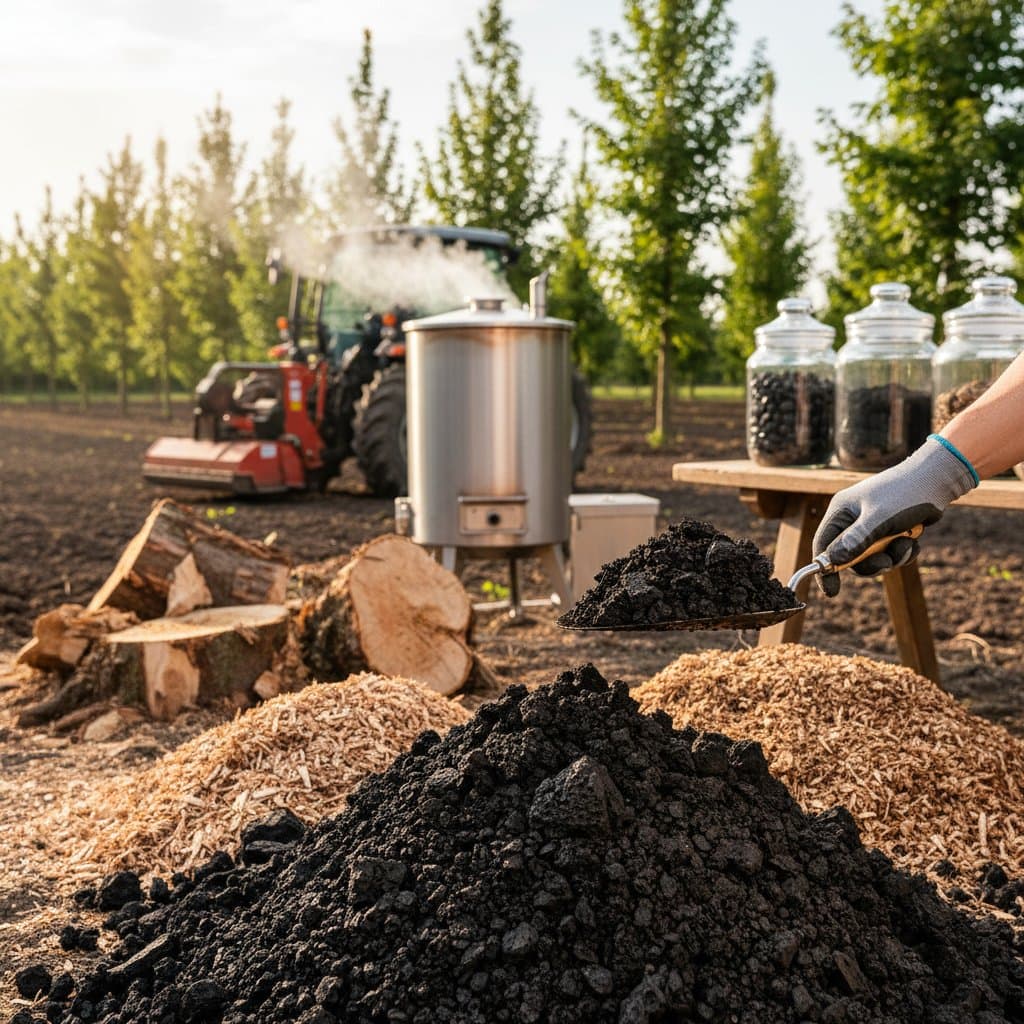
Turn Stump Grinding Waste into Biochar for Profit
Turning stump grinding waste into biochar offers a profitable method to repurpose debris that would otherwise require costly disposal. This process converts what many view as a burden into a product that commands prices up to 500 dollars per ton. The following sections detail the economics, equipment options, and steps required to begin production.
Production Costs and Economics
The national average cost to produce biochar from stump waste ranges from 100 to 200 dollars per ton. This figure accounts for fuel, equipment depreciation, and labor. With selling prices reaching 500 dollars per ton, margins remain attractive for both small and scaled operations.
Costs vary by scale. Backyard setups using basic drums incur higher per ton expenses due to lower efficiency. Commercial mobile units lower costs through higher throughput. Cooperative models distribute expenses across multiple users.
Key cost elements include the kiln or pyrolysis unit, fuel for heating, labor for processing, transportation to markets, and any required permits.
Biochar Production Systems
Traditional pit kilns represent the simplest approach. Wood waste undergoes heating in low oxygen environments within a covered pit. These require minimal investment but offer limited control over output quality.
Retort kilns provide better results through indirect heating in sealed containers. They produce consistent biochar with reduced emissions. Initial costs are higher, and operators must monitor temperatures closely.
Mobile pyrolysis units process material on site. Tree service businesses benefit from reduced hauling. These demand significant capital and skilled handling.
DIY Production or Professional Partnership
Individuals can manage small scale production with modified drums. This route minimizes expenses and allows full oversight of the process. Success requires attention to temperature and safety protocols to avoid producing ash instead of biochar.
Professional producers deliver uniform material suitable for commercial sale. Advanced systems capture gases and maintain precise conditions. Those intending to market biochar at scale often gain from such partnerships.
Step by Step Conversion Process
- Collect stump grindings and clear away rocks or contaminants. Dry the material thoroughly beforehand.
- Select and prepare a kiln or drum with adequate ventilation and safety clearances.
- Load the grindings while preserving space for gas movement.
- Apply heat under low oxygen conditions to initiate pyrolysis. Maintain temperatures between 400 and 700 degrees Fahrenheit.
- Allow complete cooling after carbonization completes.
- Crush and screen the product to achieve uniform particle size.
- Package the biochar in sealed containers for storage or sale.
Operational Best Practices
Dry input material prevents excess smoke and improves yields. Regulate airflow to prevent full combustion. Test finished biochar for lightness and porosity before distribution. Local garden centers and farms represent reliable initial customers.
Yield Expectations and Considerations
One ton of stump grindings typically yields 200 to 300 pounds of biochar. Moisture content and process control influence the exact amount.
Permits may apply depending on local air quality regulations. Biochar serves soil amendment, composting, and water filtration purposes. Production itself does not harm the environment when emissions are managed. Buyers can be located through agricultural supply networks and landscaping firms.
Starting Production
Consistent quality and attention to safety enable operators to generate revenue while supporting sustainable practices. Small scale testing helps refine techniques before expansion. Local demand for soil amendments provides a ready market for the output.