
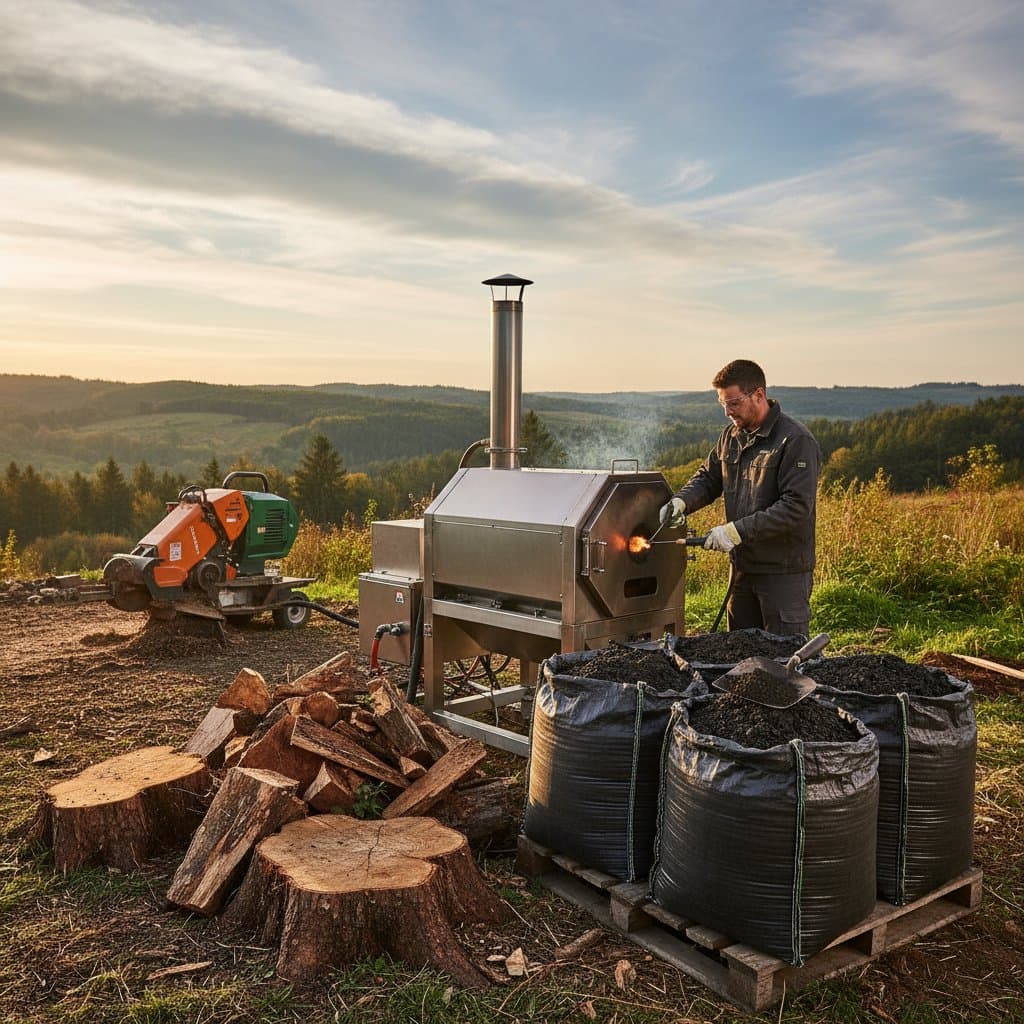
Turn Tree Stumps Into Valuable Biochar for Over 500 Dollars Profit
Tree stumps left after removal often create disposal challenges. Those same stumps convert into biochar, a stable carbon product that sells readily. Homeowners and professionals generate 500 dollars or more from material once considered waste.
Proper technique, suitable equipment, and process knowledge produce consistent results. The method also improves soil and stores carbon. This guide presents each stage from stump selection to sale.
What Biochar Is and How It Performs
Biochar forms when organic material such as wood undergoes pyrolysis in limited oxygen. The process creates a porous solid that holds nutrients and water in soil for many years.
Gardeners and farmers use biochar to reduce irrigation needs and support microbial activity. Tree stumps supply dense feedstock that yields durable char with high market value.
Factors That Determine Profit Levels
Several variables control returns. Larger hardwood stumps from oak or maple produce denser char that sells at premium prices. Softer species still work but fetch lower amounts.
A basic metal drum kiln costs under 300 dollars to build. Professional retort units cost more yet increase yield and shorten batch times. Dry wood below 20 percent moisture improves efficiency and quality.
Biochar output equals 20 to 35 percent of input weight. Retail prices range from 600 to 1200 dollars per ton for packaged product. Local sales to gardeners and farms often exceed wholesale rates.
Step by Step Production Process
- Cut the stump into sections with a chainsaw and remove soil or stones.
- Air dry the pieces in a covered, ventilated space until moisture falls below 20 percent.
- Load sections loosely into an insulated kiln designed for low oxygen flow.
- Heat gradually while monitoring temperature to avoid open flames.
- Seal vents once charring finishes and allow complete cooling.
- Crush the cooled material and mix it with compost tea or liquid nutrients.
- Package the charged biochar in sealed bags for storage or sale.
DIY Production Compared With Professional Service
Home builders keep startup costs low when they already own tools. The work demands physical effort and carries burn risks. Output volume stays modest.
Professional operators deliver faster, uniform batches and handle multiple stumps per day. Service fees rise accordingly. Tree companies often integrate production into existing routes for added revenue.
Realistic Profit Calculation
A 24 inch stump yields roughly 100 pounds of dry wood. At a 25 percent conversion rate this produces 25 pounds of biochar. Sold at one dollar per pound the batch returns 25 dollars. Twenty similar stumps generate 500 dollars after basic equipment expenses.
Tree services avoid landfill fees while creating a second income stream. Packaging charged biochar in small retail units raises margins further.
Questions Before Starting Production
Hardwoods deliver the strongest structure and longest soil life. Fresh stumps require several weeks of drying. Local air quality rules may require permits. Properly charged biochar supports vegetable gardens without nutrient theft. Direct sales to nearby growers provide the strongest margins. Heat resistant gloves, eye protection, and a fire extinguisher remain essential. Most batches finish in three to six hours plus cooling time.
Soil and Community Advantages
Small scale production diverts wood from landfills and lowers emissions. Landscapers who offer the service differentiate themselves as sustainable operators. Steady local demand supports repeat sales and gradual equipment upgrades.
Begin Biochar Production From Stumps
Stumps become a repeatable revenue source once the kiln routine is established. Consistent quality and local marketing turn disposal costs into ongoing earnings while improving soil health.