
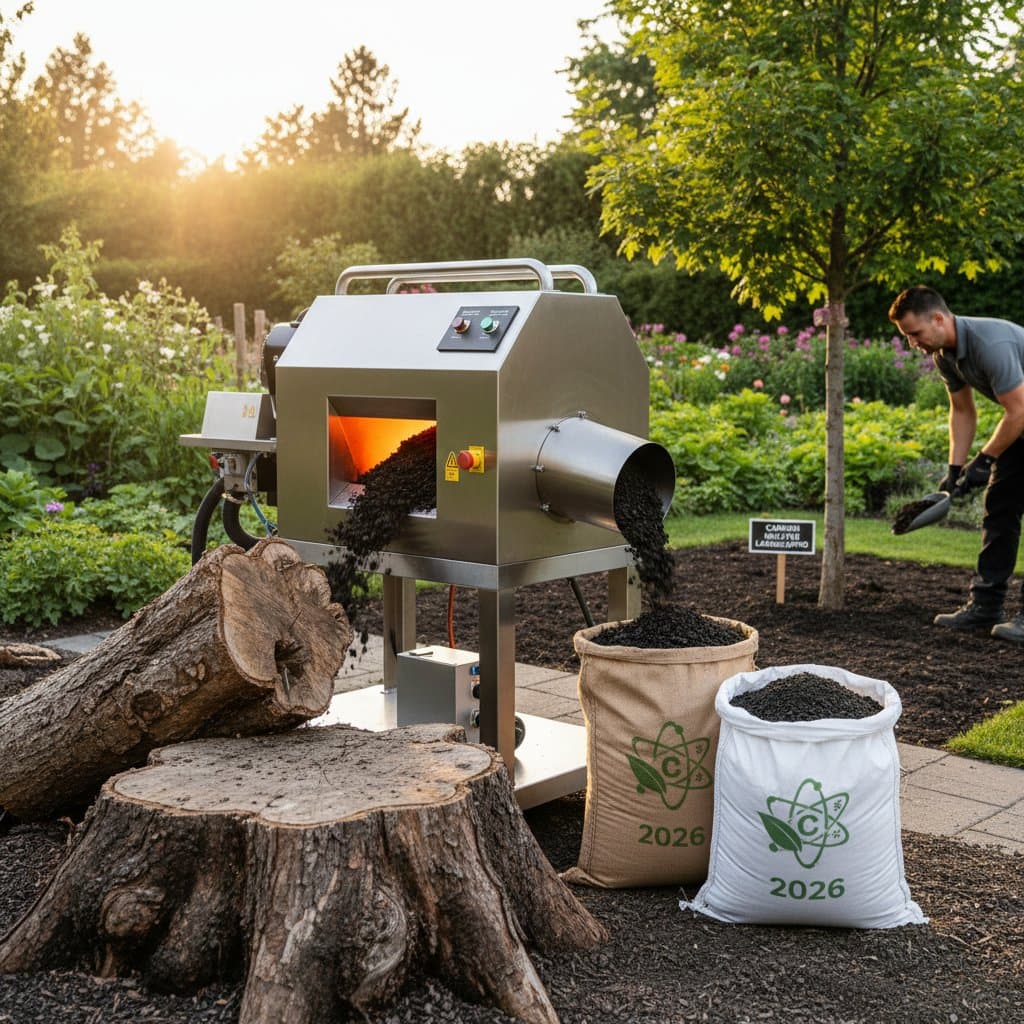
Convert Stump Waste into $200-Per-Ton Biochar Revenue
Tree removal often leaves behind stumps and roots that generate disposal costs for homeowners and tree service professionals. These materials hold significant value when processed into biochar, a carbon-rich product that sells for approximately $200 per ton. Through pyrolysis, this waste transforms into a soil amendment that enhances fertility, sequesters carbon, and creates a reliable income stream while minimizing environmental impact.
Stumps and roots represent untapped potential in the biomass sector. Pyrolysis converts wood chips and grindings into stable biochar, reducing reliance on landfills and supporting carbon-negative practices. This approach benefits both small-scale operators and larger enterprises by turning liabilities into assets.
Understanding Biochar and Its Value
Biochar results from heating organic materials in a low-oxygen setting, producing a charcoal-like substance that locks away carbon. This process prevents the release of carbon dioxide into the atmosphere, offering long-term sequestration. The porous structure of biochar improves soil aeration, water retention, and nutrient availability, fostering healthier plant growth.
Tree services manage substantial wood waste volumes, such as chips, roots, and sawdust. Rather than incur disposal fees, operators process this material into biochar for sale to landscapers, farmers, and gardeners. Demand grows as awareness of sustainable agriculture increases, positioning biochar as a viable market entry.
The Pyrolysis Process for Biochar Production
Pyrolysis involves thermal decomposition of wood in an oxygen-limited environment, distinguishing it from open combustion that emits carbon rapidly. Heat breaks down the material, expelling volatiles and forming a solid carbon residue. This method ensures the carbon remains stable for centuries.
Stump grindings enter a kiln or retort, where temperatures reach 400 to 600 degrees Celsius. Released syngas can power the system, enhancing efficiency. From one ton of dry stump waste, yields range from 200 to 300 pounds of biochar, influenced by wood density and initial moisture.
Factors Affecting Biochar Yield and Profit
Profitability hinges on several variables that operators must optimize for success.
Feedstock Quality
Hardwoods, such as oak or maple, yield denser biochar with superior carbon content, attracting premium prices. Softwoods produce viable results but result in lighter products. Select clean, uncontaminated wood to maximize output and value.
Moisture Management
Excess moisture in fresh stumps demands pre-drying to conserve energy. Aim for less than 20 percent moisture content before pyrolysis. Air-drying in thin layers under cover accelerates this step without additional equipment.
Operational Scale
Portable kilns suit small operations processing occasional batches, while continuous systems handle high volumes for commercial use. Assess annual waste generation to select appropriate equipment, balancing initial investment with throughput.
Energy Utilization
Advanced setups capture pyrolysis gases to fuel the process, cutting external energy needs by up to 80 percent. This integration lowers costs and amplifies environmental credentials, appealing to eco-conscious buyers.
Market Dynamics
Biochar commands $150 to $250 per ton based on quality and region. Target agricultural cooperatives or retail outlets for consistent sales. Certifications for carbon sequestration can elevate prices further.
Types of Stump Waste and Preparation
Stump waste varies, requiring tailored handling to ensure product consistency.
- Fresh Stumps: High in moisture and resins, these demand extended drying but yield robust biochar.
- Decayed Stumps: Partial breakdown reduces volume but creates highly porous material ideal for soil applications.
- Root Balls with Contaminants: Screen out soil and debris to protect equipment; process clean fractions separately.
Initial sorting prevents impurities from compromising yields or damaging machinery.
Step-by-Step Biochar Production Guide
The production sequence applies to both backyard and professional setups, emphasizing safety and efficiency.
-
Gather and Clean: Collect grindings from sites and use a mesh screen to eliminate rocks, metal, and dirt.
-
Dry the Material: Pile wood in a sunny, airy location for 7 to 14 days, turning periodically to ensure even drying.
-
Load and Heat: Place dried feedstock in the pyrolysis unit and maintain low-oxygen conditions at target temperatures for 2 to 6 hours per batch.
-
Cool Safely: Transfer hot biochar to airtight containers, allowing 24 hours for complete cooling to avoid spontaneous combustion.
-
Process for Use: Crush to desired particle size (1/4 to 1 inch) and sieve for uniformity, enhancing marketability.
-
Package Ready: Seal in breathable bags, label with production details, and store in a dry area.
Options for Production: DIY or Professional
Homeowners explore biochar through simple methods, while professionals leverage advanced technology.
DIY Approaches: Construct a basic retort from steel drums for batches under 50 pounds. Monitor closely to manage risks, ideal for educational or low-volume needs.
Professional Operations: Specialized firms use automated kilns for scale, ensuring compliance and quality. Collaborate with certified providers to process waste without on-site hassle.
Selecting Reliable Biochar Producers
When outsourcing, evaluate partners based on expertise and practices.
- Credentials: Verify arborist certifications and biomass processing experience.
- Technology: Confirm use of emission-controlled pyrolysis units.
- Material Handling: Ensure protocols for contaminant removal.
- Cost Structure: Request breakdowns for grinding, conversion, and revenue sharing.
- Eco-Focus: Prioritize firms committed to verifiable carbon benefits.
Essential Questions for Project Planning
Address these to build a solid foundation.
- What volume of stump waste accumulates over time?
- What site requirements exist for equipment installation?
- Do local codes restrict pyrolysis emissions?
- Who comprises the target buyer base?
- How will quality testing occur routinely?
Safety Protocols in Biochar Production
Pyrolysis demands vigilance to mitigate hazards.
Operate units on non-flammable surfaces with clear access. Equip personnel with respirators, gloves, and eye protection. Install carbon monoxide detectors and maintain suppression tools. Conduct operations during daylight with wind monitoring to disperse vapors.
Frequently Asked Questions
What Basic Equipment Supports Biochar Making?
Essential items include a kiln, drying racks, sieves, and storage bins. Start with off-the-shelf retorts for reliability.
What Yield Expect from a Ton of Stumps?
Dry material converts at 20 to 30 percent, producing 400 to 600 pounds, adjustable by process parameters.
How to Market Biochar to Buyers?
Package in consumer sizes and highlight benefits like improved yields. Network with local farms and garden centers.
Does Production Benefit the Environment?
It sequesters carbon and repurposes waste, reducing methane from landfills when gases fuel operations.
How Durable Is Biochar in Soil?
Stability spans centuries, providing enduring enhancements to structure and biology.
Which Woods Optimize Biochar?
Dense hardwoods excel, but mixed species work well for versatile applications.
Are Permits Required for Home Production?
Consult authorities on fire and air quality rules; enclosed systems often qualify as low-emission.
Maximize Revenue from Waste Through Biochar
Integrating biochar production streamlines waste management and generates income. This practice elevates tree services into sustainable enterprises, yielding environmental and financial returns. Begin with a feasibility assessment to unlock this opportunity.