
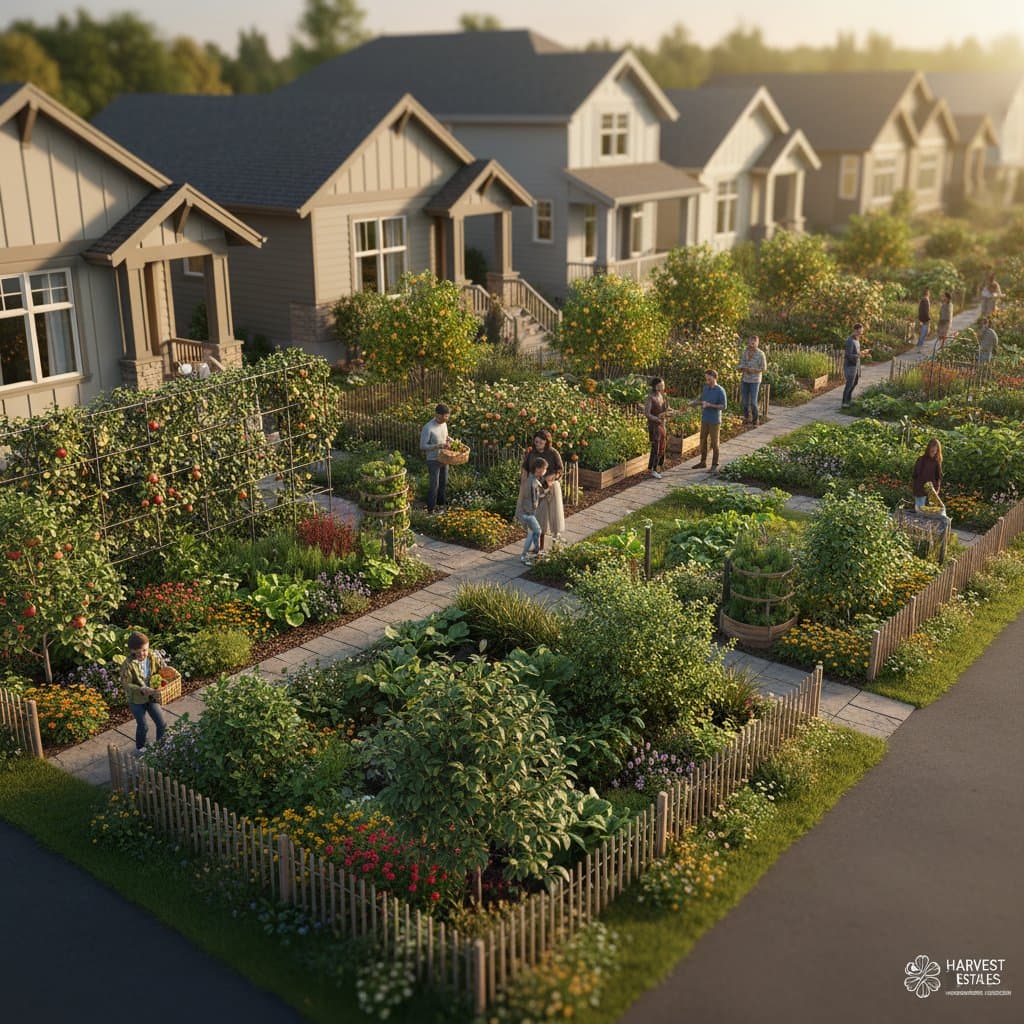
Edible Gardens Spark HOA Lawn Revolution
Homeowners in numerous neighborhoods are reevaluating the conventional manicured lawn. A rising trend toward edible gardens encourages homeowners associations to reassess entrenched landscaping regulations. These gardens, brimming with fruit trees, herbs, and vegetables, enhance community aesthetics while delivering fresh produce and ecological advantages. As residents pursue sustainable and functional outdoor spaces, homeowners associations increasingly modify their policies to align with this expanding preference.
Edible landscaping merges utility and visual appeal. It substitutes solely decorative vegetation with plants that nourish humans and pollinators alike. Residents learn that compliance with neighborhood standards remains achievable alongside food cultivation and ecosystem support.
Why Edible Gardens Are Taking Root
Edible gardens gain traction because they address multiple homeowner objectives simultaneously. They lower expenses, minimize waste, and foster a deeper bond with the natural world. A thoughtfully designed edible landscape might incorporate fruit trees like apples or figs, compact shrubs such as blueberries, and ornamental herbs that draw pollinators.
In addition to cost savings, these gardens advance environmental stewardship. They decrease irrigation demands for lawns, curtail reliance on chemical fertilizers, and bolster soil vitality. Many residents experience satisfaction in gathering their own harvests and educating family members on sustainable land management practices.
This appeal extends to urban and suburban settings alike. For instance, in drought-prone regions, edible gardens conserve water more effectively than thirsty grass varieties. Homeowners report reduced utility bills and heightened self-sufficiency, particularly as food prices fluctuate.
Key Factors Influencing HOA Acceptance
Historically, homeowners association landscaping policies emphasized uniformity. Conventional lawns defined curb appeal, with vegetable plots confined to rear yards. Today, evolving community priorities prompt updates to these rules, incorporating contemporary ecological objectives.
When evaluating proposals for edible gardens, homeowners associations examine several elements:
- Visual harmony to integrate seamlessly with surrounding neighborhood designs
- Safety measures that preserve unobstructed sightlines and curb excessive growth
- Maintenance expectations to avoid unkempt or weed-infested areas
- Influence on property values, weighing personal expression against collective uniformity
Designs that artfully combine edibles with traditional ornamentals often secure prompt approvals and garner positive feedback from neighbors. Successful examples include berry hedges lining walkways or herb borders accentuating entryways, maintaining a polished appearance year-round.
Shifts in broader societal values also play a role. Rising awareness of climate change and food security motivates boards to endorse initiatives that reduce carbon footprints and encourage local sourcing.
Designing an HOA-Friendly Edible Landscape
Developing a garden that fulfills individual desires and communal norms requires deliberate strategy. Begin with a comprehensive site plan that interweaves edible and decorative elements into a unified composition. Consider embedding kale or rainbow chard among perennials in flower borders, or positioning dwarf fruit trees in locations formerly occupied by non-productive specimens.
Implement these actionable strategies:
- Incorporate appealing boundaries such as stone borders or mulched paths to delineate planting areas clearly.
- Choose enduring perennials like rosemary, lavender, or asparagus to minimize annual replanting efforts.
- Maintain proportional heights ensuring taller specimens do not obscure vistas or dominate shorter plantings.
- Schedule for continuous appeal by blending evergreens with rotating seasonal edibles.
Consult a certified arborist or landscape professional to verify that fruit trees and other features align with property boundaries, drainage systems, and local climate conditions. Such expertise prevents common pitfalls like root interference with foundations or inadequate sun exposure for crops.
Balancing DIY Enthusiasm With Professional Insight
Many homeowners approach edible gardening with hands-on zeal, starting small with raised beds or container plantings. This method allows experimentation while adhering to association guidelines. However, professional input proves invaluable for larger installations, ensuring structural integrity and long-term viability.
Landscape architects specialize in HOA-compliant designs, often providing scaled drawings and plant lists that expedite approval processes. They also advise on soil testing and amendment to optimize yields without compromising aesthetics. Homeowners who blend personal creativity with expert guidance achieve landscapes that thrive and inspire.
Common Questions About HOA Edible Gardens
Can my HOA stop me from planting an edible garden?
Most homeowners associations maintain landscaping guidelines, yet flexibility increases over time. Submit a precise design emphasizing aesthetic integration to facilitate approval.
What types of edible plants look attractive in front yards?
Herbs, berry bushes, and dwarf fruit trees integrate smoothly with ornamental counterparts due to their compact forms and vibrant foliage.
Are edible gardens more work than regular lawns?
Initial establishment demands effort, followed by routine seasonal tending. Long-term, they often require less labor than frequent mowing and turf fertilization.
Do edible gardens attract pests?
Gardens of any kind may draw insects, but techniques like companion planting and organic controls maintain equilibrium without harsh chemicals.
How can I convince my HOA to update its rules?
Compile visuals of successful edible landscapes and highlight their ecological and communal advantages. Propose a trial demonstration plot to showcase feasibility.
Cultivating Community Through Productive Yards
Edible gardens represent more than a landscaping choice; they embody a commitment to sustainability and shared well-being. As homeowners associations embrace these innovations, neighborhoods evolve into resilient, nourishing environments. Residents gain not only bountiful harvests but also stronger connections to one another and the earth, paving the way for enduring community vitality.