
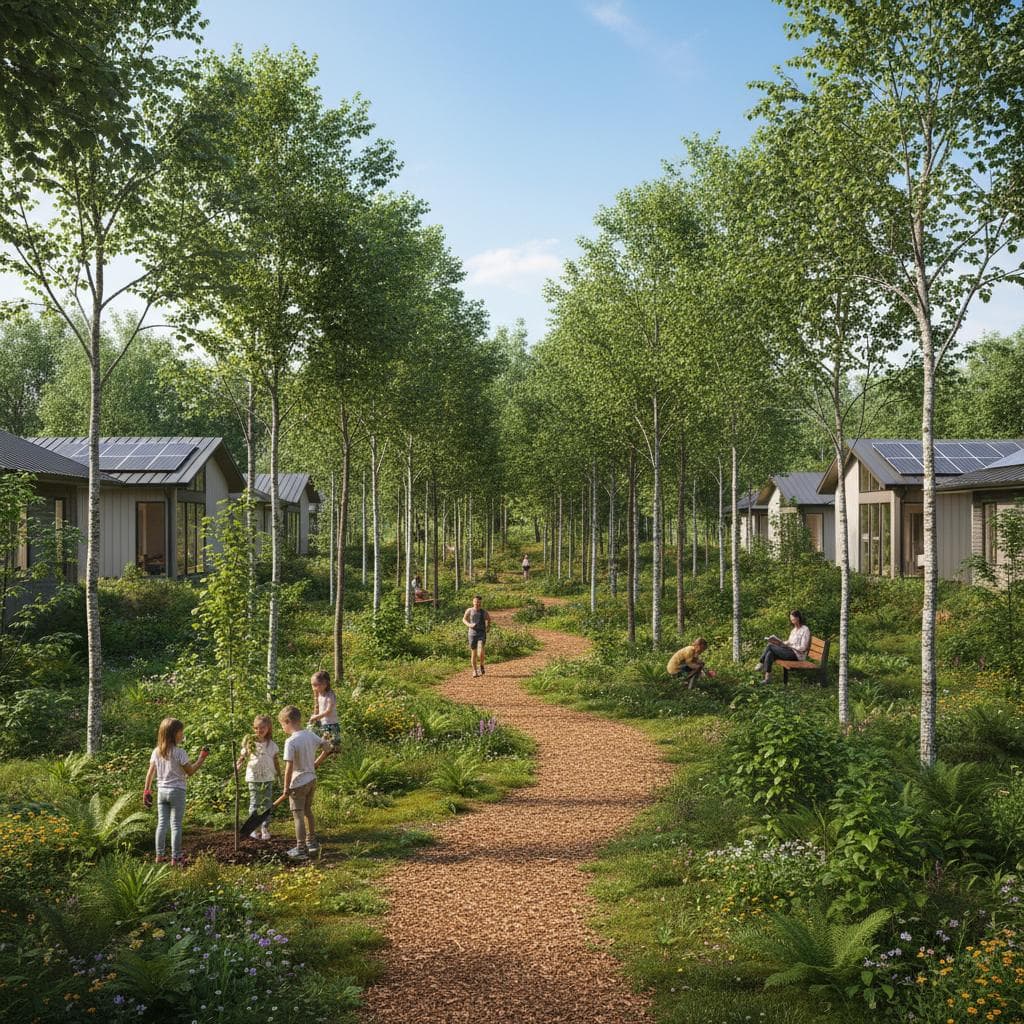
Suburbs Thrive: Micro-Forests Pack 300 Trees Per Acre
Suburban neighborhoods increasingly convert underutilized grass areas into vibrant micro-forests. These dense plantings accommodate up to 300 trees per acre, converting modest land parcels into centers of biodiversity, shade, and improved air quality. Homeowners and communities apply the Miyawaki method, a technique that promotes rapid growth and long-term environmental benefits through careful planning.
This guide details the nature of micro-forests, their mechanisms, and practical steps for implementation in residential areas. It addresses expenses, advantages, and precise instructions for developing a compact forest that enhances both personal landscapes and communal well-being.
Micro-Forest Costs
National Average Costs
Establishing a micro-forest generally requires expenditures from several thousand dollars to tens of thousands per acre, influenced by choices in vegetation, ground preparation, and expert assistance. For residential backyards, modest areas start at a few hundred dollars using community volunteers and regional seedlings. Larger initiatives with soil restoration and watering infrastructure incur higher costs, though eligibility for ecological grants or municipal green funds often offsets expenses.
Costs by Project Scale or Category
- Backyard Micro-Forest (less than 1,000 square feet): Expenses typically span a few hundred to one thousand dollars, varying with planting intensity and species assortment.
- Community or Park Micro-Forest (up to one acre): Outlays reach several thousand dollars owing to increased plant volumes, consultant fees, and ground enhancements.
- Corporate or Public Sector Projects (multiple acres): Budgets surpass tens of thousands of dollars, frequently integrated into broader environmental or carbon reduction initiatives.
Primary Expense Drivers
- Vegetation Supplies: Indigenous trees, bushes, and ground-level plants constitute the largest portion of the budget.
- Ground Preparation: Turf elimination, compost integration, and mulching affect overall outlays.
- Workforce: Community planting sessions lower costs, whereas hired teams enhance accuracy and speed.
- Watering Systems: Drip irrigation or initial hydration methods prove essential during early phases.
- Planning and Layout: Expert ecological consultation guarantees appropriate species choices and arrangements.
- Upkeep: Initial weed control, hydration, and mulching remain vital for the first few years.
Micro-Forest Categories
Micro-forests adapt to diverse suburban settings based on ground conditions, weather patterns, and objectives.
Indigenous Woodland Micro-Forest
This category emulates regional forest structures exclusively with local flora.
Advantages:
- Fosters regional fauna and pollinating insects.
- Demands little ongoing care after rooting.
- Enhances ground fertility and water infiltration.
Disadvantages:
- Exhibits gradual early development relative to decorative varieties.
- Offers restricted aesthetic range if local options prove limited.
Pollinator and Wildflower Micro-Forest
This variant merges compact native trees, blooming bushes, and enduring perennials to draw bees, butterflies, and avian species.
Advantages:
- Delivers striking, season-shifting visuals.
- Elevates species variety and sustenance for pollinators.
- Integrates seamlessly into home settings.
Disadvantages:
- Necessitates regular weed management.
- Certain plants require periodic replacement.
Edible Micro-Forest
This design incorporates fruit and nut trees alongside berry bushes and lasting herbs for yield generation.
Advantages:
- Yields consumable outputs.
- Promotes communal involvement and learning.
- Enriches ground via decaying produce and foliage.
Disadvantages:
- Demands trimming and routine attention.
- Draws animals that vie for harvests.
Shade and Cooling Micro-Forest
This configuration targets temperature moderation and energy savings through thick overhead cover near residences or gathering spots.
Advantages:
- Diminishes ambient heat.
- Cuts cooling-related energy demands.
- Forms inviting exterior areas for activities.
Disadvantages:
- Requires evaluation of root extension near structures or lines.
- Intense shadowing restricts understory options.
DIY Implementation Versus Professional Services
Homeowners can realize a micro-forest with dedication, though design intricacies and ground work often favor expert input.
DIY Strategy:
Community gatherings or household efforts power many modest endeavors. Participants excavate pits, apply mulch, and hydrate young plants using digital tutorials. This method conserves funds and instills stewardship, but it calls for scheduling, coordination, and persistent care. Errors in arrangement or plant choices risk diminished durability.
Professional Engagement:
Specialists versed in the Miyawaki approach offer proficiency in ground testing, local botany, and tailored layouts. They harmonize vegetation tiers for swift overhead development and minimal rivalry. Such experts handle procurement, hydration setup, and mulching operations for expansive efforts.
Suggested Path:
Homeowner-directed projects suit backyard spaces below 1,000 square feet with thorough readiness. Expert involvement markedly boosts success and ecological richness in bigger or collective sites.
Micro-Forest Planting Procedures
The Miyawaki method relies on intensive, stratified planting to echo natural woodland progression. These steps yield a robust, self-maintaining area.
-
Evaluate and Outline the Location
Determine the space and note light levels, ground composition, and runoff. Select combinations of local tall trees, sub-canopy trees, bushes, and cover plants matching these traits. -
Condition the Ground
Clear sod or intruding plants to reveal raw earth. Aerate dense soil using tools like spades or cultivators. Blend in compost, decayed leaves, or natural amendments to stimulate organisms and hold moisture. -
Formulate the Arrangement
Position plants in irregular patterns, avoiding linear setups. This mix builds inherent strength. Cluster varieties to reflect tiers, placing dominant trees centrally and peripherals outward. -
Execute Dense Planting
Density defines efficacy. Insert three to five saplings per square meter, varying types to avert uniformity. Allocate vertical growth room over lateral spread. -
Apply Abundant Mulch
Spread a substantial mulch coating to conserve hydration and curb intruders. Opt for fragmented leaves, bark fragments, or hay. Steer clear of artificial barriers that hinder root advance. -
Hydrate Extensively
Soak the area post-planting to saturate the ground. Sustain regular watering through initial growth cycles, reducing frequency as roots deepen. -
Sustain Initial Development
Remove weeds every month, inspect for insects, and substitute failed plants. Within two to three years, the system self-manages via fallen debris and overshadowing.
Strategies for Micro-Forest Achievement
- Initiate Modestly: A 10-by-10-foot area illustrates viability and motivates locals.
- Emphasize Variety: Incorporate 20 to 30 indigenous types for durability and habitat range.