
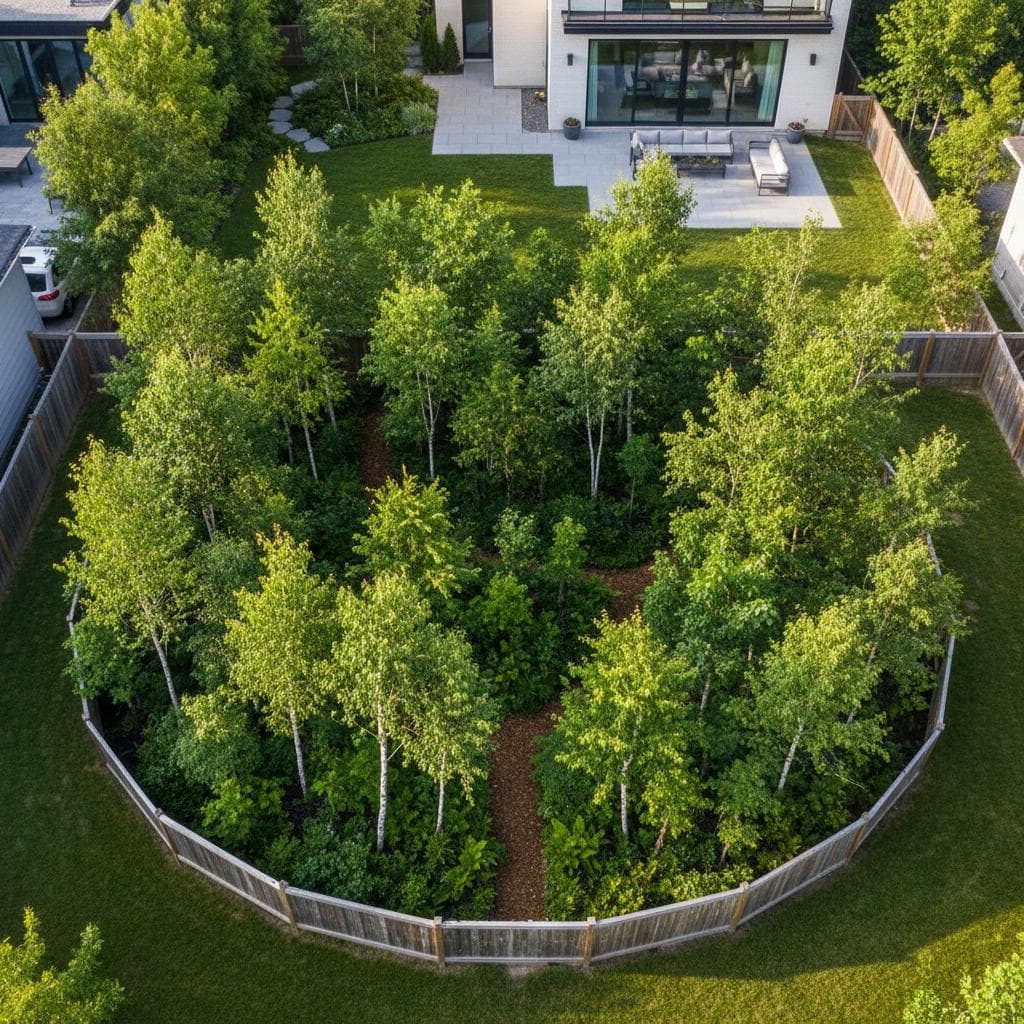
Transform 600 Square Feet into a Thriving Micro Forest with the Miyawaki Method
Small urban yards often limit landscaping ambitions to a handful of plants. The Miyawaki method challenges this constraint by enabling the creation of a dense, native forest in just 600 square feet, accommodating up to 200 trees and shrubs. This technique fosters rapid growth and biodiversity, turning compact spaces into self-sustaining ecosystems that enhance local environments.
This article explores the principles of the Miyawaki method, its implementation steps, cost considerations, and practical advice for urban homeowners. Readers gain insights into achieving a lush, resilient green space that provides ecological benefits and aesthetic appeal.
Understanding the Miyawaki Method
The Miyawaki method represents an innovative afforestation strategy developed by Japanese botanist Akira Miyawaki. It focuses on planting a diverse array of native species in close proximity to replicate the structure of ancient forests. These plantings include ground covers, shrubs, understory trees, and canopy species, arranged in multilayered formations.
Dense spacing promotes vertical growth as plants compete for sunlight, leading to accelerated development. Within three years, such forests typically reach heights of ten feet, and full maturity occurs in about a decade. This approach not only accelerates growth ten times faster than traditional methods but also builds resilience against environmental stresses like drought and pests.
Homeowners benefit from increased wildlife habitat, improved air filtration, and urban heat reduction. In cities, where green space is scarce, this method maximizes ecological impact in minimal areas.
Estimating Costs for a Miyawaki Micro Forest
Creating a micro forest involves expenses for materials, labor, and initial care. Costs generally range from $10 to $25 per square foot, depending on regional factors such as plant availability and soil amendments. For a 600-square-foot area, the total investment falls between $6,000 and $15,000.
The following table outlines average costs by yard size, assuming standard native species and basic professional assistance:
| Yard Size | Average Cost Range |
|---|---|
| 300 sq ft | $3,000 - $7,500 |
| 600 sq ft | $6,000 - $15,000 |
| 1,000 sq ft | $10,000 - $25,000 |
These figures cover soil preparation, seedlings, mulching, and two years of monitoring. Over time, the forest offsets costs through reduced maintenance and enhanced property value, often increasing home appeal by 5 to 10 percent in urban markets.
Key Factors Influencing Micro Forest Expenses
Soil Preparation Needs
Compacted urban soil demands thorough amendment to support root expansion. Incorporating layers of compost, biochar, and microbial inoculants enhances fertility and drainage. This step, which can add $2 to $5 per square foot, ensures plants establish strong foundations quickly.
Testing soil pH and nutrient levels beforehand guides precise additions, preventing over-fertilization that wastes resources.
Choice of Plant Species
Selecting 20 to 40 native varieties ensures ecological harmony and low upkeep. Common options include serviceberry for understory layers and oak for canopy height. Specialty plants, such as pollinator-attracting wildflowers, may raise costs by 20 percent but diversify the habitat.
Sourcing from local nurseries minimizes transport fees and supports regional biodiversity.
Watering and Irrigation Systems
Establishing irrigation prevents early mortality in young plantings. Drip lines or soaker hoses deliver targeted moisture, costing $500 to $1,500 for a 600-square-foot setup. After the initial phase, natural rainfall suffices as the canopy retains humidity.
Integrating rain barrels further reduces long-term water expenses.
Professional Labor Requirements
Experts in afforestation provide site-specific designs and planting precision. Hiring a certified Miyawaki practitioner adds $3,000 to $8,000 but guarantees optimal species ratios and spacing. For budget-conscious projects, community workshops offer training to handle portions independently.
Step-by-Step Guide to Implementing the Miyawaki Method
Conduct a Site Evaluation
Begin with an assessment of sunlight exposure, drainage patterns, and existing vegetation. Professionals use tools like soil probes and light meters to map the area. This informs a customized planting plan that aligns with local climate zones.
Document wind directions and nearby structures to avoid shading issues.
Prepare the Soil Base
Remove weeds and debris, then till the top 18 inches of soil. Blend in 4 to 6 inches of organic matter, including leaf mold and worm castings, to foster beneficial fungi and bacteria. Allow the amended soil to settle for one week before planting.
This preparation mimics the nutrient-rich underlayers of natural forests.
Select and Source Species
Aim for a mix representing forest strata: 30 percent canopy trees, 40 percent understory, 20 percent shrubs, and 10 percent ground covers. Examples include maple, dogwood, ferns, and grasses suited to your region. Acquire healthy seedlings from verified suppliers to ensure viability.
Diversity prevents monoculture vulnerabilities and attracts varied pollinators.
Execute Dense Planting
Plant at a density of three to four individuals per square meter, spacing them 1 to 2 feet apart. Dig holes twice the width of root balls and position plants in clusters by height category. This arrangement encourages mutual support during establishment.
Water immediately after planting to eliminate air pockets.
Apply Mulch and Initiate Care
Spread a 4-inch layer of wood chips or straw to conserve moisture and deter weeds. Irrigate deeply twice weekly for the first season, tapering as roots deepen. Monitor for signs of stress, such as wilting, and adjust accordingly.
Mulch decomposes over time, further enriching the soil.
Ongoing Observation
Inspect monthly for pests or competition imbalances, removing only necessary elements. By year three, the forest self-thins, with stronger plants dominating. Annual reports from professionals track progress toward maturity.
Weighing DIY Implementation Against Professional Services
DIY approaches suit experienced gardeners with access to local expertise. Participants save 30 to 50 percent on labor by following online guides and joining planting events. However, success hinges on accurate species identification and precise spacing.
Professional services deliver reliability for novices, incorporating advanced techniques like mycorrhizal fungi application. They handle permits and warranties, ideal for high-value properties. Hybrid models, where owners prepare the site and experts plant, balance cost and quality.
Engaging a Miyawaki Specialist
Verify credentials through certifications from botanical associations and portfolios of completed projects. Request proposals detailing timelines, species lists, and phased payments. Secure references to evaluate client satisfaction and growth outcomes.
Compare at least three bids, focusing on post-planting support. Confirm inclusion of a two-year maintenance schedule to nurture the forest through its vulnerable early stages.
Common Questions About Micro Forests
How Does Dense Planting Accommodate 200 Trees in 600 Square Feet?
The method relies on vertical stratification, where plants occupy distinct height niches. Shorter species fill lower levels, allowing taller ones to rise without lateral expansion. This layered design prevents overcrowding while maximizing density.
What Timeline Leads to Forest Maturity?
Initial growth surges in the first two to three years, reaching 10 to 15 feet. Full canopy closure and self-sufficiency emerge by year 10, with ongoing evolution as species interact.
Are Non-Native Species Viable Options?
While possible, natives outperform exotics in adaptation and ecosystem support. They require fewer resources and bolster local food webs for birds and insects.
Is Regular Pruning Essential?
Minimal intervention suffices; remove deadwood annually to promote airflow. Avoid heavy trimming, as natural shaping enhances resilience.
Realizing the Benefits of Your Micro Forest
A Miyawaki micro forest delivers enduring value beyond its creation. It cools ambient temperatures by up to 5 degrees Fahrenheit through shade and transpiration, mitigating urban heat islands. Biodiversity flourishes, with increased sightings of butterflies, bees, and songbirds.
Property owners enjoy elevated curb appeal and potential resale premiums. Community involvement, such as neighborhood planting days, fosters connections. Start by contacting local environmental groups to explore resources and begin your transformation today.