
Tree Waste to Biochar: Arborist Profits by 2026
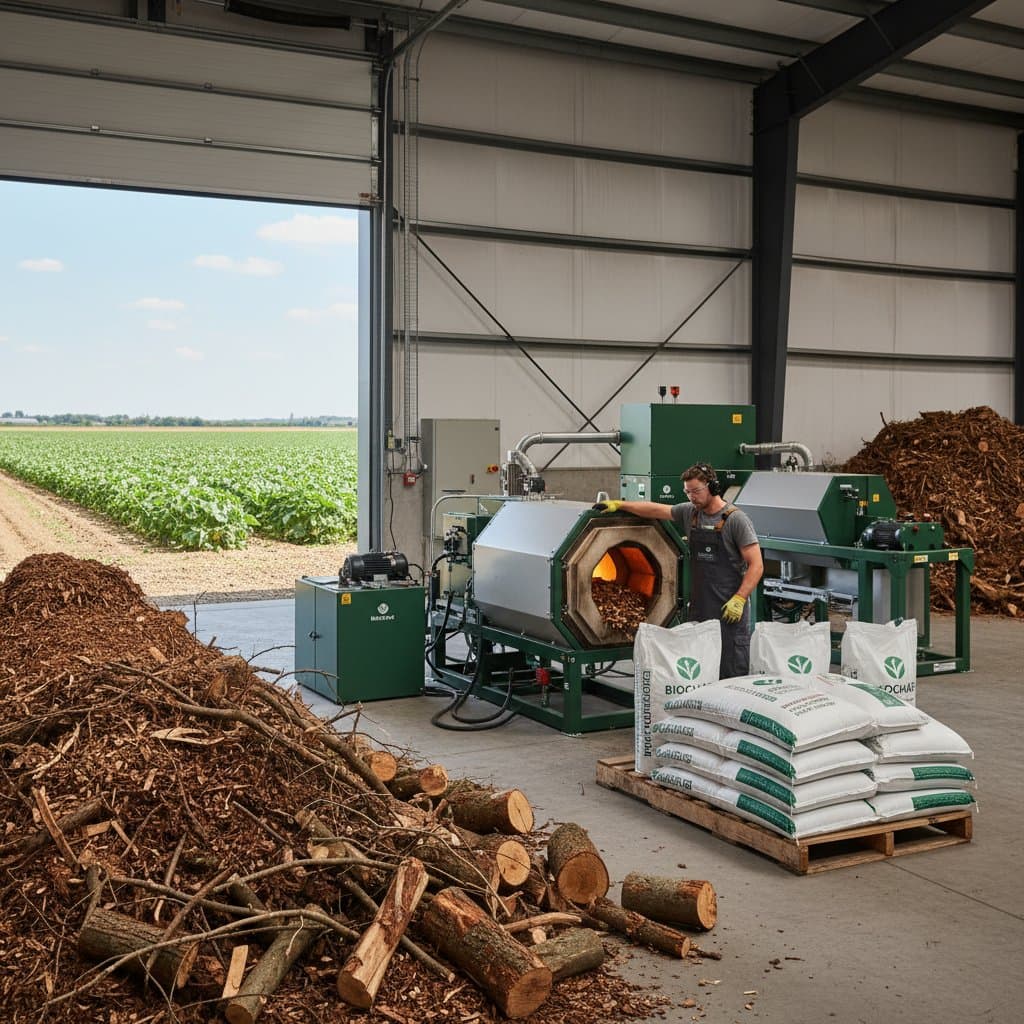
Tree care businesses manage substantial volumes of organic waste each season. Branches, logs, and wood chips frequently become mulch or landfill contributions, which incur disposal expenses for arborists. Industry professionals increasingly adopt a sustainable and profitable alternative. Converting tree waste into biochar shifts a burdensome byproduct into a valuable soil amendment that supports environmental health and enhances financial outcomes. This guide details biochar fundamentals, production methods, and strategies for arborists to generate revenue.
What is Biochar?
Biochar consists of charcoal produced from organic material, such as tree waste, through heating in a low-oxygen environment. This process, called pyrolysis, stabilizes carbon in a form that persists in soil for centuries. Application to gardens, farms, or landscapes enhances soil fertility, retains water, and improves nutrient access. For arborists, biochar offers a pathway to market tree debris as an eco-friendly product.
Average Biochar Production Costs
Production costs for biochar from tree waste depend on equipment choices, operational scale, and feedstock characteristics. Small-scale operations often begin with portable kilns or retort systems, priced from several thousand dollars to the mid-five figures. Ongoing expenses cover fuel, labor, and wood drying. Established setups achieve low costs per ton, particularly with free raw materials from routine arboriculture tasks.
| Production Scale | Average Investment Range |
|---|---|
| Small Portable Kiln | $3,000 - $7,000 |
| Mid-Scale Retort System | $10,000 - $25,000 |
| Commercial Continuous System | $40,000 - $75,000 |
Investment amounts fluctuate based on manufacturers, regional suppliers, and capacity. Biochar sales to landscapers, farmers, or garden centers recover initial outlays rapidly.
Factors Affecting Biochar Profitability
Tree Waste Volume
Operations handling large volumes of tree waste support ongoing production. Businesses securing municipal contracts or frequent removal projects achieve reduced per-unit costs through economies of scale.
Equipment Efficiency
Contemporary pyrolysis units vary in output quality and energy consumption. Systems that recapture heat or syngas for internal use minimize expenses and boost yields.
Feedstock Type
Dense hardwoods, such as oak or maple, yield superior biochar with enhanced carbon stability. Softer woods, like pine, produce viable soil conditioners, though with marginally lower density.
Location and Market Demand
Proximity to farming areas or sustainability-focused communities enables premium pricing. Distribution expands through partnerships with garden centers, compost providers, or local green initiatives.
Labor and Processing Time
Labor requirements align with automation levels. Batch kilns demand manual intervention for loading and unloading, whereas continuous systems limit handling at the cost of greater initial capital.
Certifications and Compliance
Commercial sales necessitate testing for carbon levels and contaminants like heavy metals. Endorsements from industry organizations build buyer confidence and justify higher rates.
The Biochar Production Process
Biochar production from tree waste follows a sequence of stages, adaptable to different systems. Professional arborists and producers typically employ these steps.
-
Collection and Sorting
Gather branches, logs, and chips from pruning or removal sites. Remove contaminants to maintain feedstock purity. -
Drying and Preparation
Lower moisture levels for optimal pyrolysis efficiency. Use air drying or mechanical assistance to ready the material. -
Pyrolysis Conversion
Heat the prepared wood in a controlled, oxygen-limited setting. Process duration and temperature influence the outcome, often spanning hours. -
Cooling and Stabilization
Allow carbonized material to cool gradually in an enclosed space to avoid reignition. -
Screening and Packaging
Grind or sieve the biochar to consistent particle sizes, then package for distribution or on-site application. -
Marketing and Distribution
Brand and sell under the arborist name or collaborate with agricultural outlets for broader reach.
DIY vs. Professional Biochar Production
| Approach | When It Works | Limitations |
|---|---|---|
| DIY Biochar | Fits small batches, learning exercises, or personal soil enhancement. | Yields limited volumes, variable quality, and safety hazards without expertise. |
| Professional Production | Suits arborists with reliable waste streams and commercial aims. | Demands capital for equipment and staff development. |
DIY approaches allow initial testing with modest quantities. Profitable, reliable operations, however, rely on professional equipment to guarantee safety, output consistency, and market viability.
How to Start a Biochar Business from Tree Waste
-
Evaluate Tree Waste Volume
Calculate monthly wood waste generation to gauge production capacity. -
Research Equipment Options
Assess kilns and retorts for dimensions, performance, and usability. Select portable models for mobile teams or stationary units for high-volume sites. -
Understand Local Regulations
Review permits for thermal processing or emissions. Adhere to air quality standards in the operating area. -
Develop a Market Plan
Target buyers including organic growers, soil distributors, and public entities. Emphasize carbon sequestration and soil benefits in promotional efforts. -
Train Staff and Maintain Safety Protocols
Conduct training to mitigate fire risks and uphold product standards. -
Track Production and Sales Data
Record expenses, outputs, and revenues to optimize pricing and scale operations.
Frequently Asked Questions
How profitable can biochar production be for arborists?
Profitability hinges on waste availability and buyer interest. Arborists frequently secure reliable earnings after recouping equipment investments, particularly through direct sales to landscaping firms or hobbyists.
Is biochar better than compost?
Biochar and compost fulfill distinct roles. Compost supplies organic nutrients, whereas biochar bolsters soil architecture and hydration. Their integration yields superior soil performance.
Can any type of tree waste be used?
Untreated wood serves effectively, but exclude painted, varnished, or chemically treated items to avoid soil contamination.
Does making biochar produce pollution?
Sealed, modern systems generate negligible emissions. Integrated filtration and controls ensure compliance with environmental regulations.
How long does biochar last in soil?
Biochar remains effective in soil for hundreds to thousands of years, providing enduring carbon storage and soil improvement.
Advancing Arborist Operations Through Biochar Innovation
Biochar production from tree waste enables arborists to cut disposal fees, unlock income sources, and contribute to environmental stewardship. Efficient implementation bolsters business resilience amid demand for sustainable solutions. Arborists positioning as green innovators gain competitive edges in evolving markets.