
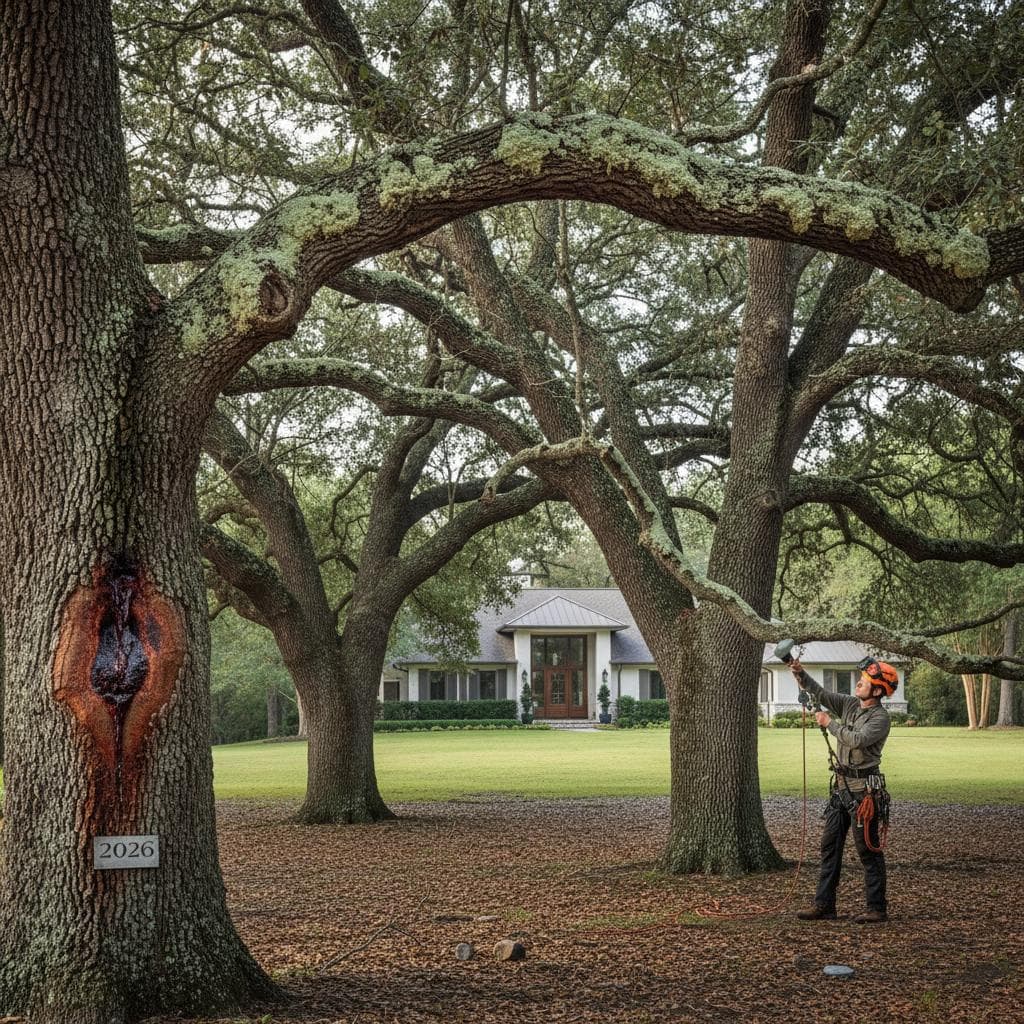
300% Fungal Surge Endangers Southern Trees in 2026
Fungal infections proliferate across southern regions, endangering countless trees. Property owners observe wilting branches, flaking bark, and aberrant formations on previously robust specimens. Specialists predict that this tripling of infection rates will reshape regional environments and erode real estate worth if unaddressed. This overview delineates the underlying dynamics, transmission mechanisms, and homeowner interventions to preserve arboreal health and yard vitality.
Understanding Fungal Tree Diseases
Fungal tree diseases arise when minuscule spores infiltrate bark, roots, or foliage, impairing nutrient uptake and circulation. These afflictions commence subtly yet expand rapidly in moist, rainy conditions. Prevalent instances encompass oak wilt, which clogs vascular systems; root rot, which undermines foundational stability; and anthracnose, which blemishes leaves and twigs. Established fungi compromise structural strength, predisposing trees to toppling or further pest invasions.
Homeowners spot early indicators like yellowing foliage, oozing lesions, or mycelial mats at the base. In southern climates, where prolonged humidity fosters spore germination, vigilance proves essential. Prompt recognition halts progression, averting the need for drastic measures such as removal.
Typical Expenses for Fungal Tree Treatments
Expenses for addressing fungal tree diseases fluctuate based on tree variety, infection intensity, and dimensions. Property owners generally anticipate expenditures from $150 to $2,500 for expert evaluation and remediation. The nationwide median for fungal management services reaches approximately $900 per tree, with intricate scenarios demanding repeated applications potentially surpassing this figure.
| Tree Size | Average Treatment Cost Range |
|---|---|
| Small Tree (under 20 ft) | $150 - $400 |
| Medium Tree (20-40 ft) | $400 - $900 |
| Large Tree (40-60 ft) | $900 - $1,800 |
| Extra-Large Tree (over 60 ft) | $1,800 - $2,500+ |
Routine upkeep, including yearly evaluations and precise fungicide deployments, diminishes long-term outlays. Investing in prevention often yields savings compared to reactive cures.
Elements Influencing Fungal Treatment Expenses
Tree Dimensions
Substantial trees necessitate greater volumes of materials, extended labor, and additional time. A full-grown oak or pine might require several trunk injections or comprehensive canopy applications, elevating total charges.
Tree Variety
Select species, including live oaks and maples, exhibit heightened vulnerability to particular fungi. Remediation approaches vary accordingly, with bespoke fungicides or delivery mechanisms inflating costs.
Infection Intensity
Superficial cases respond to foliar sprays or selective trimming, whereas profound decay calls for root aeration or substrate renewal. Greater penetration correlates with escalated remediation fees.
Site and Reachability
Proximity to utilities, barriers, or structures demands specialized gear for secure access. Restricted approaches prolong labor and augment quotations.
Regional Weather Patterns
The warm, moist atmospheres of the South nurture fungal proliferation. Consequently, prophylactic measures demand more frequent repetition, contributing to sustained upkeep expenditures.
Time Sensitivity
Urgent interventions, like excising a toppling tree afflicted by root rot, incur surcharges. Swift response to initial manifestations curtails expenses and forestalls asset harm.
Procedures in Professional Fungal Treatment
Certified arborists adhere to a systematic protocol for evaluating and remedying fungal tree diseases.
-
Preliminary Evaluation and Identification
Arborists examine for overt signs including variegated leaves, lesions, or yielding timber. Specimens undergo laboratory analysis to pinpoint the precise pathogen. -
Remediation Strategy and Estimate
Post-identification, arborists propose tailored options such as fungicide dispersal, nutrient enhancements, or excision of compromised sections. -
Authorization (as Needed)
Certain locales mandate approvals for significant alterations or eliminations, particularly involving safeguarded varieties. -
Remediation Execution
Tailored to the pathogen, experts may administer trunk infusions, foliar mists, or basal soil therapies. -
Subsequent Observation and Care
Arborists arrange recurring assessments to track efficacy. Persistent monitoring detects recurrences promptly. -
Debris Clearance and Disposal
Contaminated materials receive secure removal to curb spore dissemination to adjacent vegetation.
This methodical approach maximizes recovery prospects while minimizing environmental risks.
Self-Management Versus Professional Engagement for Tree Fungus
Scenarios for Self-Management
- Superficial mold or mildew on compact decorative trees
- Isolated foliar spots on juvenile plants
- Preliminary phases amenable to retail fungicides
Apply products judiciously, adhering to label directives, and monitor for improvements within weeks.
Scenarios Requiring Experts
- Mature or expansive trees displaying rot or lesions
- Epidemics spanning several trees
- Basal decay or equilibrium threats
- Instances necessitating diagnostic testing or systemic therapies
Trained arborists possess requisite expertise, apparatus, and protective measures for precise diagnosis. Amateur efforts on advanced cases risk exacerbating harm or permitting persistence.
Selecting a Tree Care Provider
Identifying a dependable tree maintenance firm proves vital amid fungal epidemics. Adhere to these guidelines for optimal selection:
-
Examine Qualifications and Accreditations
Seek arborists endorsed by esteemed bodies. Such credentials affirm proficiency in pathogen detection and secure methodologies. -
Confirm Coverage Protections
Ensure the firm maintains liability and employee indemnity policies. These shield against fiscal liabilities from incidents. -
Solicit Endorsements or Evaluations
Established providers furnish testimonials or digital feedback attesting to effective fungal resolutions. -
Obtain Comparative Bids
Secure no fewer than three proposals. Guard against suspiciously modest figures, which signal subpar materials or expedients. -
Demand Formal Agreements
Comprehensive documents must specify tasks, agents employed, sanitation duties, and assurances. -
Explore Ongoing Safeguards
Inquire about enduring tactics, like periodic reviews or terrain optimization initiatives.
Thorough vetting secures quality outcomes and enduring partnerships.
Common Inquiries
What Expenses Accompany Treating a 50-Foot Pine Tree's Fungal Affliction?
Remediating a pine of that stature generally ranges from $900 to $1,500, contingent on affliction scope and approachability. Profound basal rot or core deterioration might necessitate intensified efforts or outright excision.
Does Remediation Prove More Economical Than Excision for Infected Trees?
Early detection renders treatment more cost-effective than removal. Excision fees surpass $2,000 for sizable specimens, whereas preemptive care may total mere hundreds.
Which Season Optimizes Fungal Remediation?
Commencing in early spring or concluding in late autumn suits most applications. These intervals align with growth phases for accelerated healing and subdued pathogen vigor.
Do Homeowner Policies Encompass Fungal-Induced Tree Excision?
Standard provisions exclude fungal harm absent resultant structural impairment from falls. Verify specifics with your insurer.
Safeguarding Southern Trees Amid the Fungal Escalation
This fungal escalation signals urgency for southern property stewards. Vigilant surveillance, consistent appraisals, and expert remediation preserve irreplaceable assets pre-hazard manifestation. Robust trees bolster aesthetics, furnish respite, and elevate asset worth, rendering foresight a prudent allocation.
Upon detecting flaking bark, yielding bases, or anomalous developments, arrange evaluations promptly. Collaborating with adept arborists fortifies terrains, sustaining arboreal resilience, security, and vitality across seasons.