
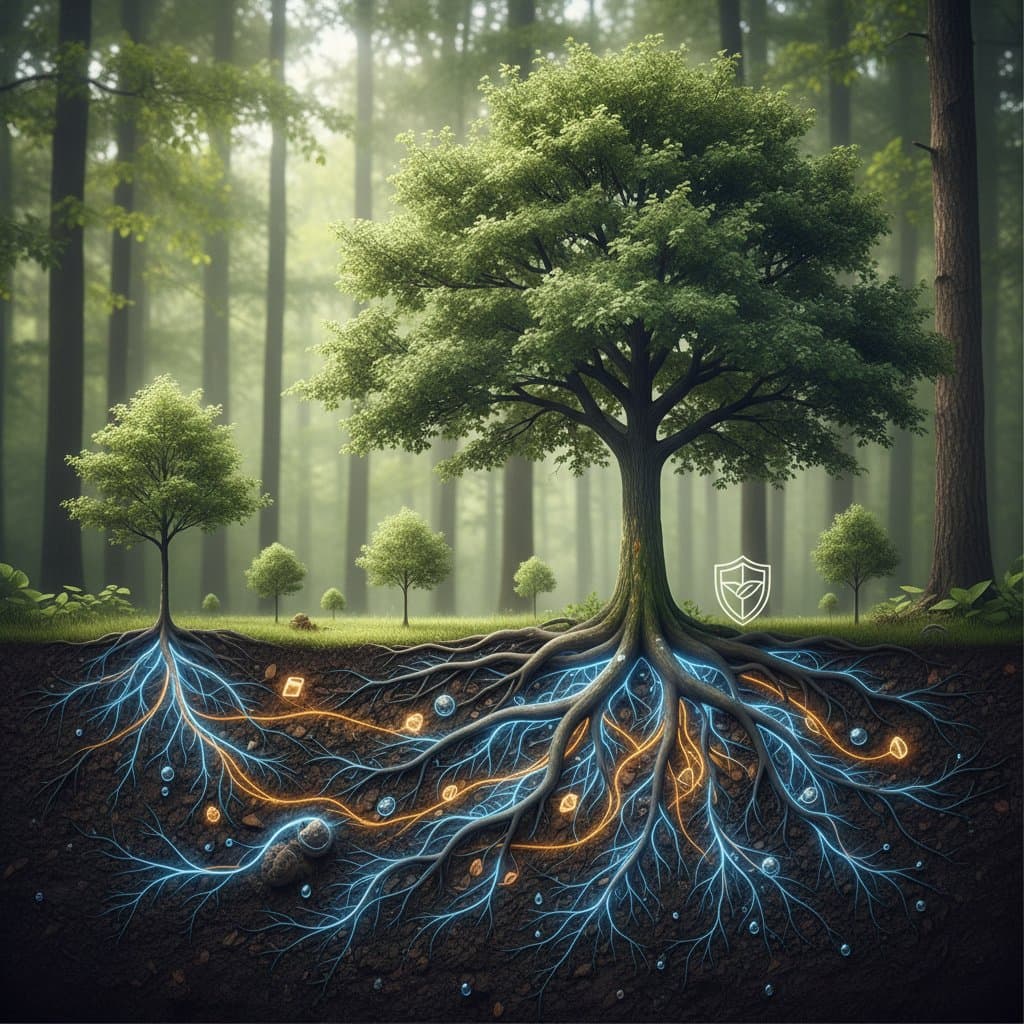
How Mycelium Networks Boost Tree Health by 65 Percent Naturally
Trees depend on more than sunlight and rainfall for vitality. Beneath the surface, expansive fungal networks called mycelium link roots, exchange nutrients, and transmit signals that significantly enhance tree endurance. Research and on-site evaluations indicate that trees integrated into these networks achieve up to a 65 percent increase in overall health relative to solitary specimens.
This symbiotic bond represents an age-old collaboration that property owners can promote to safeguard and fortify their grounds. Grasping the mechanics of mycelium empowers individuals to cultivate tree strength starting from the soil level.
Understanding Mycelium and Mycorrhizal Networks
Mycelium consists of the branching, root-like components of fungi. It develops slender, thread-shaped strands known as hyphae that permeate the earth. Upon linking with tree roots, these strands establish a mycorrhizal network, derived from the Greek words for fungus and root.
In this partnership, the fungus delivers vital minerals such as phosphorus and nitrogen to the tree. The tree, in exchange, provides the fungus with sugars generated via photosynthesis. This mutual support fortifies both entities and fosters a harmonious, self-regulating environment.
These subterranean lattices interconnect numerous trees, enabling resource distribution and alert transmissions. For instance, a mature oak may channel nutrients to a young tree in shade, while a beleaguered pine signals impending insect threats to neighbors. Such collaboration often determines whether trees endure or falter.
Key Benefits of Mycelium for Tree Health
Once mycorrhizal fungi establish themselves on a tree's roots, the outcomes prove substantial. Property owners frequently observe vigorous expansion, lush greenery, and heightened tolerance to aridity and illness.
The primary advantages include:
- Improved Nutrient Uptake: Mycelium expands the effective range of roots, drawing in nutrients across a broader soil expanse. Trees thereby obtain phosphorus, iron, and micronutrients that unaided roots struggle to secure.
- Enhanced Water Retention: Fungal structures aid soil in maintaining hydration over extended periods, alleviating strain in arid conditions.
- Disease Resistance: These fungi deter pathogens by claiming root territories and secreting defensive compounds.
- Soil Structure Improvement: Mycelium aggregates soil granules, promoting better airflow and countering density. This setup supports robust root proliferation.
- Tree-to-Tree Communication: Chemical messages allow trees to alert one another about insect invasions or scarcities, enabling landscape-wide adjustments.
Collectively, these elements elevate tree vigor by as much as 65 percent, particularly in areas with depleted or compressed soils.
Signs Your Trees Could Benefit from Mycelium Support
Not all properties sustain robust fungal systems naturally. City and suburban grounds frequently suffer disruption from construction, chemical applications, or heavy traffic, which impair fungal populations. Indicators that trees require fungal aid encompass:
- Thinning leaves or discoloration even with consistent irrigation
- Delayed development or sluggish rebound post-trimming
- Parched, firm soil deficient in organics
- Superficial root exposure from washout or subpar soil composition
- Persistent root-affecting infections in vulnerable specimens
These cues suggest an absence of vital underground alliances. Introducing suitable fungi via precise methods can reinstate equilibrium and accelerate revitalization.
The Mycelium-Tree Treatment Process
Building or reinforcing a mycorrhizal network demands deliberate actions, best executed by trained arborists and soil experts for optimal results.
- Soil Assessment: Experts evaluate texture, organic levels, and acidity to gauge existing fungal presence.
- Fungal Inoculation: Targeted spores or mycorrhizal formulations integrate into the root vicinity, suitable for new plantings or mature trees.
- Mulching and Organic Feeding: Layers of natural mulch and compost stimulate fungal proliferation while shielding treated zones.
- Moisture Management: Controlled hydration facilitates fungal establishment without saturating roots.
- Monitoring Growth: Specialists observe foliage hue, root thickness, and nutrient profiles over subsequent months to verify network efficacy.
Trees typically exhibit responses in a single growth cycle, displaying richer coloration and superior dry-weather performance as the system develops.
DIY vs. Hiring a Professional: What to Consider
Consumer mycorrhizal preparations exist for home application, yet precision remains essential. Errors such as excessive burial, mismatched strains, or subsequent chemical inputs can eradicate the fungi.
A certified arborist or soil biologist possesses the expertise to analyze conditions and select compatible fungi for specific tree varieties. Professionals weave these interventions into comprehensive strategies encompassing trimming, covering, and hydration routines.
For those inclined toward direct involvement, modest applications near saplings yield gains. Essential precautions involve steering clear of artificial amendments that unsettle fungal harmony.
How to Choose a Qualified Tree Specialist
- Credentials from accredited arborist bodies
- Proven work in soil vitality and fungal integration
- Upfront costs and detailed treatment rationales
- Ongoing care protocols with inspections or analyses
- Favorable feedback or client endorsements
FAQ
What trees benefit most from mycelium networks?
Nearly all trees engage in mycorrhizal associations to varying degrees. Species like oaks, pines, maples, and fruit bearers gain prominently, relying on fungi for critical nutrient transfers.
Can I see the mycelium in my yard?
Typically, no. Mycelium resides below ground as delicate white filaments. Occasional glimpses occur during excavation near roots or beneath coverings, though its functions remain concealed.
Do chemical fertilizers harm mycorrhizal fungi?
Yes. Excessive synthetics saturate soil with elements, diminishing the incentive for symbiotic exchanges. Opt for organic matter and gradual-release options to preserve fungal health.
How long does it take for results to appear?
Enhancements in foliage and expansion emerge within one cycle, yet complete network formation spans several years. Progress hinges on soil quality and hydration consistency.
Are mycorrhizal fungi the same as mushrooms?
No. Mushrooms represent reproductive structures of select fungi, whereas mycelium forms the supportive subsurface framework. Many mycorrhizal types forgo visible fruits while executing vital subsurface roles.
Can mycelium help during drought?
Yes. Fungal threads retain and channel moisture to roots, extending hydration amid reduced precipitation.
Steps to Integrate Mycelium into Your Landscape Plan
Incorporate mycelium support by starting with a soil test to identify needs. Select compatible inoculants for your tree types and apply during optimal seasons like spring or fall. Maintain organic practices to sustain the network, yielding long-term resilience and reduced maintenance demands for your property.