
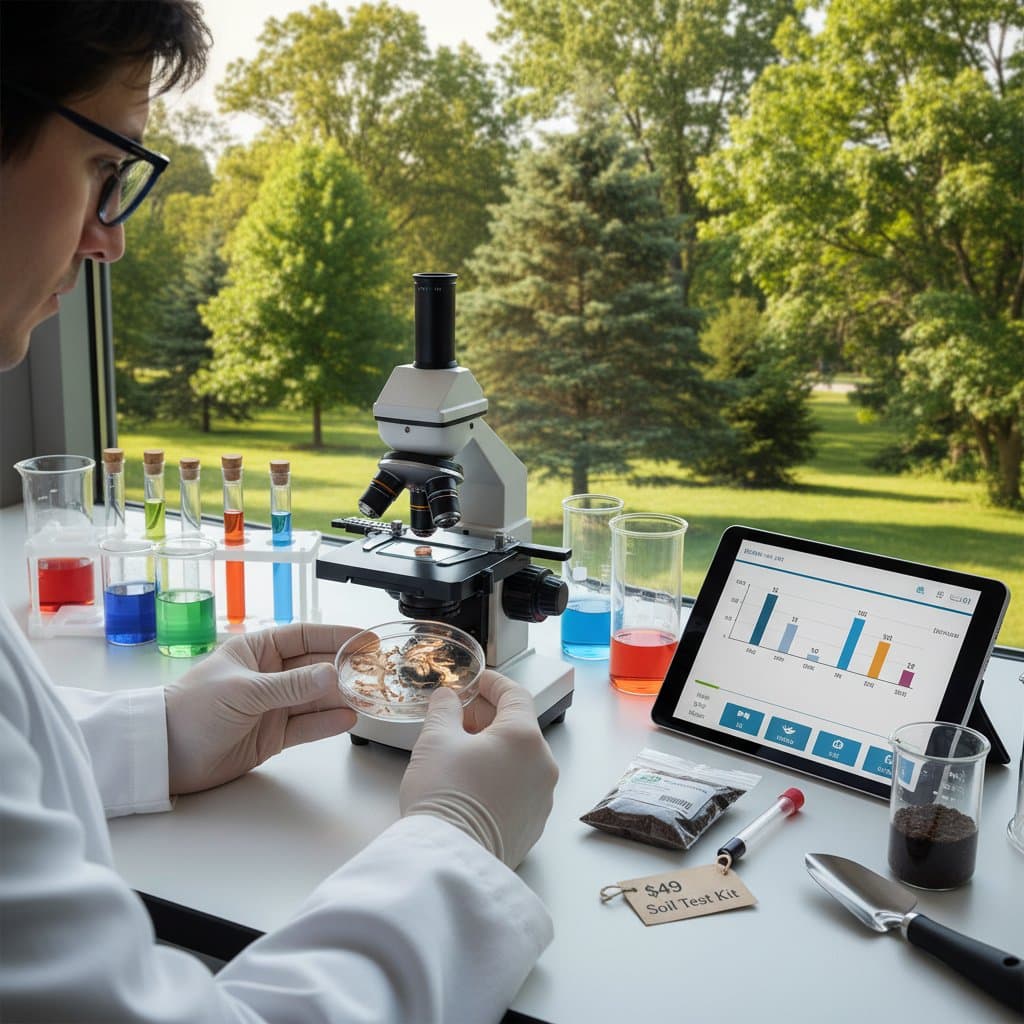
Unlock Tree Vitality: Insights from a $49 Soil Test
Strong trees depend on thriving soil. Homeowners often address visible symptoms like yellowing leaves or stunted growth with surface-level fixes, yet the root cause frequently lies underground. A professional soil test for $49 provides precise data on nutrient levels, pH balance, and microbial health, enabling targeted improvements that enhance tree resilience and longevity.
This article details the soil testing process, associated costs, and practical steps to apply results effectively, empowering you to foster a healthier yard.
Understanding Soil Tests
A soil test involves laboratory analysis of soil samples to assess composition, nutrient content, and biological elements. It evaluates essential macronutrients like nitrogen for leaf growth, phosphorus for root development, and potassium for disease resistance. The test also measures pH to determine acidity or alkalinity, organic matter for moisture retention, and microbial populations including mycorrhizal fungi that aid nutrient absorption.
These insights allow you to adjust soil conditions specifically. For instance, if phosphorus levels are low, you can incorporate rock phosphate amendments rather than broad-spectrum fertilizers.
Costs of Soil Testing
Professional soil tests typically range from $40 to $100, with a $49 option delivering comprehensive value for tree care. This fee covers sample processing, analysis, and a report with tailored advice.
| Test Type | Cost Range |
|---|---|
| Basic Nutrient and pH | $30–$50 |
| Full Nutrient and Microbial | $49–$75 |
| In-Depth Fungal and Microbial | $70–$100 |
Opt for the $49 comprehensive test to gain insights into both chemistry and biology without excessive expense.
Elements Influencing Test Costs
Analysis Depth
Basic tests focus on pH and major nutrients, while advanced ones include microbial enzyme activity and fungal diversity. Deeper analysis yields precise diagnostics for persistent tree issues, justifying the added cost through better outcomes.
Sample Collection Depth
Surface samples suit shallow-rooted plants, but trees require cores up to 12 inches deep to capture the active root zone. This method ensures results reflect true conditions for mature specimens.
Lab Technology
Facilities employing DNA sequencing for microbes or atomic absorption spectrometry for nutrients invest in precision tools. Such expertise minimizes errors and supports reliable recommendations.
Report Comprehensiveness
Standard reports list values, but premium ones interpret data with step-by-step amendment plans. Choose services that provide actionable guidance to streamline your implementation.
Steps in Professional Soil Testing
The process ensures reliable, useful outcomes through systematic evaluation.
-
Initial Assessment
An expert examines tree species, site conditions, and symptoms to guide sampling. -
Sample Collection
Technicians gather several cores from the root zone, blending them for a representative sample at 6–12 inches depth. -
Lab Examination
Samples undergo testing for nutrients, pH, organic content, and microbes via chemical assays and genetic analysis. -
Report Delivery
You receive findings on deficiencies and biology, plus suggestions like adding compost for organic matter or inoculants for fungi. -
Implementation and Monitoring
Apply recommended treatments, then retest after one growing season to measure improvements.
Comparing DIY and Professional Options
| Method | Best For | Advantages | Drawbacks |
|---|---|---|---|
| DIY Kit | Basic pH checks in gardens | Low cost, immediate results | Inaccurate for microbes, limited scope |
| Professional Service | Tree diagnostics | Thorough data, expert advice | Moderate fee, scheduling needed |
For trees, professional testing captures the ecosystem's complexity, far surpassing DIY limitations.
Soil's Role in Tree Development
Optimal soil promotes robust roots and efficient nutrient use, bolstering defenses against stressors. Deficiencies in key elements weaken trees, inviting pests or pathogens.
Monitor these soil health markers:
- pH of 6.0–7.0 to optimize nutrient availability
- Balanced N-P-K levels for comprehensive support
- 3–5% organic matter for structure and water holding
- Vibrant mycorrhizal networks for enhanced uptake
- Minimal compaction for root aeration
Testing reveals imbalances early, preventing decline.
Selecting a Testing Provider
Reliable services deliver accurate, applicable results.
-
Verify Qualifications
Seek certified arborists with tree-specific experience over generalists. -
Inquire on Methods
Ensure inclusion of microbial assessments alongside nutrients for holistic views. -
Evaluate Sampling Protocol
Confirm multiple samples from the drip line for comprehensive representation. -
Examine Report Samples
Request examples to verify clarity and detail in interpretations. -
Secure Pricing Details
Confirm the $49 quote encompasses full analysis and reporting.
Common Questions on Soil Testing
What is the cost for tree soil testing?
Expect $40–$100, with $49 covering nutrients, pH, and microbes for typical home settings.
How does soil testing inform tree health?
It detects nutrient gaps, drainage issues, or microbial shortages that hinder vitality.
Can inadequate soil lead to tree death?
Indeed, chronic lacks in oxygen or biology impair roots, fostering decline over time.
Do tests identify fungal issues?
Advanced versions detect fungal imbalances, guiding pH adjustments or beneficial introductions.
How frequently should testing occur?
Every 2–3 years for established trees to monitor and refine management.
Implement Results for Lasting Tree Strength
A $49 soil test illuminates the subsurface dynamics essential to tree success. Use the data to select precise amendments, fostering deeper roots and vibrant canopies.
Consistent soil care yields enduring benefits, transforming your landscape into a thriving ecosystem with minimal ongoing effort.