
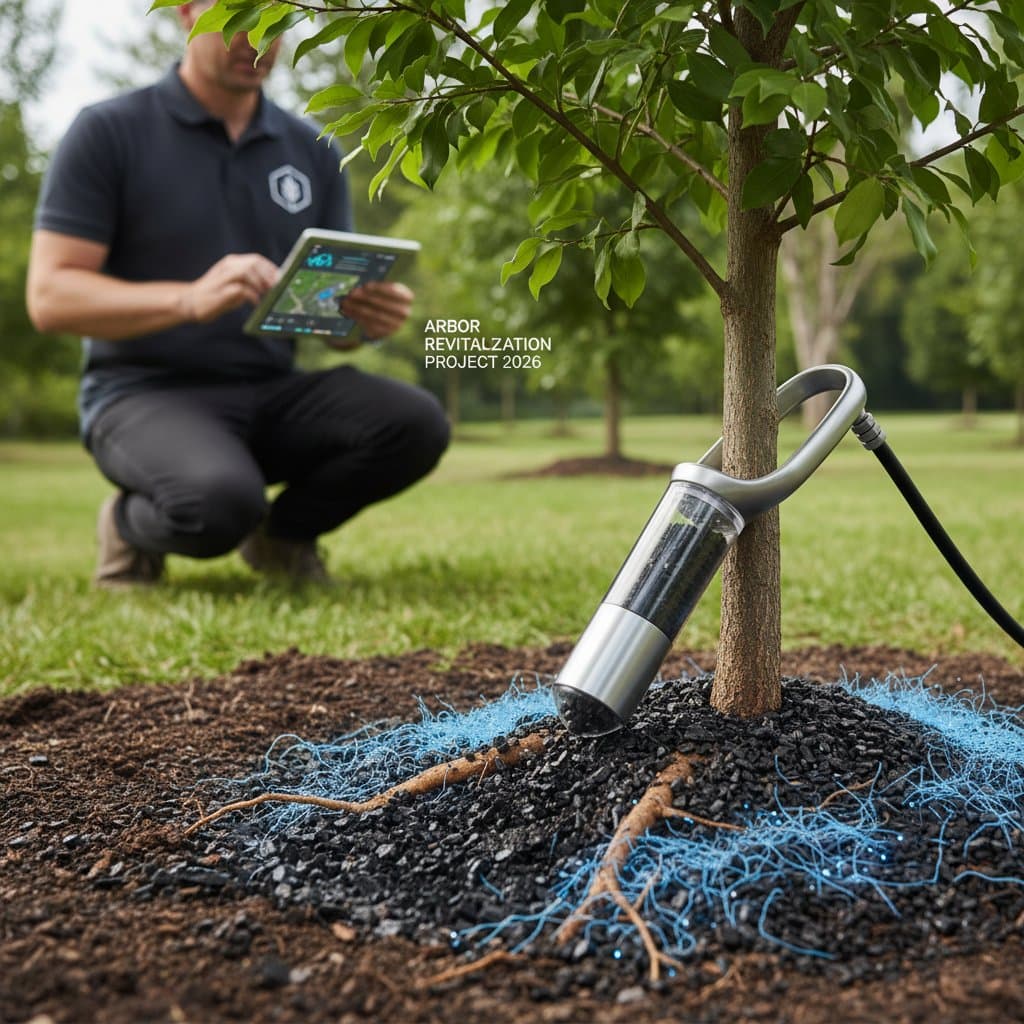
Microdosing Biochar: The Essential Root Enhancement Strategy for 2026
Vital soil forms the bedrock of robust tree growth. Homeowners and landscape professionals frequently encounter challenges in sustaining soil conditions that foster extensive, sturdy root networks. Issues such as soil compaction, nutrient depletion, and inadequate water holding capacity hinder development, rendering trees susceptible to environmental pressures and illnesses. Microdosing biochar emerges as an innovative solution, enabling precise soil enrichment to fortify root architecture, stimulate microbial populations, and elevate enduring soil quality.
This resource details the concept of microdosing biochar, its mechanisms, and its rising prominence as a pivotal amendment for tree establishment and upkeep.
Understanding Microdosing Biochar
Microdosing biochar involves the strategic delivery of minimal, focused quantities of biochar to the root areas of trees and vegetation. Biochar consists of carbon-dense substance produced through the pyrolysis of organic materials like wood fragments or agricultural byproducts in oxygen-limited conditions. The resulting material features a highly porous, durable framework that enhances soil ventilation, preserves hydration, and shelters advantageous microorganisms.
Rather than distributing substantial quantities over broad surfaces, microdosing concentrates efforts on critical zones to optimize root expansion and soil ecosystem dynamics. Such precision elevates efficiency, lowers expenses, and minimizes excess usage.
Reasons Homeowners Adopt Microdosing
Conventional soil treatments demand substantial quantities, leading to elevated costs and labor demands. Microdosing biochar achieves comparable advantages with reduced volumes. Even modest applications during initial planting or routine soil care yield reinforced root formation and vigorous trees. With increasing emphasis on ecological practices, this approach aligns with responsible landscaping by curbing pollutant discharge and naturally refining soil composition.
Typical Expenses for Microdosing Biochar
Expenses for microdosing biochar to support tree vitality generally span from $50 to $200 per tree, influenced by factors like tree dimensions, soil status, and workforce involvement. For modest home-based projects, the standard rate approximates $120 per tree.
| Factor | Average Cost Range |
|---|---|
| Small tree (under 15 ft) | $50 - $80 |
| Medium tree (15-30 ft) | $90 - $150 |
| Large tree (over 30 ft) | $160 - $200 |
These figures encompass biochar supplies, ground preparation, and expert implementation for accurate positioning. Integration with supplementary services like mulching or nutrient addition may adjust overall charges.
Elements Influencing Microdosing Biochar Costs
Tree Dimensions
Mature trees necessitate greater depth for biochar integration and larger material volumes, thereby extending duration and expenditure. Smaller or nascent trees demand fewer resources, positioning microdosing as a cost-effective upfront measure for sustained wellness.
Soil Status
Dense or deficient soils require enhanced groundwork to facilitate biochar uptake. Processes like aeration or blending contribute to service fees. Well-aerated, nutrient-rich soils demand minimal adjustments.
Biochar Grade
Premium biochar derived from hardwood or tailored sources commands higher prices yet delivers superior outcomes. Its porosity and capacity to retain elements directly affect nutrient storage and microbial habitation.
Site Reachability
Trees in confined or inclined locations may require advanced tools or additional effort for secure application, elevating the final amount.
Local Sourcing
Biochar procurement differs across regions. Proximity to production sites reduces pricing, whereas distant areas incur elevated shipping charges.
Steps in the Microdosing Procedure
Skilled arborists and soil experts follow a systematic protocol to guarantee optimal biochar deployment and assimilation.
-
Soil Evaluation and Analysis
Initial steps include measuring soil pH, composition, and organic content. These insights guide the selection of biochar volume and granule dimensions for maximum efficacy. -
Biochar Conditioning
Biochar undergoes activation by blending with compost extracts, vermicompost, or nutrient solutions prior to use. This preload equips its cavities with essentials, averting depletion from surrounding soil. -
Precise Delivery
Modest portions enter the root vicinity via injection devices, drilling tools, or manual implements. Insertion depths typically span 6 to 12 inches, adjusted for tree scale and ground characteristics. -
Blending and Hydration
Post-placement, the area receives light mixing and irrigation. These actions secure the biochar and initiate biological processes near roots.
Comparing DIY and Expert Services
| Method | Ideal Scenarios | Essential Factors |
|---|---|---|
| DIY Microdosing | Appropriate for compact trees, container plants, or small plots. | Select superior biochar and dose conservatively. Refrain from root disruption or soil densification. |
| Expert Implementation | Ideal for established trees, extensive areas, or challenging soils. | Specialists evaluate precisely, employ advanced equipment, and distribute uniformly without root injury. |
Homeowners adept in gardening may appreciate the hands-on aspect of DIY microdosing. However, errors in execution can diminish benefits or endanger roots. For significant or prized specimens, expert intervention guarantees reliability and protection.
Selecting a Biochar or Tree Wellness Expert
-
Verify Credentials and Background
Seek accredited arborists or soil advisors versed in biochar enhancements. Inquire about their familiarity with microdosing protocols. -
Insist on Soil Examination
Dependable experts conduct pre-treatment analysis to tailor dosages and formulations accurately. -
Examine Supply Origins
Superior biochar derives from uncontaminated, natural feedstocks. Request details on sourcing and manufacturing processes. -
Obtain Several Proposals
Evaluate bids from at least two or three providers. Variations arise from regional supplies and staffing costs. -
Secure Ongoing Support
Established services incorporate monitoring after application or plans for subsequent enhancements to sustain advantages.
Common Inquiries
What Quantity of Biochar Fits Per Tree?
Microdosing guidelines suggest one to two pounds of activated biochar per inch of trunk girth. Adjustments depend on soil properties and tree condition.
Does Microdosing Substitute Fertilizers?
Biochar serves as a soil conditioner, not a nutrient source. It complements organic or inorganic fertilizers by prolonging their availability in root zones.
How Durable Is Biochar in Soil?
Biochar exhibits remarkable longevity, persisting for hundreds of years. Its framework sustains microbial networks and hydration equilibrium over extended periods.
Is Biochar Suitable for Every Tree Variety?
Correct application benefits diverse species including oaks, maples, pines, and orchard trees through better aeration and biological aid. Customize blends to match specific nutritional profiles.
Can Biochar Bolster Drought Tolerance?
Biochar elevates moisture storage and curbs loss around roots. Trees gain fortitude against arid conditions while avoiding saturation.
Is This Practice Eco-Conscious?
Biochar sequesters carbon in soil, mitigating emissions. It lessens reliance on synthetic inputs and bolsters ecological balance.
Incorporating Microdosing into Routine Tree Maintenance
Microdosing biochar functions as a foundational element in eco-sustainable soil strategies. Introduce doses at planting stages, during seasonal upkeep, or following trimming to cultivate a dynamic soil environment that nurtures roots persistently.
Users of this technique observe accelerated recovery from relocation stress, richer foliage tones, and heightened stress resistance. The initial outlay proves economical as gains accumulate annually.
Advancing Root Vitality with Precision
Robust trees depend on dynamic soil, and microdosing biochar provides an effective pathway to achieve it. From establishing young plants to restoring mature ones, focused biochar use strengthens root integrity and soil endurance. Collaboration with a competent arborist ensures secure, impactful execution for optimal results.