
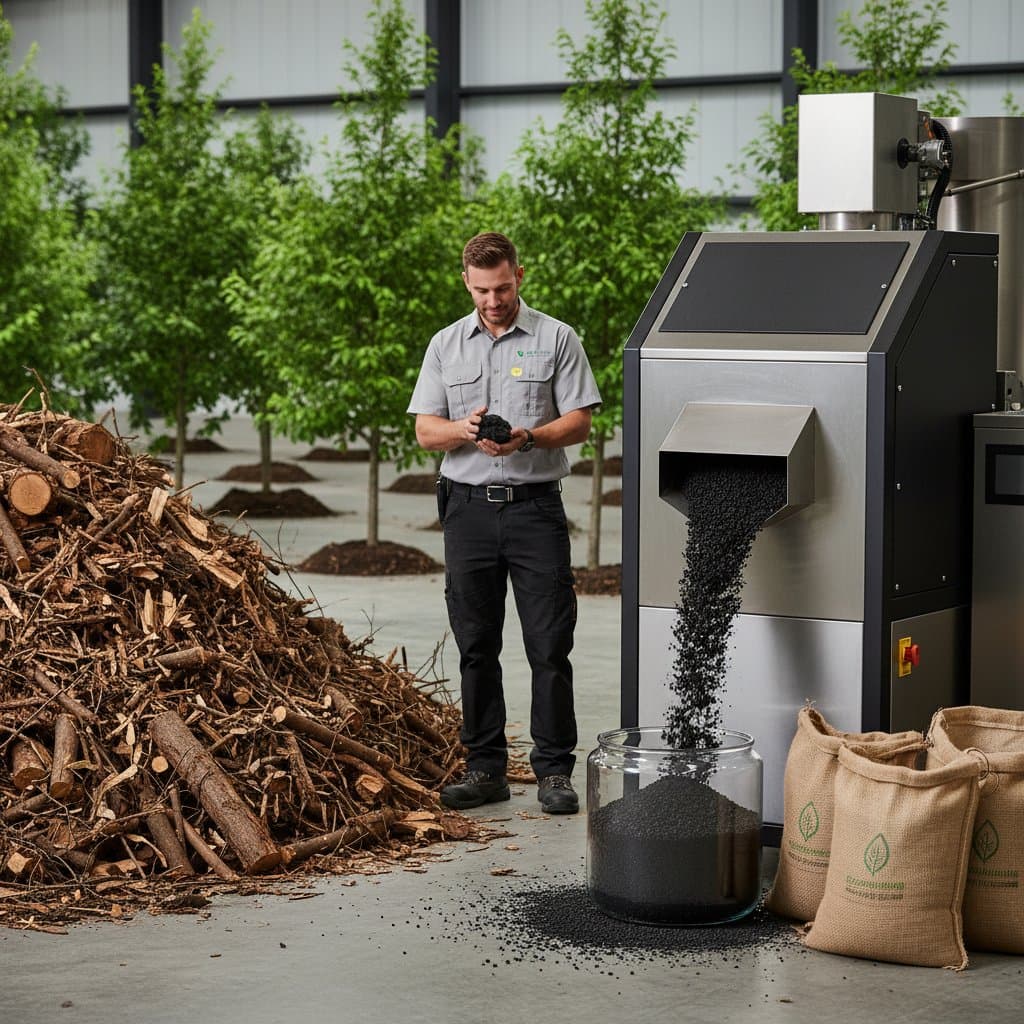
Turning Tree Waste into Profitable Biochar
Arborists, landscapers, and property owners now convert branches, stumps, and pruning debris into biochar instead of paying landfill fees. This approach cuts disposal expenses while producing a soil amendment that improves structure, retains water, and stores carbon for decades. The following sections detail production methods, realistic costs, and step-by-step procedures that deliver consistent results.
Understanding Production Costs
Small-scale batches using portable kilns typically require a few hundred dollars in equipment and labor per run. Larger continuous pyrolysis systems demand several thousand dollars upfront yet deliver higher efficiency and output that offsets the investment through reduced hauling fees and biochar sales.
Costs vary by operation size. Homeowners and small crews benefit from low-cost cone kilns and minimal preparation. Commercial producers invest in automated units that run steadily and capture usable heat. Cooperative facilities spread equipment expenses across multiple suppliers while sharing finished product.
Key variables include kiln type, feedstock chipping and drying, labor hours, fuel source, and local demand for the finished material.
Comparing Production Systems
Pit and Cone Kilns
These simple structures limit oxygen during burning to create stable carbon rather than ash.
-
Low material cost and quick assembly
-
Best suited to rural or occasional use
-
Uneven heating often reduces yield and quality
-
Limited temperature control increases smoke output
Retort Kilns
An inner chamber heats wood indirectly, yielding uniform biochar with cleaner exhaust.
-
Precise temperature management improves consistency
-
Higher recovery rates and reusable design
-
Greater initial purchase price
-
Requires basic training for safe operation
Continuous Pyrolysis Units
These industrial systems accept steady feedstock and recover gases for energy.
-
Scalable output for municipal or business needs
-
Consistent product and heat recovery
-
High capital and maintenance expense
-
Needs skilled operators and reliable wood supply
Choosing DIY or Professional Service
Operators who already handle tree waste can produce biochar on site to avoid tipping fees and create amendments for their own projects. Success depends on steady airflow control, safe quenching procedures, and compliance with local air-quality rules.
Professional producers supply proper equipment, permits, and volume capacity. They process large loads quickly and meet emission standards that many property owners cannot achieve alone. Most homeowners and small firms find professional service the faster and more economical choice.
Step-by-Step Production Process
- Gather clean, untreated branches, logs, and chips; remove painted or pressure-treated pieces.
- Air-dry the wood under cover until moisture content drops below 20 percent.
- Select a kiln sized to your volume and load the chamber.
- Ignite from the top and restrict airflow to maintain a slow pyrolysis burn.
- Seal the unit once carbonization finishes and allow cooling before quenching with water.
- Crush cooled biochar into half-inch pieces and store in a dry location.
Practical Production Tips
Use only untreated wood to prevent chemical residues. Track kiln temperature to reach full carbonization without turning material to ash. Blend finished biochar with compost several weeks before soil application to activate microbial life. Record each batch size, burn time, and yield to refine future runs.
Common Questions
What are the main uses for biochar?
Biochar increases soil porosity, supports beneficial microbes, and holds moisture during dry periods. Gardeners, farmers, and landscapers apply it to improve plant performance and sequester carbon.
Which woods work best?
Most hardwood and softwood species produce quality biochar. Avoid treated lumber because it releases toxins during heating.
How long does a batch take?
Small kilns finish in three to six hours. Larger continuous units can operate around the clock with steady feeding.
Is the process environmentally sound?
Properly managed pyrolysis locks carbon in solid form, diverts waste from landfills, and can supply renewable heat from captured gases.
Can produced biochar be sold?
Yes. Many operators sell bagged or bulk biochar to nurseries, farms, and municipalities seeking sustainable soil amendments.
Launching a Biochar Project
Begin with a modest kiln suited to available wood volume and test a few batches to confirm quality. Track disposal savings and any revenue from sales to measure return. Consistent records and gradual scaling lead to reliable production that benefits both the operation and the surrounding soil.