
Predict Tree Failures Early with Root Sensor Alerts
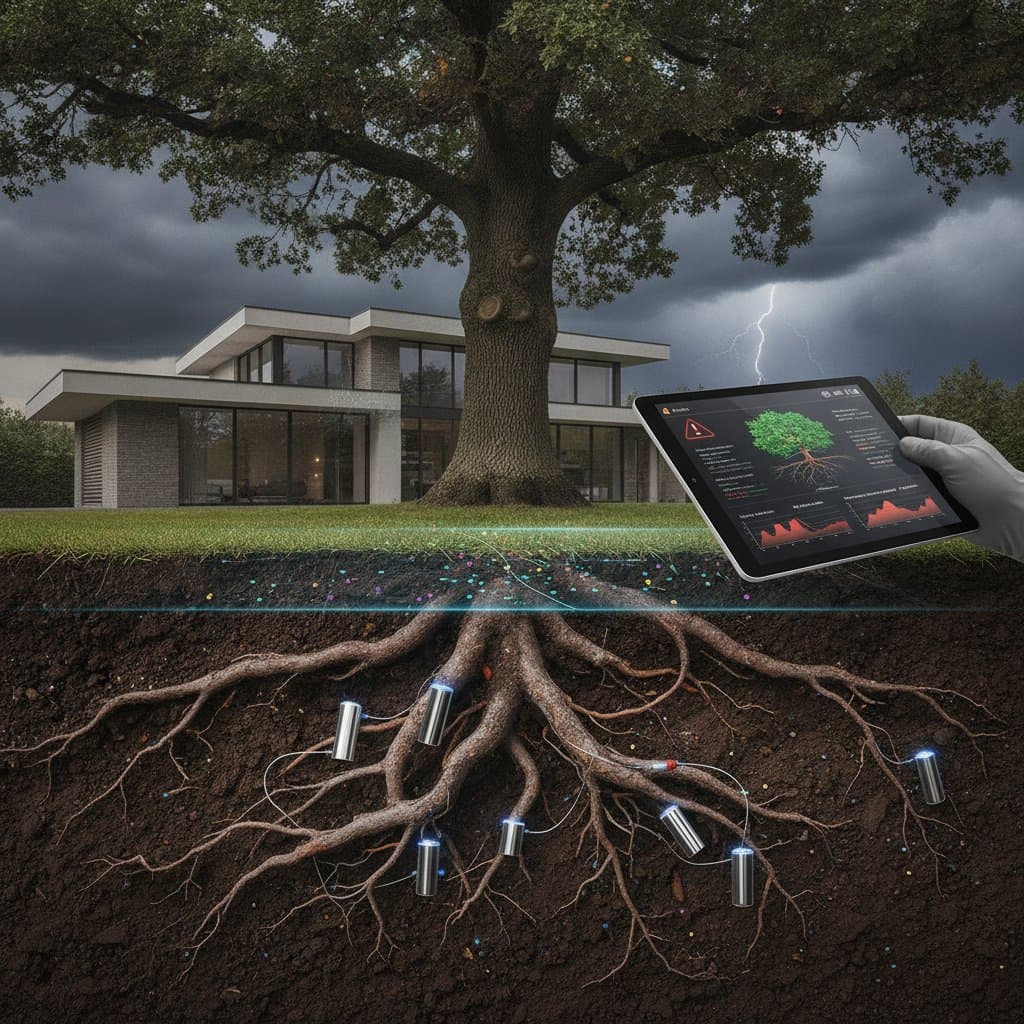
When a large tree falls without warning the results often include expensive repairs along with risks to people and structures. Many property owners view such events as random. New monitoring technology now identifies instability at the root level weeks or months before surface signs emerge. Root sensor alerts track soil movement and moisture in real time so that homeowners and arborists can intervene early.
What Root Sensor Alerts Measure
These systems place small probes in the root zone to record shifts in soil tension, moisture, and vibration. Readings that move outside established safety ranges trigger an automatic notification. The data allow action while the tree remains stable and removal or major pruning can still be avoided.
Typical Installation Costs
Prices for a complete root sensor setup range from 350 to 1500 dollars per tree. Cost depends on tree size, number of probes, and whether wireless data transmission is included. The investment stays modest when compared with potential losses from property damage.
| Tree Size or Scope | Average Cost Range |
|---|---|
| Small tree under 20 ft | 350 to 600 |
| Medium tree 20 to 50 ft | 600 to 900 |
| Large tree over 50 ft | 900 to 1500 |
| Multiple trees | 1500 to 3000 |
Elements That Influence Final Price
Tree diameter determines how many sensors are required because larger root plates need broader coverage. Soil type affects labor time. Clay or rocky ground requires more digging than loose loam. Advanced probes that record tilt and pressure cost more than basic moisture units. Sites with limited access or nearby utilities add extra planning and handling charges. Ongoing data review or annual calibration visits increase the yearly total but improve long term reliability.
Step by Step Detection Process
- Sensors establish a baseline of normal movement after installation.
- Continuous readings capture moisture, tension, and vibration around the roots.
- Software flags any deviation that exceeds set thresholds and sends an alert.
- An arborist reviews the data and performs a field inspection.
- Recommended steps such as pruning, cabling, or soil treatment are scheduled.
This sequence converts hidden root decline into scheduled maintenance rather than emergency response.
DIY Limitations and Professional Requirements
Basic moisture sensors can be placed by homeowners around small garden trees. These units supply general watering guidance but lack the precision needed for structural assessment. Professional installation becomes necessary for any tree taller than 30 feet or located near buildings, driveways, or utilities. Certified crews position probes at correct depths and interpret results against species specific thresholds.
| Monitoring Goal | DIY Suitable | Professional Required |
|---|---|---|
| Small garden trees only | Yes | No |
| Structural risk near structures | No | Yes |
| Trees taller than 30 ft | No | Yes |
| Moisture tracking alone | Yes | No |
Selecting a Qualified Provider
Confirm International Society of Arboriculture credentials before signing an agreement. Request proof of liability and workers compensation coverage. Ask whether live data access is provided through a mobile app or restricted to the service team. Obtain written estimates from at least two firms and compare sensor count, calibration visits, and warranty terms. Review recent client references and verify that hardware and installation remain covered for a stated period.
Common Questions Answered
Modern units achieve high accuracy when placed and calibrated correctly. They register root movement before any crown symptoms appear. Irregular moisture patterns sometimes point to decay. An alert is always followed by a site visit to separate normal weather effects from genuine risk. Sensors add value on healthy trees because compaction or drainage changes can develop without visible clues. Most systems need only annual professional checks.
Protect Landscape Assets Through Continuous Monitoring
Root sensor data turn tree care from reactive repairs into scheduled prevention. Property owners receive objective evidence rather than visual guesses. Early adjustments often extend the safe life of mature trees while reducing unexpected costs. Consult a certified arborist to identify which trees on the site would benefit most from underground monitoring.