
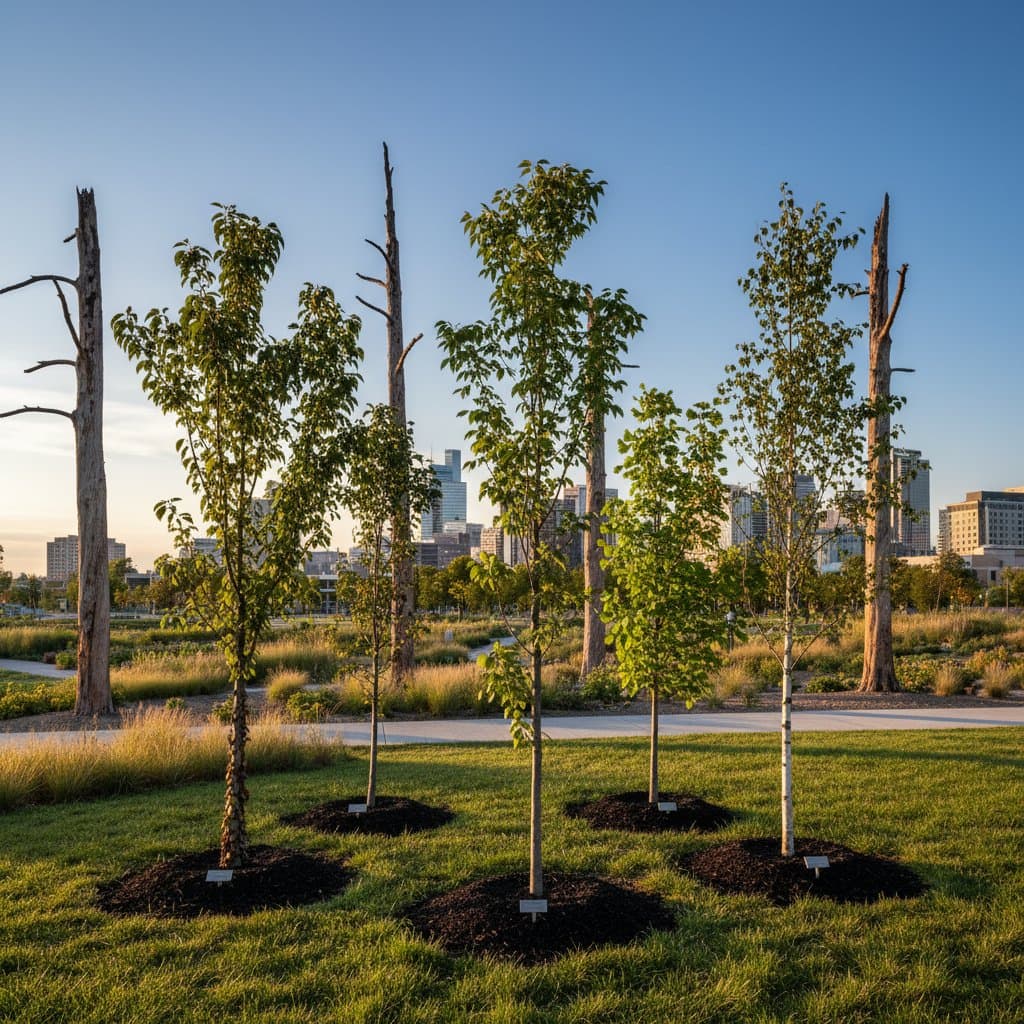
Top 5 Climate-Smart Trees for Replacing Ash in 2026
The loss of millions of ash trees across neighborhoods and woodlands has left homeowners searching for resilient, long-lasting replacements. The emerald ash borer, a destructive invasive beetle, decimated ash populations and exposed how vulnerable some tree species can be. As cities and homeowners replant, the focus has shifted toward climate-smart trees that can withstand changing weather patterns, pests, and diseases.
This guide highlights the top five climate-smart trees for replacing ash. It explains their benefits, growth habits, and ideal planting conditions. Each species offers strong resilience, attractive form, and environmental value.
What Are Climate-Smart Trees?
Climate-smart trees are species selected for their ability to adapt to heat, drought, storms, and pests. They are hardy enough to thrive in shifting climates and urban conditions. These trees support biodiversity, store carbon, and provide reliable shade even as weather extremes become more common.
Why Replace Ash Trees with Climate-Resilient Species
Replacing ash trees is not only about filling empty spaces but about future-proofing your landscape. Ash trees once dominated many neighborhoods because of their fast growth and graceful canopy. Their vulnerability to invasive pests revealed the importance of diversity and resilience. By replanting with climate-smart species, homeowners can reduce maintenance costs, protect property value, and contribute to a more stable urban forest.
Top 5 Climate-Smart Trees for Replacing Ash
Each of the following species offers durability, beauty, and adaptability that make them ideal for replacing lost ash trees. These selections thrive in a range of soils, tolerate urban stress, and resist pests and diseases that often challenge traditional shade trees.
1. Swamp White Oak (Quercus bicolor)
The swamp white oak is a native species prized for its longevity, wide canopy, and tolerance to both wet and dry conditions. It grows steadily to about 50 to 60 feet, creating a rounded crown that provides excellent shade.
This oak handles poor drainage and compacted soils better than many species, making it ideal for city planting strips and residential lawns. Its deep root system anchors it during strong winds, and its leaves offer stunning golden fall color. As weather patterns shift, swamp white oak remains stable through droughts and heavy rains alike. It supports numerous native insects and birds, contributing to local biodiversity.
2. Kentucky Coffeetree (Gymnocladus dioicus)
The Kentucky coffeetree is a tough, adaptable native that thrives in urban settings. It features a tall, open crown with unique doubly compound leaves that create light, dappled shade. Mature trees can reach 60 feet or taller, with strong limbs resistant to storm damage.
This species tolerates poor soil, pollution, and drought once established. It requires minimal pruning and resists most pests and diseases. Its coarse bark and sculptural branching add winter interest. The Kentucky coffeetree deep roots and drought tolerance make it highly resilient as summers grow hotter and drier. It also serves as an excellent substitute for ash because of its similar size and shade coverage.
3. American Elm (Ulmus americana) - Disease-Resistant Varieties
Once nearly lost to Dutch elm disease, modern disease-resistant American elm cultivars have brought this classic shade tree back to residential landscapes. New selections such as Princeton and Valley Forge maintain the graceful vase shape and arching canopy that made the elm a favorite street tree.
These improved varieties resist the fungal diseases that devastated older elms, while still offering fast growth and broad shade. They thrive in a range of soils and tolerate both heat and cold. Resistant elms adapt well to changing rainfall patterns and urban stress. Their resilience, combined with iconic beauty, makes them a top choice for replacing ash in parks, boulevards, and large yards.
4. Bald Cypress (Taxodium distichum)
The bald cypress is a striking conifer known for its feathery leaves and adaptability. Though native to wet southern regions, it performs well in both dry and moist soils once established. It reaches 50 to 70 feet with a pyramidal form that becomes more open with age.
Bald cypress tolerates flooding, compacted soil, and even periods of drought. It resists most insects and diseases, and its unique orange-brown fall color adds strong seasonal appeal. As rainfall becomes less predictable, bald cypress offers unmatched flexibility. It absorbs standing water during storms yet endures dry spells with little stress.
5. Honeylocust (Gleditsia triacanthos var. inermis)
The thornless honeylocust is one of the most versatile urban trees. It grows quickly to 40 to 60 feet, forming a light canopy that allows grass to thrive below. Its small leaflets cast a soft, filtered shade that cools without creating heavy leaf litter.
Honeylocust adapts to compacted soil, pollution, and drought. It rarely suffers from serious pests or diseases and requires little maintenance once established. This species tolerates extremes in temperature and moisture, making it an excellent choice for both urban and suburban yards. Its fine-textured foliage also reduces wind resistance, which lowers the risk of storm breakage.
Factors to Consider When Selecting a Replacement Tree
Match the mature size of the tree to your available space. Large trees like oaks and elms need wide planting areas, while smaller yards may benefit from species such as serviceberry or redbud. Assess whether your soil stays moist, drains quickly, or compacts easily. Choosing a tree that fits your soil type ensures better growth and longevity.
Most shade trees require full sun for healthy development. Check surrounding structures and existing vegetation to ensure your new tree receives enough light. Consult a local arborist or extension office to confirm that your chosen species suits your regional climate zone. Climate-smart does not mean universal, so local adaptation still matters.
Avoid replanting large groups of the same tree. Mixing species helps prevent widespread loss if a future pest or disease outbreak occurs.
The Planting Process for Tree Replacement
- Site Assessment: Evaluate soil, drainage, and space before selecting a species.
- Tree Selection: Choose a healthy, locally grown specimen from a reputable nursery.
- Planting Preparation: Dig a wide, shallow hole and loosen compacted soil.
- Planting and Watering: Set the tree at the correct depth, backfill with native soil, and water thoroughly.
- Mulching and Maintenance: Apply a 2 to 3 inch mulch layer around the base, leaving space near the trunk.
- Ongoing Care: Water regularly during the first few seasons and prune only as needed to develop strong structure.
Why Professional Help Matters
While planting a small sapling can be a simple project, replacing mature ash trees or handling large specimens often requires professional expertise. Certified arborists can assess soil conditions, recommend the best species, and ensure proper planting techniques. They also manage stump grinding, debris removal, and any necessary permits for street or public trees.
Hiring professionals ensures your new tree establishes correctly, improving its survival rate and long-term health. It also protects you from potential hazards associated with heavy equipment or large root systems.
Frequently Asked Questions
How long does it take for a replacement tree to provide shade? Most climate-smart species begin offering noticeable shade within five to eight growing seasons. Faster growers like honeylocust and elm develop canopy cover sooner, while oaks take longer but live much longer.
Can I plant a new tree near the old ash stump? It is better to remove or grind the stump first. Ash roots can compete for nutrients and space with new roots. Clearing the area ensures healthier establishment for your replacement tree.
Are these trees suitable for small urban lots? Yes, but consider mature size and root spread. Honeylocust and Kentucky coffeetree fit well in medium yards, while swamp white oak and bald cypress need more room to thrive.
How do I ensure my new tree survives drought? Mulch deeply, water during dry spells, and avoid over-fertilizing. Once established, most of these climate-smart trees handle drought naturally through efficient root systems.
Will local wildlife benefit from these replacements? Absolutely. Native species like swamp white oak and American elm support birds and insects, restoring habitat lost with ash decline.
Steps to Secure a Resilient Landscape
Select species that match site conditions and commit to proper planting and care. These choices create shade, support wildlife, and strengthen the urban forest against future stresses.