
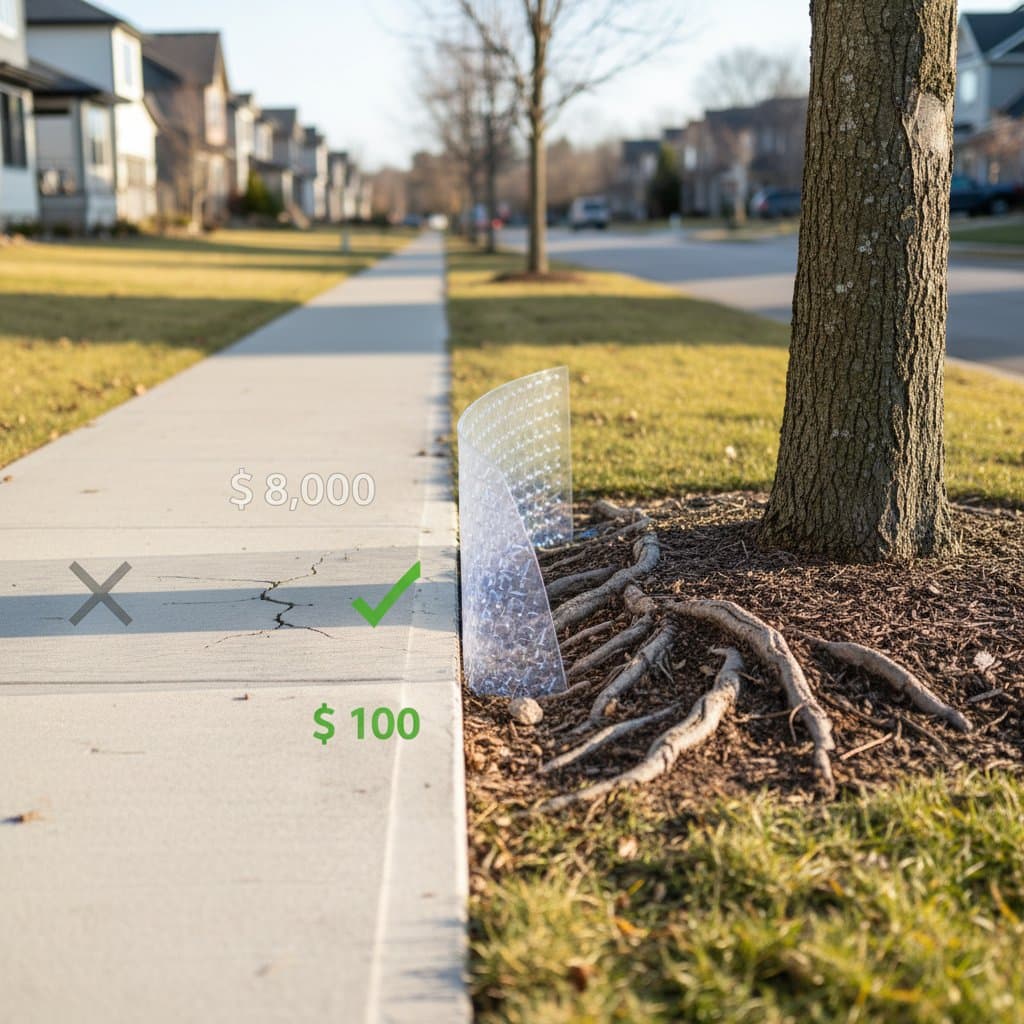
Prevent $8,000 Sidewalk Repair Costs with Root Barriers
Tree roots enhance properties with shade and aesthetic appeal, yet they frequently cause substantial damage to infrastructure. Repairing sidewalks elevated or fractured by encroaching roots may incur expenses up to eight thousand dollars. Root barriers serve as an effective preventive measure, installed underground to redirect root expansion and avert such costly issues.
These barriers establish a subterranean boundary that channels roots away from sidewalks, driveways, and building foundations. Homeowners thus maintain the vitality of their trees alongside the integrity of paved areas, avoiding the need to remove valued landscape elements.
How Root Barriers Function
A root barrier consists of robust panels or fabrics positioned underground to influence root direction. Installation occurs in a vertical trench dug between the tree and vulnerable structures. Materials vary from inflexible plastic sheets to adaptable, water-permeable textiles that permit airflow while impeding root penetration.
Roots seek out moisture and nutrients in accessible locations. An appropriately placed barrier alters this trajectory, encouraging deeper or lateral growth into undisturbed soil rather than toward compacted surfaces like concrete slabs.
Causes of Root-Induced Pavement Damage
Roots expand naturally in pursuit of resources, exerting force against obstacles such as soil or pavement. Upon reaching concrete, they exploit weaknesses, causing uplift, fractures, or soil displacement over time.
Species like willow, poplar, and silver maple exhibit particularly vigorous root networks. Trees situated near urban hardscapes face heightened risks. Preventive action through barriers proves more economical than subsequent remediation efforts.
Elements Affecting Root Barrier Performance
Effectiveness hinges on multiple considerations, enabling tailored solutions for diverse landscapes.
- Material Selection: Rigid plastics offer unyielding obstruction, whereas permeable fabrics facilitate drainage. Selection aligns with local soil type and tree characteristics.
- Installation Depth: Barriers typically extend twelve to forty-eight inches below grade. Greater depths suit established trees with extensive root systems.
- Proximity to Trunk: Barriers positioned nearer the base exert stronger influence but demand caution to preserve tree stability. Optimal distance balances protection and health.
- Soil Composition: Moisture-retaining clays promote surface-level rooting; enhanced depth counters this tendency.
- Tree Maturity: Younger specimens accommodate installation with minimal disturbance. Mature trees benefit from expert evaluation to mitigate risks.
Steps in Root Barrier Installation
Professional installation demands precision to ensure longevity and efficacy. Certified arborists or landscapers adhere to a structured approach.
- Site Evaluation: Analyze tree variety, root extent, and at-risk features.
- Trench Layout: Delineate a path one to two feet from pavement, parallel to the protected zone.
- Digging: Excavate to specified depth, preserving primary roots intact.
- Positioning: Insert barrier vertically, securing overlaps to eliminate breaches.
- Refilling: Replace soil in layers, compacting for firmness.
- Verification: Confirm seam integrity and root diversion potential.
Projects for standard homes span one to two days, with costs ranging from eight to twenty dollars per linear foot. This upfront expenditure pales against future repair or removal outlays.
Evaluating DIY Installation Against Professional Services
Individuals skilled in basic excavation may manage barriers for saplings. However, mature trees or intricate terrains necessitate expert intervention. Specialized equipment handles substantial roots without compromising tree vigor.
Arborists integrate root pruning with barrier placement, safeguarding against decline or structural weakness. Professional oversight guarantees compliance with best practices for sustained landscape health.
Selecting an Appropriate Root Barrier Type
Options cater to specific scenarios, ensuring optimal results.
- Rigid Plastic Panels: Best for high-traffic pavements, delivering robust deflection of roots.
- Permeable Fabrics: Geotextiles promote hydrology while curbing intrusion, ideal for planting beds.
- Chemical Treatments: Impregnated materials inhibit growth via repellents, though usage warrants environmental review.
- Modular Assemblies: Interlocking units streamline deployment in expansive or municipal settings.
Indicators of Required Root Barrier Intervention
- Elevated or fissured sidewalk sections adjacent to tree trunks
- Buckled driveways or irregular borders
- Exposed roots abutting or invading curbs
- Minor foundation fissures or subsidence
- Recurrent blockages in nearby irrigation or drainage systems
Frequently Asked Questions
What Planting Distance Ensures Safety Near Sidewalks?
Species dictate spacing: ornamental varieties require five feet, while shade trees demand ten. Barriers enable closer placements without hazard.
Does Installation Risk Tree Health?
Proper techniques preserve tree function by sparing vital roots and maintaining resource access.
What Is the Durability of Root Barriers?
Premium plastics endure over twenty years; fabrics offer replaceable service for ten to fifteen.
Are Permits Needed for Public Areas?
Municipal approval often applies to street-adjacent work; verify regulations prior to proceeding.
Can Barriers Safeguard Utilities?
They redirect growth effectively, yet utilities merit additional shielding. Locate lines before any digging.
What Risks Arise from Proximity to the Trunk?
Excessive nearness limits nutrient uptake, potentially inducing stress. Adhere to advised offsets.
Safeguard Your Property Through Proactive Root Management
Implementing root barriers fortifies landscapes against inevitable growth pressures. This strategy preserves aesthetic and functional elements, yielding long-term savings and stability. Consult professionals to customize protection for your unique site.