
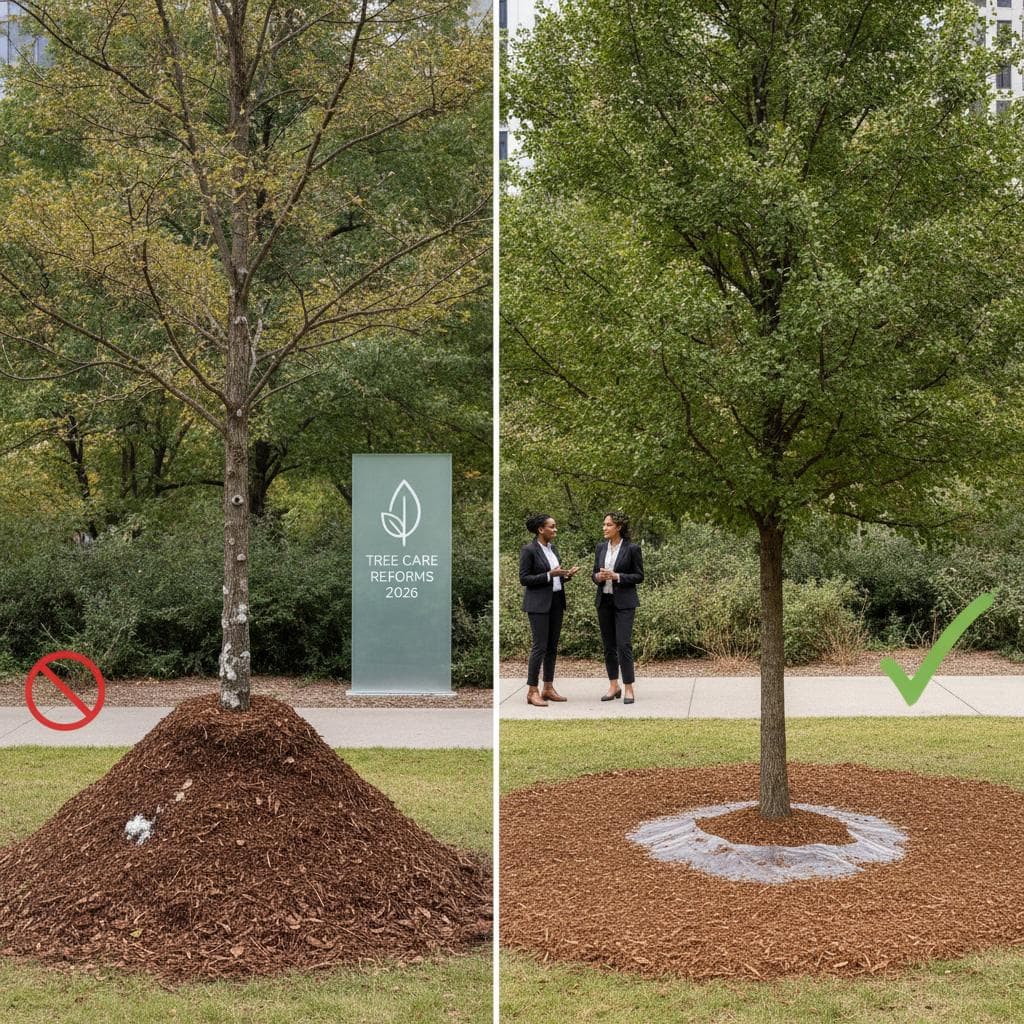
2026 Rules Ban Mulch Volcanoes in Tree Planting Shift
Homeowners and landscapers should prepare for a major change in tree care practices. New tree planting regulations prohibit the use of mulch volcanoes. The updated rules require proper mulching methods that protect tree roots, encourage healthy growth, and prevent long-term damage. This change improves tree survival rates and reduces the costly consequences of poor mulching habits.
Mulch volcanoes form when mulch is piled high around the base of a tree. The new regulations make it clear that this practice will no longer be acceptable. Proper mulching that keeps the root flare visible and maintains a consistent layer depth will become the national standard for both residential and commercial landscapes.
Understanding the Mulch Volcano Ban
The new rules target the widespread misuse of mulch that suffocates tree roots and traps moisture against the trunk. A mulch volcano forms when mulch is mounded around the tree like a cone, often piled several inches high against the bark. This style may appear tidy, but it creates serious problems below the surface.
Excessive mulch holds moisture against the trunk. This leads to bark decay, fungal infections, and root rot. It also encourages roots to grow in circular patterns near the surface. These roots can girdle the tree and restrict its ability to take in water and nutrients. Over time, these conditions can weaken or kill even mature trees.
The ban aims to standardize proper mulching practices by setting clear depth limits and spacing requirements. It encourages landscapers, homeowners, and municipalities to adopt healthier techniques that support long-term tree vitality.
Why Mulch Volcanoes Are Dangerous for Trees
A mulch volcano might look neat and professional, but it causes several hidden health issues for trees. Understanding these dangers helps explain why the new rules are necessary.
- Trunk decay occurs when constant moisture against the trunk invites decay and disease. The bark is meant to remain dry.
- Girdling roots develop when mulch is piled thickly. Roots grow upward and around the base instead of spreading outward.
- Oxygen deprivation happens as thick mulch layers restrict airflow to the soil.
- Pest habitat forms in deep mulch layers that attract insects and rodents.
- Water stress results when mulch volcanoes block water from reaching the roots while holding moisture near the trunk.
By banning this practice, the new rules promote tree health and reduce premature decline. The focus shifts toward techniques that balance moisture retention with proper airflow and root exposure.
Key Factors That Define Proper Mulching
Proper mulching supports tree health, soil quality, and water conservation. The upcoming rules emphasize consistency and moderation rather than excess. Here are the essential guidelines every homeowner should follow.
- Maintain a mulch layer between two and four inches deep. Too little mulch provides minimal benefit, while too much suffocates the roots.
- Keep mulch at least three inches away from the trunk. The root flare, the area where the trunk broadens at the base, must remain visible.
- Extend the mulch out to the tree drip line if possible. This area represents the natural spread of the roots.
- Use organic mulch such as shredded bark, wood chips, or composted leaves. These materials decompose over time and enrich the soil with nutrients.
- Replenish mulch annually, but avoid piling new layers on top of old compacted material. Rake and loosen existing mulch before adding more.
These principles create a growing environment that mirrors natural forest conditions. Trees thrive under a light, breathable layer of organic matter.
How the Rules Will Affect Homeowners and Landscapers
The new regulations affect both private homeowners and professional landscapers. Many municipalities will begin enforcing these standards through inspection programs or maintenance guidelines for public spaces. Private property owners are expected to comply by adjusting their landscape maintenance routines.
For homeowners, compliance involves removing any existing mulch volcanoes and reshaping them into flat, evenly distributed rings around each tree. Landscapers and property managers will need to train crews on correct mulching techniques and educate clients about the reasons behind the change.
Trees planted and maintained under the new guidelines are expected to live longer. They require less corrective pruning and resist disease more effectively. Over time, this translates to lower maintenance costs and healthier urban canopies.
The Proper Mulching Process
To help homeowners adapt, here is a clear step-by-step process for proper mulching under the new standards.
- Remove old mulch, weeds, and grass around the base of the tree. Expose the root flare so it is visible.
- Check for compacted or waterlogged soil. Loosen the top layer with a rake to improve aeration and drainage.
- Spread mulch evenly around the base, stopping a few inches short of the trunk. Keep the layer consistent in depth.
- Form a gentle, flat ring rather than a mound. The goal is to create a uniform layer that looks natural and allows rainwater to soak in.
- Recheck mulch levels regularly. As the material breaks down, top it up slightly while maintaining proper spacing.
Following these steps ensures compliance with the new regulations and promotes a healthier environment for your trees.
DIY vs. Hiring a Professional
Although mulching appears simple, achieving the right depth and spacing requires precision. DIY homeowners can handle small projects, but large properties or commercial landscapes benefit from professional expertise.
DIY mulching is cost effective for small areas. It suits individual trees or small gardens and requires basic tools like a rake and wheelbarrow.
Professional mulching is ideal for large properties or multiple trees. Professionals can identify root flare locations accurately. They use proper materials and can assess soil health before application.
Hiring a certified arborist or trusted tree care company ensures compliance with the new rules and prevents costly mistakes. The investment pays off in improved tree health and reduced replacement costs.
How to Choose a Qualified Tree Specialist
Selecting the right professional helps guarantee that your trees receive the best care under the new standards. Look for these qualifications and practices.
- Choose an arborist certified by a recognized tree care organization. Certification demonstrates training in proper planting and mulching techniques.
- Ensure the company carries liability and worker protection coverage.
- Ask for local references to verify quality work and adherence to current regulations.
- Obtain detailed quotes listing labor, materials, and scope of work.
- A trustworthy professional explains ongoing care requirements and educates you on proper mulching upkeep.
Working with qualified experts gives peace of mind and helps your landscape remain compliant and healthy.
Common Questions About the Mulch Volcano Ban
Why were mulch volcanoes banned?
They were banned because they damage tree bark, suffocate roots, and shorten a tree lifespan. The new rules standardize mulching methods that protect trees rather than harm them.
What happens if I ignore the new regulations?
Ignoring the rules can lead to tree decline and potential enforcement actions in regulated areas. Noncompliance can also reduce property value if trees begin to die or require removal.
Can I still use decorative mulch around my trees?
Yes, decorative mulch is allowed as long as it follows the correct depth and spacing guidelines. The material type is less important than proper application.
How often should I replace my mulch?
Most mulch types last about a year before decomposing. Refresh it annually, but always maintain the correct depth and keep it away from the trunk.
Achieving Healthier Trees Through Compliance
Adopting these standards leads to stronger root systems and longer tree lifespans. Property owners who follow the guidelines see reduced disease incidence and lower long-term care expenses. Consistent application across neighborhoods builds more resilient urban forests for future generations.