
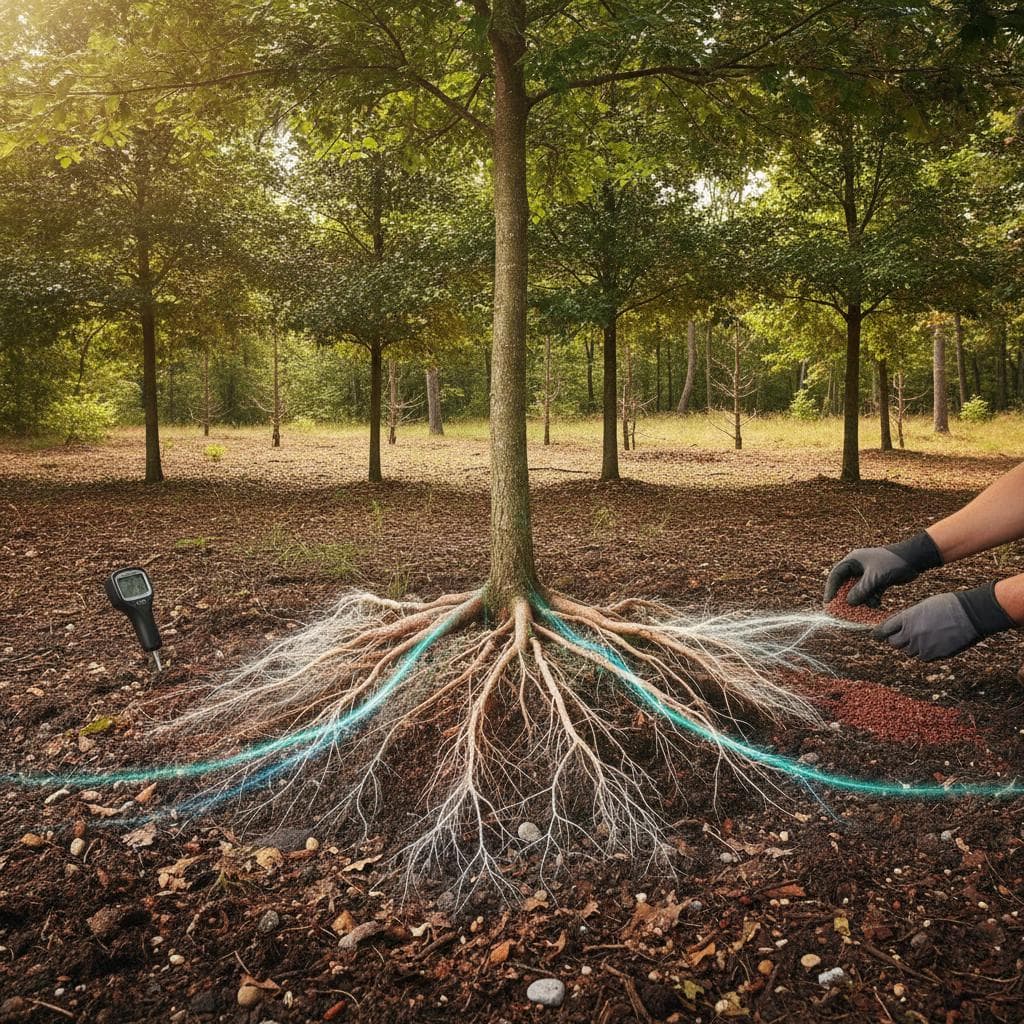
Mycorrhizal Fungi Cut New Tree Deaths by 60 Percent: The Science Behind Stronger Roots
Healthy trees begin underground. When new trees fail to thrive, the problem often lies not in the trunk or canopy but in the soil beneath them. Research and practical field results show that mycorrhizal fungi can reduce new tree deaths by as much as 60 percent. These beneficial fungi form a natural partnership with tree roots, improving nutrient uptake, water absorption, and overall resilience.
In simple terms, mycorrhizal fungi act as a living extension of a tree root system. They increase the root ability to access resources and protect against stress. For homeowners and landscapers, understanding and using mycorrhizal inoculation during planting can mean the difference between a struggling landscape and one that flourishes for decades.
What Are Mycorrhizal Fungi?
Mycorrhizal fungi are microscopic organisms that attach to tree roots and form a symbiotic relationship. The fungi feed on carbohydrates from the tree through photosynthesis, and in return, they help the tree access nutrients locked in the soil.
There are two main types of mycorrhizal relationships found in trees:
- Ectomycorrhizal fungi grow around the root tips of trees such as oaks, pines, and birches.
- Endomycorrhizal fungi, also called arbuscular mycorrhizae, penetrate the root cells of trees like maples, elms, and most fruit species.
Both types serve the same purpose by expanding the effective root surface area, improving nutrient uptake, and strengthening the tree ability to handle stress.
How Mycorrhizal Fungi Improve Tree Survival
When a tree is newly planted, its root system is limited and vulnerable. The surrounding soil may be compacted, nutrient-poor, or lacking in biological diversity. Mycorrhizal fungi help overcome these challenges in several key ways.
Enhanced Nutrient Uptake
These fungi extend thread-like structures called hyphae into the soil. Hyphae can reach areas that roots alone cannot. This network absorbs phosphorus, nitrogen, calcium, and trace minerals, delivering them directly to the root cells. Trees with active mycorrhizal connections often grow faster and maintain greener, more vigorous foliage.
Improved Water Absorption
Hyphae act like fine wicks, drawing water from tiny soil pores and transferring it to the tree. This ability allows trees to withstand dry conditions better than non-inoculated ones. In urban or suburban environments where soils are often dry or compacted, this advantage can be critical to survival.
Resistance to Soil Pathogens
Mycorrhizal fungi create a physical and chemical barrier around roots that deters disease-causing organisms. They also stimulate the tree natural defense mechanisms, helping it resist harmful bacteria and root rot fungi that can quickly kill young trees.
Better Soil Structure
Healthy mycorrhizal networks help bind soil particles together. This creates a crumbly, well-aerated structure that allows roots to breathe and water to drain effectively. Over time, this natural conditioning improves the entire planting area, benefiting not just one tree but the surrounding landscape.
Reduced Transplant Shock
When trees are moved from nurseries to new planting sites, they lose a large portion of their roots. Mycorrhizal inoculation helps re-establish root function more quickly. The fungi begin colonizing the new soil environment, allowing the tree to adapt faster and experience less transplant stress.
Key Factors That Influence Mycorrhizal Success
While mycorrhizal fungi can significantly improve survival rates, their effectiveness depends on several factors. Understanding these helps ensure you get the best results when planting new trees.
- Soil Conditions: Mycorrhizal fungi thrive in living soil with organic matter. Overly compacted or heavily fertilized soil can hinder their growth.
- Tree Species: Not all fungi work with all trees. Selecting the right fungal species for your tree type is essential.
- Moisture Levels: Fungi need moderate moisture. Soil that is too dry or waterlogged can limit their activity.
- Inoculation Technique: Proper application is key. Fungal spores must contact the root system directly to establish a connection.
- Chemical Use: Overuse of synthetic fertilizers or fungicides can kill beneficial fungi. Choose organic or low-impact soil amendments whenever possible.
The Root Inoculation Process
Applying mycorrhizal fungi during planting is straightforward but must be done correctly to achieve full benefits. Here is a practical step-by-step approach.
- Prepare the Planting Hole. Dig a hole that is twice as wide as the root ball and slightly shallower than its height. Loosen the surrounding soil to allow easy root expansion.
- Inspect the Roots. Remove any circling or girdling roots. Gently loosen compacted roots before planting.
- Apply the Mycorrhizal Inoculant. Sprinkle the inoculant directly on the root ball or mix it into the backfill soil. Granular, powder, or gel-based forms are available. The key is direct root contact.
- Position and Backfill. Center the tree so the root flare sits slightly above ground level. Backfill with native soil mixed with compost, ensuring even distribution of the inoculant.
- Water Thoroughly. Deeply water the tree to settle the soil and activate the fungi. Maintain consistent moisture for several weeks while the symbiosis forms.
- Mulch and Monitor. Apply a 2 to 3-inch layer of mulch to retain moisture and regulate soil temperature. Avoid piling mulch against the trunk.
When applied correctly, the fungi begin colonizing roots within weeks, forming a stable and beneficial network that can last for the life of the tree.
DIY Application Versus Professional Services
Some homeowners prefer to apply mycorrhizal inoculants themselves, while others hire certified arborists. Both approaches can work, but they differ in precision and results.
DIY application uses products widely available at garden centers. They are easy to use but rely on proper mixing and placement. Homeowners should read labels carefully to ensure compatibility with their tree species.
Professional inoculation uses specialized tools that inject spores directly into the root zone. This method ensures even coverage and is ideal for large trees, group plantings, or poor soil conditions.
While DIY inoculation is economical, professional application offers greater reliability, especially for valuable or mature trees.
Selecting a Qualified Tree Specialist
Selecting the right professional ensures your investment in mycorrhizal treatment pays off. Look for certification from an ISA Certified Arborist or a licensed tree care professional. Ask about previous inoculation projects and success rates. A good arborist will test or visually assess soil conditions before recommending treatment. The provider should explain product types, expected outcomes, and care instructions clearly.
A trusted expert will not oversell the process but will emphasize how it fits into a broader tree care plan that includes watering, mulching, and pruning.
Frequently Asked Questions
If your soil is compacted, low in organic matter, or has been disturbed by construction, it likely lacks beneficial fungi. Newly planted trees in these conditions benefit greatly from inoculation.
Inoculants can be introduced to existing trees later through root injection or soil drenching. Results may take longer to appear but can still improve tree health.
Fertilizer provides nutrients directly, while mycorrhizal fungi enhance a tree ability to access nutrients already in the soil. They work together but serve different functions.
Initial colonization occurs within a few weeks, but noticeable growth and health improvements usually appear after one growing season as the root-fungal network matures.
Urban and suburban soils often lack these organisms due to grading, compaction, and chemical treatments. Inoculation restores the biological balance that natural forest soils maintain.
Mycorrhizal treatment does not replace watering or mulching. It complements those practices by enhancing root efficiency.
For homeowners, inoculant products can range from a few dollars per tree for DIY applications to higher costs for professional injection services. The investment is modest compared to the cost of replacing a dead or stressed tree.
Building Resilient Landscapes
Mycorrhizal fungi offer one of the most natural and effective ways to boost tree survival. By forming a living partnership with roots, they strengthen young trees against drought, disease, and nutrient stress. Healthy soil is the foundation of strong trees. Whether you choose to inoculate your own plantings or hire a professional arborist, integrating mycorrhizal fungi into your tree care routine is a simple step that delivers lasting results.