
Detection Breakthroughs for Armillaria Root Rot
When a healthy tree begins to wilt, lose leaves, or develop decaying bark near its base, the cause may lie deeper than it appears. Armillaria root rot ranks among the most destructive fungal diseases affecting both landscape and forest trees. This fungus spreads silently underground, attacking roots long before symptoms emerge above the soil. The following sections explain the nature of Armillaria root rot, highlight recent detection advancements, and provide practical guidance for homeowners and property managers to identify and manage this enduring threat.
Understanding Armillaria Root Rot
Armillaria root rot stems from infection by several species of the Armillaria fungus. The pathogen invades roots of living trees and woody shrubs, deriving nourishment from decaying organic matter while progressively killing vital tissues. Once entrenched, the fungus endures in soil and stumps for decades. It propagates to adjacent healthy trees via root contacts or through rhizomorphs, which are dark, cord-like structures that navigate through the soil.
Homeowners often encounter this disease in ornamental trees, while forest managers face widespread impacts in timber stands. Early recognition proves crucial, as the fungus targets a broad range of species, including oaks, pines, and fruit trees. Understanding its lifecycle aids in implementing effective control measures.
Challenges in Early Detection
Conventional detection methods depend on observable symptoms, such as yellowing leaves, canopy thinning, or white fungal growth beneath the bark. By the time these indicators surface, the infection has typically progressed significantly. The underground proliferation and faint initial signs render Armillaria difficult to intercept promptly, often resulting in irreversible tree damage.
Soil variability and environmental factors further complicate diagnosis. For instance, drought stress may mask early symptoms, delaying intervention. Professionals emphasize the need for proactive monitoring in vulnerable areas, such as wet soils or sites with recent tree removals.
Advanced Detection Technologies
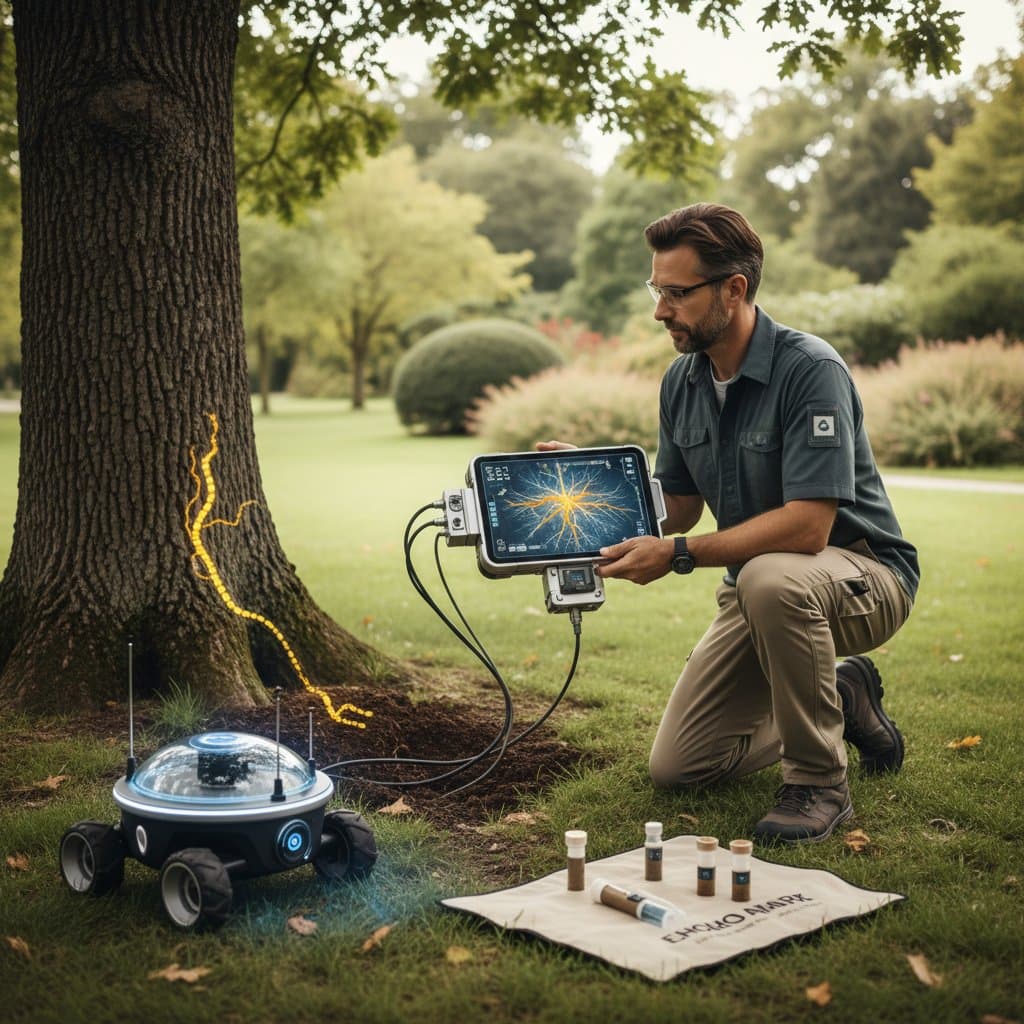
Innovations in tree pathology now equip professionals with tools for earlier and more accurate identification of Armillaria root rot. These technologies enable precise diagnoses that avert extensive losses in managed landscapes and forests. Below, key methods receive detailed examination.
DNA-Based Soil Testing
Laboratory analysis of DNA from soil or root samples detects Armillaria presence prior to visible symptoms. Technicians extract and amplify trace fungal DNA to confirm infection at nascent stages. This approach delivers high accuracy, revealing the pathogen even in outwardly healthy trees.
To utilize this method, collect samples from the root zone during routine inspections, particularly after heavy rains that promote fungal activity. Results guide targeted interventions, such as isolating affected areas. Arborists recommend annual testing for high-risk properties.
Ground-Penetrating Radar and Resistograph Tools
Ground-penetrating radar (GPR) examines the root zone to pinpoint decay zones or voids linked to fungal degradation. Operators interpret radar images to map underground anomalies without excavation. This non-destructive technique supplies critical insights into root integrity.
Complementing GPR, Resistograph devices employ a fine drill bit to assess wood density by measuring penetration resistance. Patterns indicative of Armillaria decay emerge as softer zones in otherwise solid wood. Together, these tools facilitate comprehensive evaluations, preserving tree structure during assessment.
Electronic Nose Sensors
Portable electronic nose devices identify volatile organic compounds released by infected roots. These sensors replicate biological scent detection, capturing chemical signatures of fungal metabolism. Deployment occurs in field settings, offering rapid results that surpass traditional visual checks.
Researchers calibrate these tools for specificity to Armillaria markers, minimizing false positives from other soil microbes. Users scan multiple trees efficiently, integrating data with GPS for mapping infection hotspots. Ongoing refinements enhance portability for widespread adoption.
Thermal Imaging and Spectral Analysis
Thermal imaging employs infrared cameras to reveal temperature discrepancies in tree tissues caused by impaired water conduction. Infected regions typically register cooler due to root dysfunction. Spectral analysis extends this by examining light reflectance patterns across wavelengths to detect physiological stress.
Professionals apply these tools over large areas, such as orchards, to chart disease progression. Drones equipped with multispectral sensors accelerate surveys, providing high-resolution maps. Integration with software analyzes data for predictive modeling of spread.
Importance of Early Detection
Timely identification of Armillaria root rot distinguishes manageable cases from catastrophic losses. Arborists leverage early alerts to execute precise strategies that contain the pathogen. Key benefits include halting transmission through stump removal and enhancing soil conditions to suppress fungal growth.
Resistant species selection, like certain birches or maples, supports long-term recovery. Root barriers installed around valued trees prevent rhizomorph incursion. These measures safeguard biodiversity and maintain aesthetic and economic value in landscapes.
Strategies for Disease Management Post-Detection
Confirmation of Armillaria necessitates expert intervention to mitigate impacts. Excavate and remove infected roots to eliminate reservoirs, followed by soil amendments for better aeration and drainage. Reduce excess moisture through grading or irrigation adjustments to discourage fungal persistence.
In advanced infections, complete tree removal and stump grinding become essential to curb dissemination. Follow-up treatments may involve fungicides applied to surrounding soil, though efficacy varies by site conditions. Document all actions for ongoing monitoring protocols.
Homeowner Contributions to Detection
Homeowners play a vital role by monitoring for subtle indicators of Armillaria activity. Look for mushrooms or honey-colored fungal mats at the tree base, especially after wet periods. Note cracked bark revealing white mycelial fans underneath, alongside premature foliage loss or branch dieback.
Probe gently near roots for soft, spongy textures signaling decay. Maintain records of observations to share with arborists during consultations. Schedule professional inspections biennially, focusing on trees over 10 years old or in compacted soils.
Proactive Measures for Sustained Tree Vitality
Armillaria root rot presents ongoing challenges in arboriculture, yet emerging detection technologies empower effective defense. Arborists and homeowners alike benefit from these tools to intervene swiftly and preserve tree populations. Commit to vigilant surveillance and expert partnerships to foster resilient landscapes that bolster environmental stability and property appeal.