
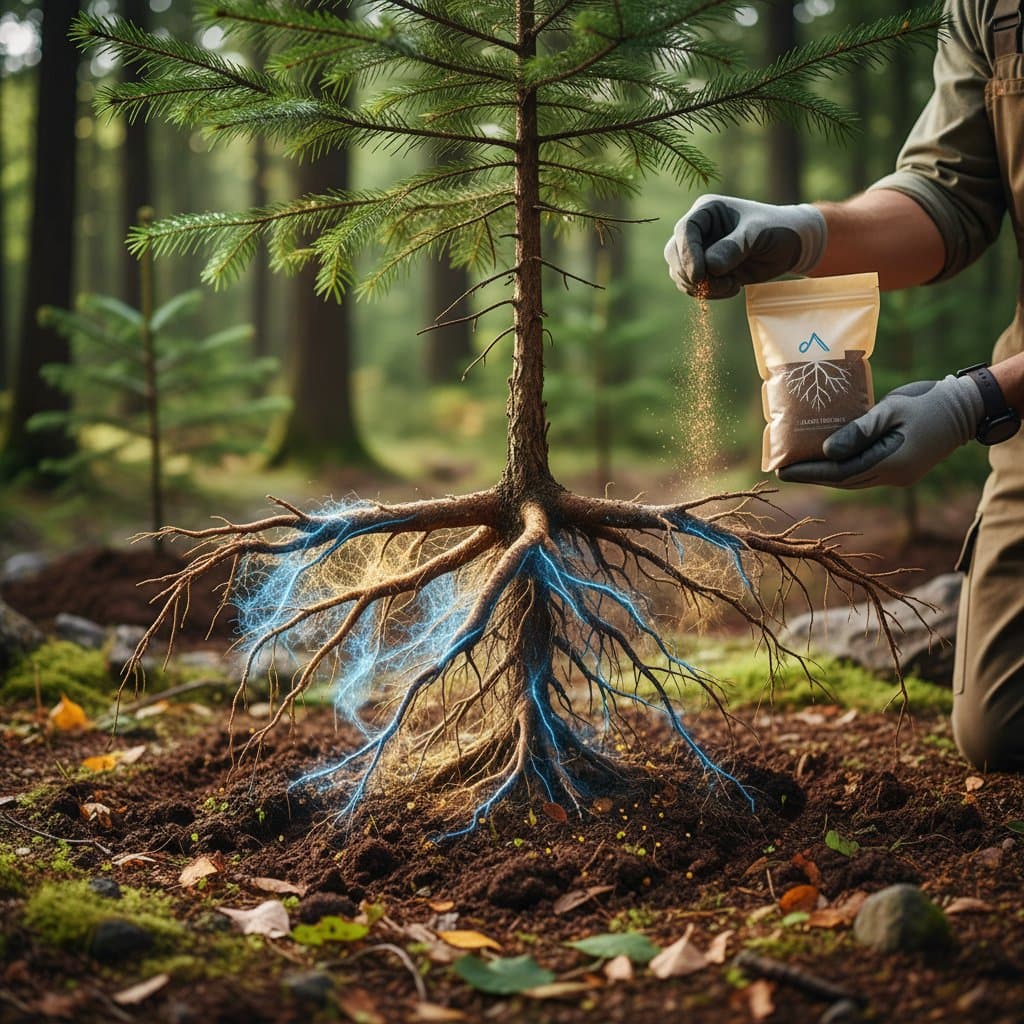
Mycorrhizal Fungi: Double Your Tree Planting Success
Healthy soil teems with microorganisms that sustain plant life beneath the surface. Among these, mycorrhizal fungi stand out for their ability to enhance tree establishment. Proper integration of these fungi can double the survival rate of newly planted trees by promoting robust root development, efficient nutrient absorption, and greater resilience to drought.
Homeowners equipped with knowledge of these fungi can significantly improve tree vitality and landscape durability. This guide details the nature of mycorrhizal fungi, their mechanisms, and practical application strategies to foster enduring tree health.
What Are Mycorrhizal Fungi?
Mycorrhizal fungi consist of microscopic organisms that establish symbiotic bonds with plant roots. The name mycorrhiza translates to fungus root, reflecting the way these fungi integrate with and extend from root structures.
These fungi develop threadlike hyphae that permeate the soil around roots. This extension amplifies the root systems effective range well beyond the trees inherent capabilities. In return for carbohydrates supplied by the tree via photosynthesis, the fungi deliver water and essential nutrients from distant soil regions.
Two primary categories exist:
- Ectomycorrhizal fungi create a sheath encasing tree roots and prevail in species like oak, pine, birch, and beech.
- Endomycorrhizal fungi, known as arbuscular mycorrhizae, enter root cells and dominate in shrubs and many ornamental trees.
Both categories forge an extensive subterranean network that facilitates nutrient exchange and bolsters soil integrity.
Why Mycorrhizal Fungi Matter for Tree Planting
Newly planted trees encounter stressors such as transplant shock, restricted root expansion, and altered soil composition. In the absence of support, young trees often falter in establishing firm holds, particularly in dense or nutrient-poor soils. Mycorrhizal fungi serve as biological allies that aid trees in surmounting these initial hurdles.
Principal advantages encompass:
- Superior nutrient acquisition: Hyphae collect phosphorus, nitrogen, and micronutrients from zones outside the trees direct root reach.
- Elevated drought endurance: The broadened network taps into subsurface water sources, mitigating hydration deficits.
- Augmented pathogen defense: Fungi form a shield that repels detrimental soil microbes from root tissues.
- Reinforced soil architecture: Hyphal webs aggregate soil particles, enhancing oxygen flow and curbing erosion.
- Elevated establishment rates: Inoculated trees root more swiftly and withstand ecological stresses with greater fortitude.
These attributes position mycorrhizal fungi as vital components in eco-conscious landscaping and diligent tree stewardship.
Key Factors That Influence Mycorrhizal Success
Natural ecosystems harbor mycorrhizal fungi, yet urban and suburban environments frequently deplete them. Activities like site development, soil regrading, and chemical fertilizer applications eradicate these organisms. Homeowners may reinstate equilibrium by incorporating commercial inoculants at planting time.
Critical influences on fungal efficacy include:
- Soil vitality: Organic matter-rich soils nurture fungal proliferation. Barren or compressed soils hinder attachment.
- Tree compatibility: Species such as oaks and pines forge more robust fungal alliances than certain others.
- Planting elevation: Excessive depth smothers roots and fungi alike. Maintain the root flare at soil level.
- Fertilizer composition: Elevated phosphorus or artificial variants suppress fungal integration.
- Hydration balance: Fungi require steady moisture for initial bonding, yet excess saturation impedes progress.
Managing these elements enables property stewards to optimize conditions for sustained fungal and arboreal prosperity.
How to Use Mycorrhizal Fungi in Tree Planting
Incorporating mycorrhizal fungi demands straightforward yet precise methods, with emphasis on root proximity during application. The objective involves direct spore-root contact prior to or concurrent with planting.
Execute these procedures for optimal outcomes:
-
Excavate the planting site. Create an opening two times the root balls width, matching the root systems depth. Aerate the perimeter soil to facilitate hyphal extension.
-
Select and prepare inoculant. Opt for a tree-specific, premium mycorrhizal product available as powder, granules, or liquid.
-
Administer to root areas. For bare-root specimens, envelop roots in the product. For potted trees, gently tease apart outer roots and distribute inoculant throughout the zone.
-
Refill with indigenous soil. Minimize supplemental materials. Fungi perform optimally in unaltered native substrates.
-
Irrigate adequately. Deep watering initiates spore germination and secures hyphal adhesion to roots.
Post-establishment, fungi proliferate alongside roots, cultivating a perpetual alliance spanning the trees lifespan.
Signs That Mycorrhizal Relationships Are Working
Observers may question indicators of fungal activity, given the networks subsurface nature. Visible cues of efficacy emerge through plant performance.
Reliable markers include:
- Robust shoot elongation and lush, verdant leaves.
- Minimal drooping during irrigation intervals.
- Larger, thicker foliage coverage.
- Heightened tolerance to insect or microbial threats.
Vigorous advancement and diminished stress in arid conditions signal a thriving mycorrhizal symbiosis.
DIY vs. Hiring a Professional Arborist
Inoculant deployment suits hands-on efforts in many scenarios, yet expert input proves beneficial in complex cases. Arborists or soil experts assess terrain, pinpoint imbalances, and suggest tailored fungal strains for particular trees.
DIY suits scenarios involving:
- Limited plantings of trees or shrubs.
- Straightforward, labeled commercial products.
- Familiar, stable soil profiles.
Expert consultation benefits:
- Installation of sizable or premium trees.
- Remediation of dense or altered soils.
- Extensive arboreal projects.
- Rehabilitation of natural or forested areas.
Professionals often pair mycorrhizal applications with techniques like soil venting, organic additions, or carbon enhancements for amplified effects.
How to Choose a Reliable Mycorrhizal Product
Inoculant quality varies widely. Single-fungus formulations pale against multi-species blends offering versatile support. Prioritize selections featuring:
- Varied fungal spectrum: Combinations of ecto- and endomycorrhizal types accommodate diverse trees.
- Abundant spore density: Higher concentrations accelerate integration and potency.
- Viability assurance: Verify dates and preserve in shaded, arid storage.
- Effective mediums: Peat or clay bases retain hydration near roots.
Scrutinize labels for tree alignment. Steer clear of subpar items promising rapid or exaggerated expansions.
Questions to Ask Before Using Mycorrhizal Fungi
Prospective users benefit from clarifying inquiries prior to acquisition or deployment:
- Which fungal varieties comprise the product, and do they match my trees requirements?
- What application ensures maximal root exposure?
- Which soil traits could undermine fungal viability?
- Is compatibility possible with natural amendments like compost?
- When might observable improvements appear?
Such inquiries avert errors and cultivate conducive settings for fungal flourishing.
Common Mistakes to Avoid
Well-meaning plantings occasionally falter from avoidable lapses. Sidestep these pitfalls:
- Over-fertilization: Artificial types, particularly phosphorus-heavy, deter fungal bonding.
- Moisture neglect: Fungi demand reliable yet moderate wetness.
- Excessive burial: Submerged roots stifle respiration and fungal development.
- Root oversight: Bound root masses resist penetration; score and loosen beforehand.
- Impatience: Symbiotic gains accrue gradually over months.
FAQs About Mycorrhizal Fungi and Tree Planting
Do all trees need mycorrhizal fungi?
Nearly all tree kinds gain from mycorrhizal associations, though dependency varies. Oaks, pines, and birches exhibit pronounced reliance, whereas certain rapid ornamentals require minimal aid.
Can I add mycorrhizal fungi to existing trees?
Yes. Introduce inoculant via root-zone injection or surface incorporation, followed by thorough saturation to promote spore migration.
Will store-bought soil already contain mycorrhizal fungi?
Commercial mixes undergo sterilization against weeds and diseases, eliminating beneficial fungi. Supplement with dedicated inoculants for restoration.
Are mycorrhizal fungi safe for pets and children?
Yes. As inherent soil elements, they present no hazards when applied per guidelines to humans, animals, or ecosystems.
How long do mycorrhizal fungi last once applied?
Established fungi endure throughout the trees existence, expanding with roots to perpetually refine soil and nutrient dynamics.
Can I combine mycorrhizal fungi with compost or mulch?
Yes. Organic layers furnish sustenance for fungi. Position mulch away from trunks to prevent dampness accumulation and decay.
What if my tree already looks unhealthy?
Inoculants offer support but do not remedy advanced ailments or root impairments. Seek arborist evaluation for comprehensive diagnostics and interventions.
Fostering Enduring Tree Vitality Through Fungal Alliances
Integrating mycorrhizal fungi transforms tree planting from a gamble into a reliable endeavor. By nurturing these subterranean partnerships, homeowners secure resilient landscapes that thrive amid challenges. Commit to informed practices, and witness trees flourish with sustained vigor and ecological harmony.