
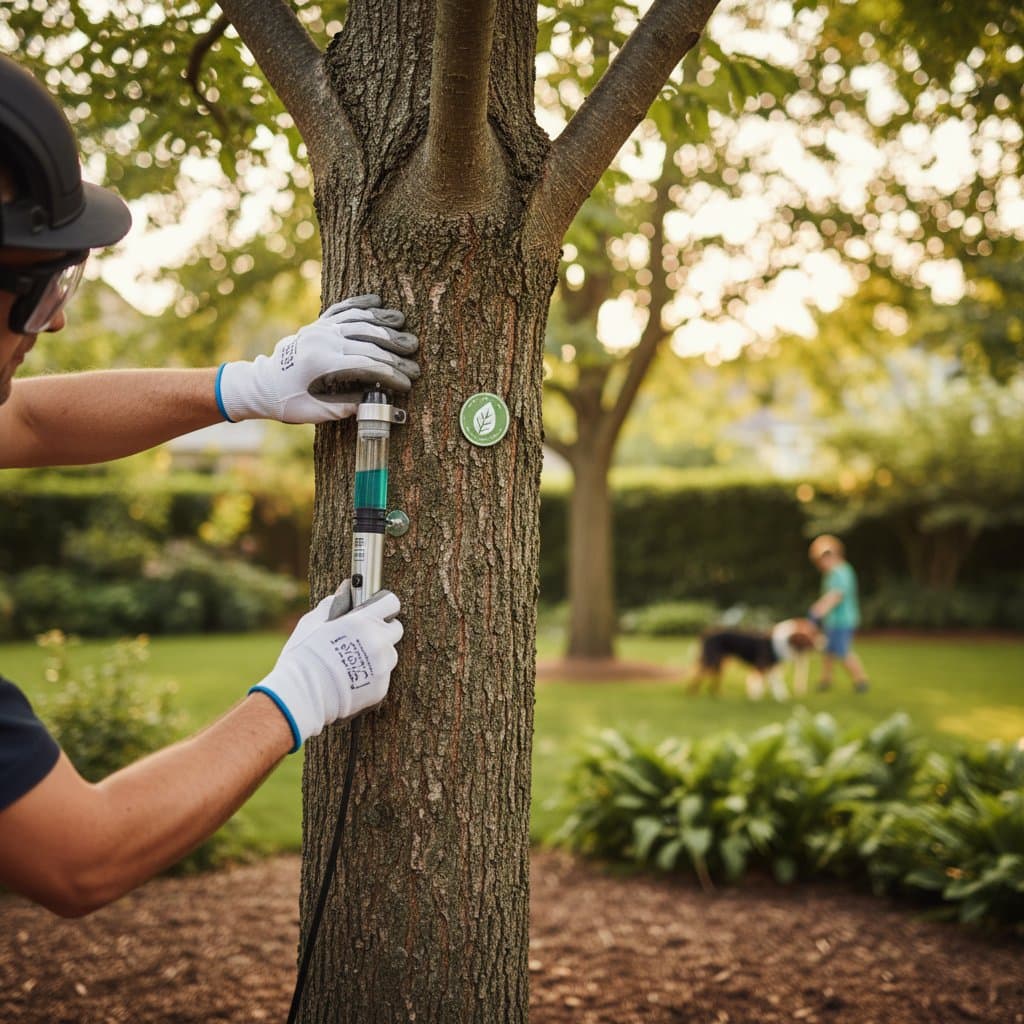
Ash Tree Vaccines: A Safer Alternative to Harsh Chemicals
Ash tree vaccines offer an effective and environmentally responsible method to safeguard ash trees from the devastating emerald ash borer. These injectable treatments transport protective agents directly into the tree's vascular system, eliminating the reliance on widespread chemical sprays. Vaccination stands as a validated technique to maintain tree vitality while limiting chemical exposure to humans, animals, and adjacent ecosystems.
Property owners seeking to preserve their ash trees benefit from tree injection therapy as a durable, low-impact strategy. Rather than applying insecticides to soil or foliage, vaccinated trees gain internal safeguards that endure through several growth cycles. This technique proves gentler on the environment and frequently more economical in the long term.
Understanding Ash Tree Vaccines
Ash tree vaccines consist of specialized formulations crafted to counter the emerald ash borer, an invasive beetle that burrows under the bark and interrupts nutrient transport. The vaccine enters the tree via injections at the trunk base through discreet, sealed ports that facilitate absorption. From there, the active components distribute via the xylem, defending the tree from within.
These vaccines employ systemic insecticides optimized for injection delivery. The compounds remain confined to the tree, averting airborne drift, water runoff, and soil pollution. A certified arborist evaluates the appropriate dosage and schedule, considering the tree's dimensions, condition, and regional pest prevalence.
Why Choose Injection Therapy Over Chemical Sprays
Conventional chemical treatments typically require spraying or soil saturation with broad-spectrum insecticides. Although these can control pests, they pose elevated risks to the environment. Such applications endanger pollinators, neighboring flora, and aquifers through unintended chemical dissemination. Ash tree vaccines, however, remain encapsulated within the host tree, drastically curbing external contact.
Key advantages of injection therapy include:
- Reduced chemical exposure: The product integrates solely into the targeted tree, preserving surrounding soil and water sources.
- Long-lasting results: A single application shields the tree for up to two complete growing seasons prior to reapplication.
- Minimal disruption: No residues appear on bark or leaves, and injection sites mend without intervention.
- Targeted control: Internal circulation ensures the treatment reaches pests consuming the tree's inner layers.
This precise strategy holds special importance in urban settings or proximity to water bodies, where chemical migration presents significant hazards.
The Ash Tree Injection Process: Step-by-Step
Certified arborists adhere to a meticulous protocol for injection therapy, prioritizing tree welfare and treatment efficacy. Each phase minimizes physiological strain and optimizes uptake.
- Inspection and assessment: The arborist examines the tree for indicators of emerald ash borer infestation, such as bark fissures, crown thinning, or woodpecker foraging.
- Preparation: Measurement of the trunk diameter at breast height informs the dosage calculation.
- Drilling injection points: Modest holes form at the trunk base, distributed uniformly around the perimeter.
- Administering the vaccine: Ports insert into the holes, linking to pressurized units that dispense the solution.
- Absorption and sealing: The tree draws in the treatment via transpiration. Ports detach post-absorption, and sites seal to deter pathogens.
The procedure spans one to two hours per tree, varying with scale and vigor. Trees exhibit negligible treatment traces after weeks, limited to faint, healed punctures at the base.
Key Factors That Influence Cost and Effectiveness
Ash tree vaccination expenses generally fall between fifty and one hundred fifty dollars per tree, influenced by multiple variables:
- Tree size: Greater diameters demand increased volumes and ports.
- Health condition: Compromised or infested specimens might require augmented doses or subsequent maintenance.
- Accessibility: Sloped terrains or structural proximities necessitate specialized tools.
- Regional pest pressure: High-infestation zones often warrant accelerated re-treatments.
Vigorous trees yield superior outcomes from vaccination; prompt action proves critical. Advanced infestations can impair vascular function, hindering treatment distribution. Arborists assist in determining candidacy for salvage.
Signs Your Ash Tree Needs Protection
Routine monitoring of ash trees enables early detection of emerald ash borer threats. Timely recognition enhances treatment success and recovery prospects.
Observe these indicators:
- Thinning canopy: Foliage spars in upper limbs, accompanied by branch dieback.
- D-shaped exit holes: Minute, characteristic openings mark adult beetle emergence on the bark.
- Bark splits: Longitudinal fissures expose serpentine larval galleries.
- Increased woodpecker activity: Avian foraging targets concealed larvae under bark.
- Epicormic shoots: Stress-induced sprouts emerge from trunk or roots in recovery attempts.
Upon detecting these cues, engage a certified arborist without delay. Swift assessment and vaccination avert permanent harm.
DIY vs. Professional Tree Injection
Although consumer injection kits exist, expert administration remains advisable. Vaccination demands accuracy in tree anatomy and pest dynamics. Improper depth or quantity risks tree injury or suboptimal pest control.
Professionals provide essential advantages:
- Calibrated tools maintain safe infusion pressures.
- Expertise in infestation staging ensures targeted intervention.
- Selection of suitable formulations and schedules attuned to locales.
- Compliance with regulatory standards for application.
Amateur efforts may appear budget-friendly initially yet invite enduring detriment or unchecked outbreaks. Employing a certified arborist secures asset value and site integrity.
How to Choose a Qualified Arborist
Prioritize qualifications and track record over cost when engaging tree specialists for vaccination. Request verification of certifications from esteemed arboriculture bodies and confirm liability insurance.
Essential inquiries include:
- Do you hold arborist certification with ash tree expertise?
- What injection apparatus and formulation do you employ, and what justifies the choice?
- How frequently do regional trees require renewal?
- What protocols protect the property and flora?
- Can you furnish a detailed written proposal beforehand?
Trustworthy experts respond transparently and delineate procedures clearly.
Frequently Asked Questions
How long do ash tree vaccines last?
Most injections furnish protection spanning up to two growing seasons. Reapplication follows to sustain barriers against emerald ash borers.
Are ash tree vaccines safe for pets and wildlife?
Yes. Containment within the tree precludes surface residues, rendering it harmless to pets, avian species, and pollinators.
Can a heavily infested tree still be saved?
Trees with over half canopy mortality face slim recovery odds. Arborists evaluate viability for treatment versus removal.
When is the best time to vaccinate my ash tree?
Late spring or early summer precedes adult emergence, often April through June by region. Local arborists pinpoint ideal windows per pest patterns.
Do vaccinated trees need other treatments?
Typically not, though vigilance for secondary threats benefits from routine checks. Nutrient-rich soil and adequate hydration bolster resilience.
How does injection therapy compare to soil drenching?
Injection confines delivery to the tree, sidestepping soil uptake and aquifer risks, unlike drenching which disperses broadly and demands repetition.
What happens if I skip a vaccination cycle?
Omission permits borer resurgence, fostering decline and possible mortality. Biennial adherence upholds robust defense.
Sustaining Ash Trees Through Proactive Vaccination
Embracing ash tree vaccines fortifies landscapes against invasive threats while upholding ecological balance. This internal defense mechanism extends tree lifespan, curtails maintenance demands, and averts removal costs. Consult a certified arborist to initiate protection and foster enduring vitality in your green spaces.