
Early Warning Signs of Armillaria Root Disease
Mushroom root rot, known scientifically as Armillaria root disease, strikes trees from below ground level. This fungal infection spreads through soil and decaying wood, often remaining hidden until significant damage occurs. Property owners who recognize the initial indicators can intervene promptly to safeguard their landscape.
Early detection hinges on observing subtle changes, such as clusters of mushrooms near the trunk or unexplained canopy thinning. Professional assessment follows these observations to confirm the presence of the pathogen. The strategies outlined here provide practical steps for identification, management, and prevention.
Understanding Armillaria Root Disease
Armillaria root disease results from fungi in the Armillaria genus. These organisms target tree roots and the lower trunk, consuming living tissue and disrupting water and nutrient uptake. The infection progresses gradually, allowing the fungus to propagate via soil contact or root connections.
The pathogen persists in decaying wood for years, ready to infect stressed hosts. It affects a wide range of species, including oaks, pines, maples, and fruit trees. Woody plants in urban or landscaped settings face heightened risk due to environmental pressures.
Conditions That Promote Armillaria Infection
Certain environmental factors increase tree susceptibility to Armillaria. Property managers benefit from addressing these to minimize outbreak potential.
- Standing water from poor drainage stresses roots and creates ideal fungal habitats.
- Soil compaction from vehicles or foot traffic limits oxygen and retains excess moisture.
- Retained stumps or buried roots serve as reservoirs for the fungus after tree removal.
- Prolonged drought weakens defenses, making invasion easier.
- Existing injuries or pests compromise bark and root barriers.
These elements often combine to facilitate spread. The fungus employs rhizomorphs, elongated black strands, to extend underground and connect with new hosts.
Recognizing Early Indicators
Prompt identification of Armillaria symptoms prevents widespread decline. Symptoms emerge in a sequence, starting with underground activity before surfacing.
Mushrooms Near the Trunk
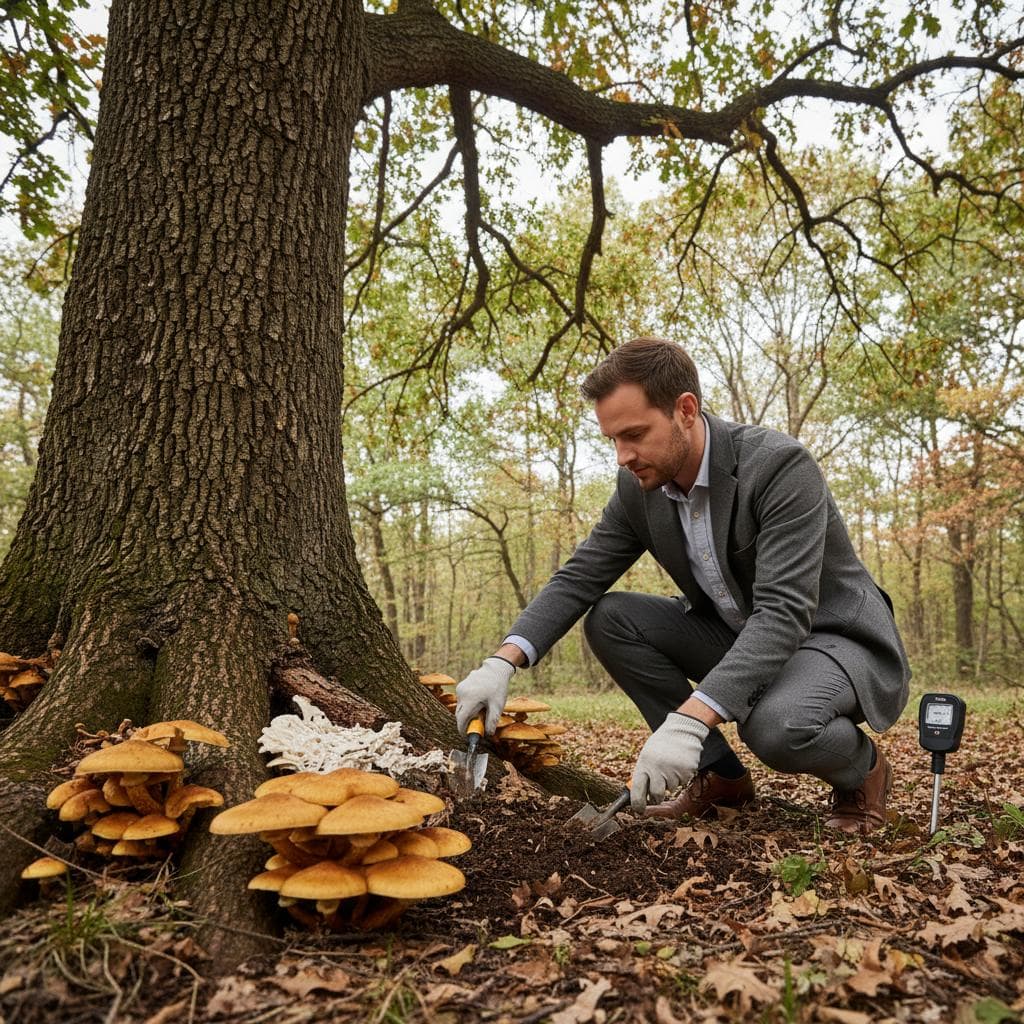
Honey-colored mushrooms cluster at the base or root zone, especially after rainfall. These fruiting bodies signal active fungal reproduction. Inspect trees weekly during wet seasons to catch them before they vanish.
Mycelial Growth Beneath Bark
White, fan-like mats appear when bark near the base loosens. Gently lift affected sections to reveal this mycelium, the fungus's vegetative network. Such findings indicate established colonization.
Rhizomorphs in the Soil
Black, shoelace-like structures weave through upper soil layers or cling to wood. Dig carefully around the root flare to expose them. Their presence points to active expansion toward adjacent plants.
Thinning Canopy
Foliage yellows prematurely, wilts, or spars unevenly. One branch section may decline first, reflecting root damage on that side. Monitor seasonal changes against baseline health records.
Trunk and Bark Changes
Base cracks, sap leaks, or bark sloughs off, exposing softened wood. Probe gently with a tool to assess internal firmness. Early softening warns of advancing decay.
Step-by-Step Detection Methods
Initial homeowner checks lay the groundwork, but experts employ systematic techniques for verification.
- Conduct a thorough visual survey of canopy density, trunk integrity, and base soil.
- Excavate the root collar with air tools to reveal hidden decay or fungal elements.
- Sample bark for mycelial inspection, noting color and texture anomalies.
- Probe soil for moisture levels and root vitality using specialized meters.
- Submit samples to a lab for species confirmation if visuals remain inconclusive.
Accurate diagnosis guides effective responses. Avoid assumptions that could delay intervention.
Weighing DIY Efforts Against Expert Intervention
Basic monitoring empowers owners, yet full management demands professional expertise.
Homeowners handle:
- Routine visual scans for emerging signs.
- Debris clearance to promote airflow.
- Documentation of progressive symptoms.
Seek specialists for:
- Confirmed fungal fruiting or mats.
- Rapid canopy loss or structural instability.
- Multi-tree involvement.
- Soil softening underfoot.
Arborists equip themselves for safe excavation and containment. Their plans balance preservation with risk mitigation.
Strategies for Management and Prevention
Confirmed infections require targeted actions to limit damage and recurrence.
Enhance Drainage
Redirect water flow by reshaping grades or adding French drains. Aerate compacted areas to restore root respiration.
Eliminate Infected Material
Grind out stumps and excavate decayed roots completely. Dispose of debris away from the site to break the fungal cycle.
Uncover the Root Flare
Remove soil buildup at the trunk base for better drying. Maintain a slight slope away from the tree to shed water.
Deploy Preventive Fungicides
Apply soil drenches around at-risk trees per expert guidance. Time treatments to coincide with fungal activity peaks.
Select Resilient Replacements
Opt for species like certain elms or birches that resist Armillaria. Research local adaptability before planting.
Support Overall Vigor
Irrigate deeply during dry periods without overwatering. Apply mulch in a ring, avoiding trunk contact, and prune judiciously.
Selecting a Reliable Arborist
Qualified professionals deliver precise diagnostics and tailored solutions.
- Verify International Society of Arboriculture certification for proven competence.
- Inquire about testing protocols to ensure thorough evaluation.
- Demand detailed proposals covering procedures, timelines, and pricing.
- Confirm liability and workers' compensation insurance.
- Review testimonials for evidence of successful outcomes.
Vetting secures quality work and protects investments.
Frequently Asked Questions
How does Armillaria root disease initiate?
Entry occurs via root wounds or existing decay. Environmental stressors like flooding or mechanical injury lower resistance.
Does the fungus transmit between trees?
It does, via underground rhizomorphs or shared root systems. Proximity amplifies transmission risk.
How persistent is Armillaria in soil?
Decades-long survival in organic remnants is common. Thorough cleanup disrupts longevity.
Do mushrooms indicate ongoing infection post-removal?
They may recur if residual wood remains. Eradication requires comprehensive root extraction.
Can infected trees rebound?
Early interventions like drainage fixes offer recovery chances. Severe cases necessitate removal to safeguard neighbors.
Are Armillaria mushrooms hazardous to handle?
Low toxicity levels exist, yet gloves prevent skin contact. Clean thoroughly afterward.
Is soil replacement advised after tree removal?
Focus on root and debris removal instead. Test soil post-excavation for replanting viability.
Safeguarding Your Trees Long-Term
Integrating vigilant monitoring with proactive care fortifies landscapes against Armillaria. Regular assessments catch issues early, while habitat improvements build resilience. Consult experts to customize defenses, ensuring enduring tree health and property value.