
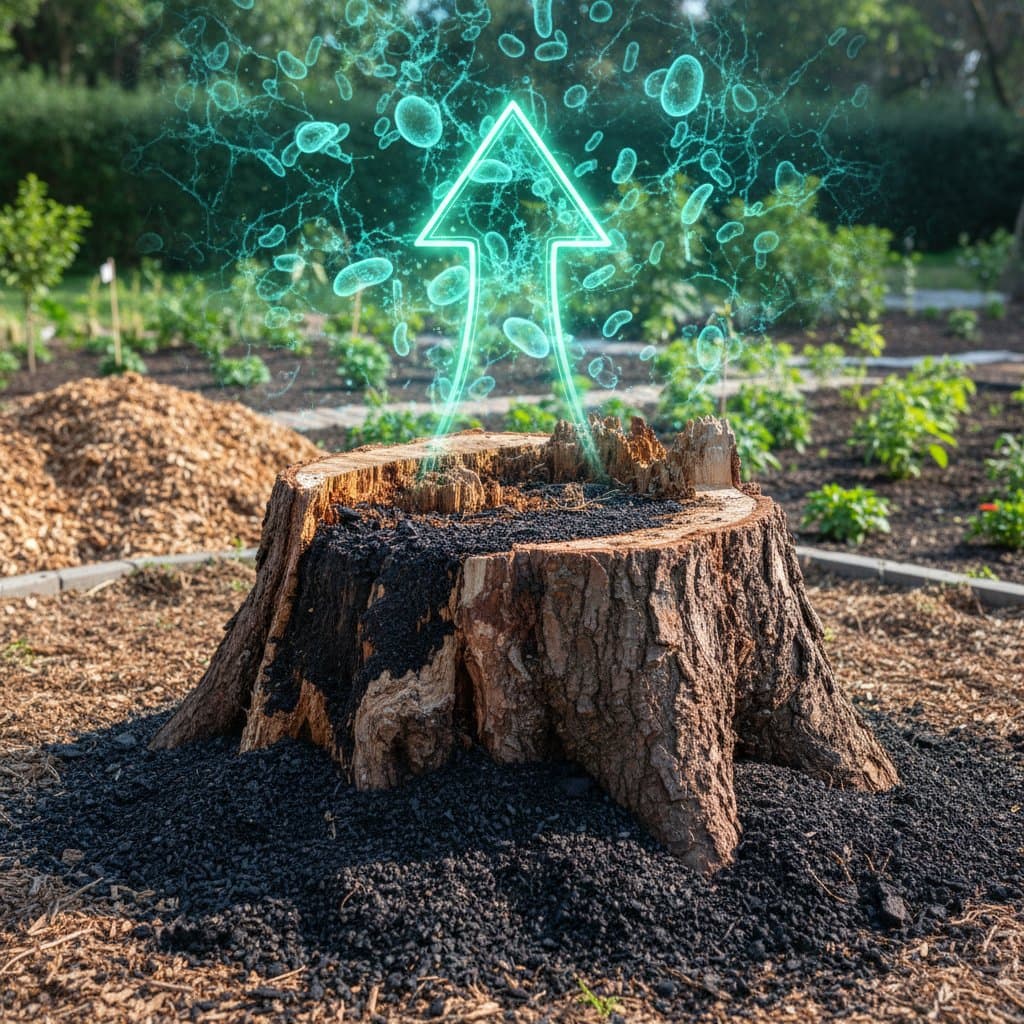
The Biochar Solution: Accelerating Tree Stump Decomposition
Tree stumps often persist in yards long after tree removal, sprouting new growth or requiring years to break down. Homeowners seek efficient methods to resolve this issue without environmental harm. Biochar emerges as a proven, science-supported option that hastens stump decay and minimizes regrowth.
This article details the mechanism of biochar in stump treatment, its advantages over conventional approaches, and practical application guidelines. Applicable to various tree species, from resilient oaks to fresh pine remnants, biochar facilitates quicker yard recovery while enhancing soil quality.
Fundamentals of Stump Decay and Regrowth
After tree felling, stumps and root systems may remain viable for extended periods, sometimes years. Species such as maple and willow frequently produce suckers that develop into shoots. Other types decay gradually beneath the surface due to the density of wood, which resists microbial decomposition.
Common removal techniques include mechanical grinding, chemical treatments, or passive natural breakdown. Grinding proves expensive and disruptive, chemicals risk soil contamination, and natural processes demand patience. Biochar provides a balanced alternative: it promotes rapid decomposition naturally and enriches soil structure simultaneously.
Economic Advantages of Biochar
Initial and Ongoing Expenses
Biochar costs less than commercial chemical removers or professional grinding sessions. Prices vary by origin and grade, yet a single bag typically suffices for several stumps. Application demands only basic tools, such as a shovel and watering device.
When incorporated post-grinding, biochar eliminates the need for follow-up interventions or extensive soil corrections. Its soil-enhancing properties also reduce future fertilizer expenditures, particularly for reseeding grass or planting shrubs in treated zones.
Long-Term Benefits
Biochar delivers enduring value through accelerated timelines. One treatment halves decomposition duration, potentially sparing months or years of delay. It further mitigates nutrient depletion, as decaying wood no longer leaches nitrogen from adjacent soil, fostering robust establishment of new vegetation.
Influencing Cost Variables
- Stump dimensions and root extent: Substantial stumps necessitate greater biochar volumes to penetrate deep roots.
- Soil hydration: Moist conditions enhance biochar's microbial interactions.
- Biochar grade: Activated, finely milled varieties optimize decay acceleration.
- Integration technique: Incorporating into pulverized wood or surface application impacts effectiveness.
- Site-specific soil traits: Dense clay or compacted earth benefits from prior aeration for maximum efficacy.
Mechanism of Biochar in Stump Decomposition
Biochar results from pyrolyzing organic matter, like wood residues, in oxygen-limited conditions. This yields a highly porous carbon structure capable of retaining water, nutrients, and microbial populations. Integrated into stump voids or distributed over root zones, it functions as an incubator for decay agents.
Wood-decomposing microbes, including specific fungi and bacteria, flourish within biochar's protected microenvironment. Its pores maintain essential moisture and aeration, vital for microbial proliferation. This setup expedites the degradation of lignin and cellulose, the resilient polymers defining wood's durability.
Biochar establishes a self-reinforcing biological cycle: microbes hasten wood breakdown, liberate nutrients, and expand populations, thereby intensifying decomposition rates. In contrast to synthetic accelerators, biochar preserves beneficial soil life without compromising ecosystem integrity.
Biochar Varieties for Stump Applications
Hardwood-Derived Biochar
Produced from dense woods like oak or maple, this variant endures longer in soil profiles. It proves ideal for sizable or persistent stumps, maintaining integrity throughout the process.
Advantages
- Provides sustained soil enhancement
- Superior water-holding capacity
- Performs well in dense or heavy soils
Disadvantages
- Higher acquisition cost relative to softwood options
- Gradual initial microbial engagement
Softwood-Derived Biochar
Derived from conifers such as pine or spruce, this form degrades more rapidly and mobilizes nutrients swiftly. It fits scenarios involving modest stumps where prompt outcomes matter.
Advantages
- Rapid initiation of microbial processes
- Seamless integration with mulch or existing soil
- Generally lower price point
Disadvantages
- Reduced longevity in the ground
- Prone to compression in saturated environments
Biochar from Agricultural Residues
Sourced from crop byproducts or coconut husks, this option appeals to sustainability-focused users. It amplifies microbial dynamics and revitalizes sandy or depleted soils effectively.
Advantages
- Derived from renewable, eco-friendly materials
- Elevates overall soil nutrient levels
- Simple to transport and apply due to low weight
Disadvantages
- Variability in quality across producers
- Requires larger amounts for extensive stump treatments
Self-Application Versus Professional Services
Biochar deployment is accessible, though pairing it with grinding or soil rehabilitation adds layers of consideration.
Self-Directed Method
Individuals manage minor stumps with everyday implements: a shovel for excavation, a rake for distribution, and a watering tool for hydration. The routine entails reducing the stump near soil level, incorporating biochar, and sustaining moisture. Primary benefits include expense reduction; limitations arise from uneven or shallow placement, potentially prolonging results.
Professional Assistance
Certified arborists or landscapers employ specialized machinery for precise grinding and biochar infusion into root depths. They assess soil parameters to select optimal biochar formulations and dosages. For expansive or numerous stumps, experts deliver swifter, thorough outcomes.
Guideline for Selection
Opt for self-application on compact stumps if adept at basic landscaping tasks. Engage professionals for aged, widespread root networks to guarantee uniform coverage and peak performance.
Step-by-Step Biochar Application Protocol
Execute these procedures to expedite stump disintegration and curb regrowth.
-
Reduce Stump Height
Position the stump flush with the ground surface. Clear away detachable bark and debris to reveal underlying wood. -
Establish Penetration Routes
Bore holes atop the stump, spaced one inch apart and penetrating one inch deep. These channels facilitate biochar and water ingress to core areas. -
Combine Biochar with Organic Amendments
Merge biochar equally with compost. This infusion supplies initial microbial colonies to inhabit the biochar's structure. -
Integrate and Insulate the Site
Insert the blend into boreholes and apply a surface layer over the stump. Top with mulch to conserve moisture. -
Hydrate Consistently
Irrigate weekly to maintain even dampness, avoiding waterlogging. Moisture synergizes with microbes to propel breakdown. -
Track Development
Within months, observe softening and fragmentation. As fibers disintegrate, underlying soil darkens and enriches, priming it for new plantings.
Strategies to Enhance Decomposition Speed
- Maintain consistent moisture to nurture microbial communities.
- Steer clear of synthetic chemicals that eradicate helpful organisms.
- Select powdered biochar for superior dispersal and prompt engagement.
- Supplement with nitrogen sources, such as compost extracts or aged manure, to offset biochar's carbon intensity.
- Apply mulch coverings to stabilize temperature and humidity, both critical decay accelerators.
Common Inquiries
Timeline for Biochar's Impact on Stumps?
Microbial responses initiate within weeks of application. Visible softening typically emerges in months, influenced by stump scale and ambient moisture.
Does Biochar Inhibit Regrowth?
Indeed, by fostering decay at the root base, biochar diminishes the stump's capacity for shoot production. Progressive root enervation naturally halts resurgence.
Repurposing Excess Biochar in the Landscape?
Certainly. Biochar bolsters fertility in gardens, turf areas, and ornamental beds, retaining essentials for broad plant support.
Risks to Adjacent Flora?
None; biochar remains innocuous and frequently benefits neighboring growth. Apply sparingly over root zones to prevent aeration interference.
Pre-Activation of Biochar?
Activation, via soaking in compost tea or nutrient solutions for 24-48 hours, enhances microbial readiness and efficacy.
Implementing Biochar for Yard Renewal
Biochar transforms stump management into an effective, sustainable practice. It shortens decay periods, eliminates regrowth concerns, and cultivates nutrient-rich soil for future projects.
Consult area tree specialists familiar with biochar to select suitable products and techniques. This approach ensures confident execution and accelerated landscape revitalization.