
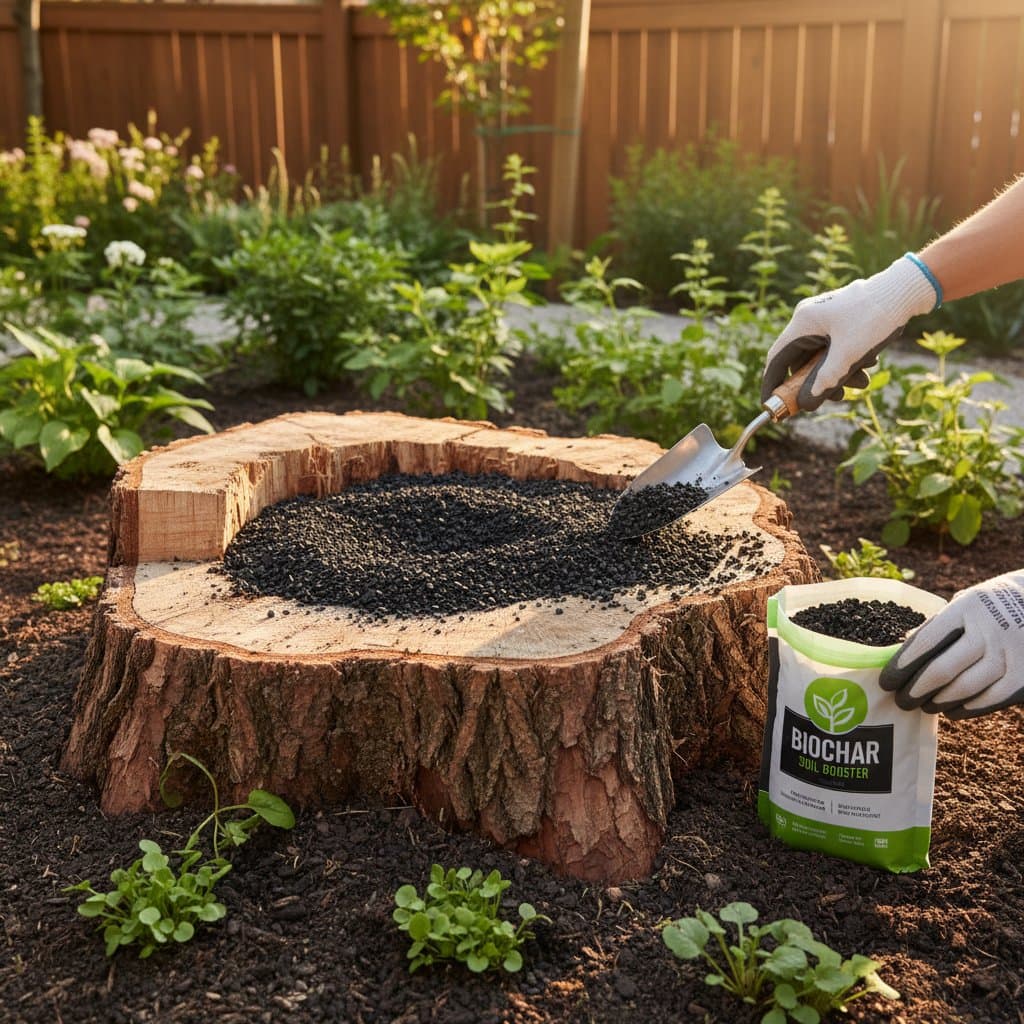
Eco-Friendly Biochar Reduces Stump Regrowth by 95 Percent
Tree removal often leaves behind stumps that pose ongoing challenges for property owners. These remnants can sprout new growth from roots, invite weed invasion, and draw pests as the wood decays. Conventional approaches, such as grinding or chemical applications, address the issue yet carry environmental drawbacks. Biochar stump treatment emerges as a superior, sustainable option. This method applies a carbon-rich material to cut regrowth by up to 95 percent and enhance soil quality.
Property owners and tree care professionals increasingly adopt this technique for its safety and efficacy. The following sections detail biochar stump treatment, its mechanics, pricing, and implementation strategies.
Understanding Biochar Stump Treatment
Biochar stump treatment employs a carbon-rich substance derived from organic materials pyrolyzed in low-oxygen conditions. The product, known as biochar, resembles charcoal and integrates into the stump surface and adjacent root areas. This application hastens wood decomposition and inhibits shoot emergence.
In contrast to synthetic herbicides, biochar avoids soil and water pollution. It bolsters soil porosity, holds essential nutrients, and fosters microbial communities that expedite organic matter breakdown.
Typical Costs for Biochar Stump Treatment
Biochar stump treatment generally costs between $120 and $350 per stump, influenced by dimensions, site, and access. The typical national rate equals $210, positioning it comparably to grinding while undercutting excavation expenses.
| Stump Size | Cost Range |
|---|---|
| Small (under 12 inches) | $120 - $180 |
| Medium (12 - 24 inches) | $180 - $250 |
| Large (24 - 36 inches) | $250 - $350 |
| Extra Large (36 inches or more) | $350 - $500 |
These figures encompass biochar supply, application labor, and basic soil enhancement. Certain providers incorporate soil analysis or planting guidance at no extra charge.
Elements Influencing Biochar Treatment Expenses
Multiple factors determine the expense of biochar stump treatment.
Stump Dimensions
Greater stump volume demands additional biochar and extended preparation time, elevating costs. Compact decorative stumps might utilize mere pounds of material, whereas substantial oak remnants could require an entire bag.
Species Characteristics
Dense hardwoods, including oak and maple, resist breakdown and necessitate concentrated biochar blends or repeated uses. Resilient softwoods like pine or poplar degrade swiftly, resulting in reduced treatment fees.
Site Accessibility
Stumps in confined spaces or proximate to buildings demand heightened effort for material delivery and secure application. Readily approachable sites allow quicker, more economical processing.
Existing Soil Properties
Impaired drainage or dense compaction hinders decay and may call for preliminary soil amendments. Such steps modestly raise total outlays.
Quantity of Stumps
Addressing several stumps simultaneously typically yields per-unit savings. Providers frequently extend reductions for bundled services during one appointment.
Service Timeliness
Active regrowth or invasive proliferation might necessitate prompt intervention. Expedited or on-demand scheduling incurs supplementary charges.
Steps in the Biochar Stump Treatment Procedure
The biochar process unfolds methodically with minimal environmental impact.
-
Site Evaluation and Proposal
A qualified arborist examines stump scale, type, and sprout activity. The professional delivers a cost estimate and outlines application methods. -
Site Clearance
Technicians remove surrounding litter, ground cover, and vegetation. Existing sprouts receive pruning to reveal underlying wood. -
Biochar Integration
Staff blend biochar with organic matter, moisture, or microbial enhancers into a paste. This composition spreads across the stump and nearby earth. -
Coverage and Incorporation
A layer of organic mulch or soil secures the area against drying. Occasionally, biochar mixes into surface layers to stimulate biological processes. -
Follow-Up Observation
Biochar facilitates progressive stump dissolution and sprout control over ensuing months. Reapplication occurs sparingly after intense precipitation or prior to new plantings. -
Site Reutilization
Upon full breakdown, the location supports turf, ornamentals, or replacement trees. The revitalized soil promotes robust establishment.
Deciding Between Self-Application and Expert Assistance
The choice between personal effort and specialist involvement hinges on stump scale and site specifics.
Suitable Scenarios for Self-Application
- Stumps measure small and position conveniently.
- Biochar exists in household supplies for soil projects.
- Minimal sprout potential accompanies diminutive landscape trees.
Homeowners procure biochar, combine it with amendments, and distribute evenly. This approach minimizes spending yet demands consistent oversight and potential reapplications.
Reasons to Engage Professionals
- Substantial, entrenched, or structure-adjacent stumps require handling.
- Swift, assured outcomes rank as priorities.
- Multiple stumps or challenging soils complicate efforts.
Experts deploy tailored biochar variants and precise methods for optimal suppression. They assess soil vitality and suggest vegetation plans, ensuring comprehensive results.
Professional involvement delivers reliability, particularly amid valued gardens or hazard risks.
Selecting a Provider for Biochar Stump Services
A thoughtful selection process guarantees secure and productive outcomes.
-
Credential Verification
Ascertain licensing and insurance compliance. Arborial tasks, even non-chemical, involve specialized skills and potential liabilities. -
Material Quality Inquiry
Confirm biochar originates from uncontaminated sources and meets soil amendment standards. Inferior variants risk impurity introduction. -
Comprehensive Quotation
Obtain itemized proposals covering supplies, work, and monitoring. Evaluate offerings from various firms for equitable rates. -
Reputation Assessment
Review endorsements focused on sustainable practices. Solicit visual evidence or client accounts. -
Soil Improvement Discussion
Esteemed providers address decomposition alongside long-term ground enhancement for subsequent landscaping. -
Post-Service Standards
Verify debris clearance and site preparation for immediate reuse.
Common Inquiries About Biochar Stump Treatment
What is the expense for treating a large stump with biochar?
Stumps exceeding 24 inches in diameter range from $250 to $350. Adjustments arise from access, ground state, and integrated services like partial grinding or remediation.
Does biochar outperform chemical removers environmentally?
Affirmative. As a natural agent, biochar introduces no toxins. It refines soil architecture, sequesters carbon, and cultivates helpful organisms, establishing it among securest alternatives.
How rapidly does decomposition proceed post-treatment?
Breakdown initiates within months for most cases. Full resolution spans up to one year for sizable hardwoods. Progression remains consistent, with marked regrowth decline.
Is biochar compatible with prior stump grinding?
Yes. Post-grinding application vitalizes soil and curbs residual root activity. It hastens chip disintegration as well.
Does biochar suit stumps affected by disease or insects?
Indeed. Biochar mitigates harmful agents and restores soil ecology. It counters select fungi and deters pest habitation in decaying tissue.
Which method costs less: grinding or biochar?
Grinding spans $150 to $400 per stump, against biochar's $210 average. Grinding yields instant clearance, whereas biochar provides enduring soil gains without equipment demands.
Might insurance offset biochar treatment costs?
Coverage applies infrequently to optional procedures unless hazards or insured incidents like storms contribute. Consult the policy provider prior to arrangements.
Which trees benefit most from biochar?
Biochar suits virtually all varieties, excelling with broadleaf species such as maple, elm, and birch. Conifers like pine yield prompt responses due to accelerated root decline.
Implementing Biochar for Sustainable Stump Management
Biochar stump treatment advances responsible property care through scientific and ecological principles. It surpasses traditional methods by achieving 95 percent regrowth reduction while fostering soil fertility.
For properties with lingering stumps, engage a local specialist in green practices. Request biochar evaluation, soil review, and integration into broader landscape plans. This approach yields enduring environmental and aesthetic improvements.